China Just Launched the First Scheduled Arctic Shipping Route to Europe. It Still Costs More Than the Suez Canal.
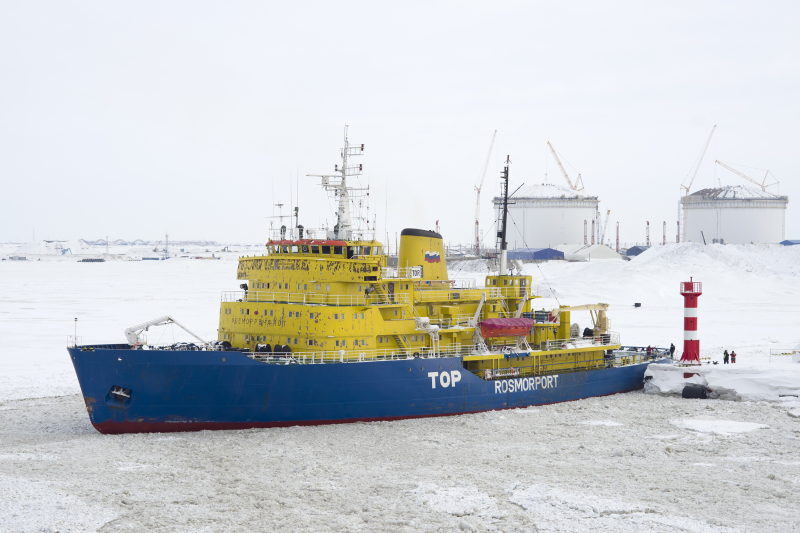
Right now, sending a container through the Arctic instead of the Suez Canal saves about three weeks and costs roughly $650 more, by one industry estimate — Russia's discount tolls are buying customers, not yet paying for themselves.
What happened?
On 15 August 2026, the Chinese shipping company Sea Legend sent its first ship, the Dubai Tower, on the first-ever scheduled, repeating container service through the Northern Sea Route — Russia's Arctic shipping lane along its own coast, which cuts the trip between China and Europe roughly in half compared with going around Africa or through the Suez Canal. Eight round-trip sailings are planned between 12 August and 27 October 2026, using a fleet of seven small-to-medium ships (1,528 to 4,890 TEU, a shipping-container size measure). The route takes about 18 to 22 days depending on the European port, against more than 40 days via Suez. It builds on a single proof-of-concept voyage in 2025, when Sea Legend's largest ship, the Istanbul Bridge, made the same China-to-UK run in about 20 days. Days later, a second Chinese line, NewNew Shipping, announced four new ice-strengthened ships starting October 2026 and said it would invest directly in the Russian ports of Murmansk and Arkhangelsk.
Why did it happen?
On Russia's side, this has been years in the making: in June 2023, the government ordered Rosatom, the state nuclear operator that also runs Russia's icebreaker fleet, to design a discounted toll system for the Arctic route — with state subsidies built in if needed — aimed at pulling shipping away from routes the West can police. On the Chinese side, the timing lines up with real trouble on the alternatives: Sea Legend's own COO points to Suez Canal and Strait of Hormuz risk as the reason shippers are looking north now. Underneath both, Russia has an incentive that has nothing to do with tolls: its Arctic shipping company Sovcomflot swung from a $393 million loss to a $94 million profit in the first quarter of 2026 alone, so every new customer on the route is also revenue Russia badly wants.
Who benefits?
Russia gets paying customers and hard currency on a route it fully controls, at a moment its state shipping company badly needed the revenue. The two Chinese shippers running the new services, Sea Legend and NewNew, get a genuine speed advantage and a marketing story ('Ice Silk Road') that Western carriers currently cannot copy. Ports named in NewNew's investment plans — Murmansk and Arkhangelsk — stand to gain real infrastructure spending. Whether Chinese shippers overall benefit, or just these two specific companies willing to take on Arctic and sanctions-adjacent risk, is the open question.
Who loses?
Anyone taking the 'new Suez' framing literally loses first: International Finance's reporting, citing Xeneta chief analyst Peter Sand, found 2025's real numbers underwhelming — total Northern Sea Route cargo actually fell to 37.02 million tonnes, missing Russia's own 80-million-tonne target, and container ships carried under a tenth of everything the route moved. The route also structurally can't match Suez on ship size — Arctic-capable ships top out around 4,000-5,000 containers against 24,000-plus for the biggest Suez ships — so matching one big ship's cargo takes five or six smaller Arctic ones, eating into the fuel savings the whole pitch rests on. And the per-container math is still worse: Sand's analysis puts the extra cost — a roughly $180,000-per-voyage icebreaker fee, $40,000-50,000 in extra insurance, and about $20,000 in permits and compliance — at around $648 more per container than the southern route.
What happened?
Sea Legend markets the service under an 'Ice Silk Road' or 'China-Europe Arctic Express' name, sailing from the Ningbo-Zhoushan hub (with feeder stops at Dalian, Qingdao, Shanghai, Taicang, Fuzhou and Nansha) to Felixstowe, Rotterdam, Wilhelmshaven and Gdynia. The Maritime Executive's 10 August 2026 report on the launch gives the Dubai Tower's specifics — a 2010-built, Liberia-registered, 1,740-TEU vessel — and confirms the 2025 Istanbul Bridge voyage (66,781 deadweight tonnes) as the trial the scheduled service is built on. gCaptain's coverage of the same launch adds the fleet-wide numbers: eight sailings across the season, seven ships ranging 1,528 to 4,890 TEU, and Sea Legend's own claim of roughly 50% lower CO2 emissions than the southern route because of the shorter distance. Marine Insight's reporting adds the reason carriers give for choosing now: Sea Legend's COO is quoted saying 'recent tensions in West Asia had exposed the risks facing major shipping routes such as the Suez Canal and the Strait of Hormuz, increasing interest in alternative routes' — tying the launch directly to the same Red Sea and Hormuz instability covered elsewhere on this site. Nine days after the first sailing, Baird Maritime reported that NewNew Shipping — a second, separate Chinese operator — would deploy four 4,800-TEU ice-class vessels from October 2026, targeting 1.2 million tonnes of cargo for the 2027 season, and that its CEO had said the company would invest in upgrading berths and building inland logistics parks at Murmansk and Arkhangelsk. The same report noted NewNew's cargo ship Xinxinhai 1 had already sailed Tianjin to Murmansk carrying automotive parts, arriving 19 August 2026.
Why did it happen?
PortNews' 2023 report on the government directive is explicit that the tariff concept was ordered specifically because unpredictable icebreaker costs were seen as an obstacle to Arctic shipping growth, that Prime Minister Mikhail Mishustin instructed it 'should foresee state support measures to subsidize them' if needed, and that the target for the finished system to take effect is 2028 — meaning the 'toll regime' that gives this piece its question does not fully exist yet; what exists today are ad hoc per-voyage icebreaker fees, not a settled tariff structure. Marine Insight's direct quote from Sea Legend's COO is the clearest statement of the demand-side driver: recent tension around the Suez Canal and the Strait of Hormuz has made shippers actively look for a northern alternative, not just accept a discount. High North News' financial reporting supplies the supply-side motive often left out of the geopolitics: Sovcomflot, the Russian state shipping company central to Arctic logistics, needed the traffic. Its Q1 2026 revenue rose 60% to $444 million and it returned to profit after a loss the same quarter a year earlier — meaning Russia's interest in filling the route is also, concretely, a balance-sheet one. Scored likely rather than confirmed because no single source states all three motives (Russian subsidy strategy, Chinese route-risk avoidance, Russian revenue need) as one coordinated plan; each is independently well documented, but the connection between them is this analysis's inference from timing.
Who benefits?
The clearest, most concretely sourced beneficiary is Russia's state shipping sector: High North News' Q1 2026 Sovcomflot figures — revenue up 60% to $444 million, a swing from a $393 million loss to a $94 million profit — show the financial stakes are real and immediate, not theoretical. On the Chinese side, Baird Maritime's reporting on NewNew Shipping shows a company moving beyond a single trial voyage into commitment: four new 4,800-TEU ice-class ships, a stated 1.2-million-tonne cargo target for 2027, and CEO Ke Jin's on-record plan to invest in Murmansk and Arkhangelsk port infrastructure — upgraded berths and inland logistics parks — is capital expenditure a company does not make on a route it expects to be a one-season stunt. Scored uncertain rather than confirmed because both named beneficiaries are the parties directly running the route; there is no independent sourced figure in this material for whether Chinese shippers or manufacturers broadly are shifting real cargo volume north, versus these two companies building a niche, sanctions-tolerant business the wider Chinese shipping industry has so far avoided.
Who loses?
International Finance's 19 May 2026 piece is the most detailed independent cost accounting found for this route, and it disputes the growth narrative on its own terms rather than disputing that growth is happening at all. Its headline figures: 2025 total Northern Sea Route cargo fell to 37.02 million tonnes, 870,000 tonnes below 2024 and short of Russia's own 80-million-tonne target for the year; a 'record' 103 voyages moved only 3.2 million tonnes; and Peter Sand's now-quotable line — 'the number of ships transiting the Northern Sea Route last year was a record high. But we counted 15 ships, so that's what a record high looks like' — undercuts the record-breaking framing used elsewhere in the coverage of this route. On costs, the piece's breakdown — a roughly $180,000 mandatory icebreaker escort fee per voyage, a $40,000-50,000 insurance premium above Suez-route coverage, and about $20,000 in permits and compliance — works out, in its accounting, to about $648 in extra cost per container versus the southern route. The same piece also flags a structural ship-size ceiling (Arctic vessels capped around 2,000-4,000 TEU against 24,000-plus for the largest Suez-capable ships, meaning five or six Arctic sailings replace one big Suez one) and an ice-reliability problem: even in a winter that tied a 47-year record low for maximum Arctic sea ice, regional ice behaved 'violent and unpredictable,' with Bering Sea ice expanding 60% in two weeks and forcing an 88% jump in ships rerouting to longer southern paths. None of this contradicts that scheduled service now exists — it disputes that the toll-and-subsidy strategy has yet produced a route that beats Suez on anything but time.
Domino Effect
The causal chain so far. Read the dates against each other — that is the whole argument.
Every hard number in this piece that isn't a company's own marketing points the same direction: the route's own 2025 results missed Russia's target; container ships still carry under a tenth of total Northern Sea Route cargo; the ships that can make the crossing top out around a fifth of the size of the largest Suez-capable vessels, so matching one big ship takes five or six Arctic ones; and even a record-low-ice winter produced ice behavior analysts called 'violent and unpredictable,' forcing an 88% jump in ships taking the longer way round when Bering Sea ice expanded 60% in two weeks. Layer onto that the fact that Russia's own unified toll system — the thing that would make this route's economics predictable rather than ad hoc — isn't due to take effect until 2028, five years after it was first ordered. The honest reading is that two Chinese companies, not the Chinese shipping industry broadly, have decided the current mix of discounted fees, Suez/Hormuz risk and a roughly two-and-a-half-month reliable sailing season adds up to a viable niche business — not that a new global shipping lane has arrived. Question 4 above is scored likely rather than confirmed for exactly this reason: the losers are visible in this year's numbers; whether the winners' bet pays off is a question the 2027 and 2028 seasons will actually answer.
Corrections & revisions
noneEvery change to this analysis since publication, with the reason. We append here — we don't rewrite. A number that changes silently is indistinguishable from never having been wrong.
RSS feed- No corrections yet. When we get something wrong, the fix is logged here rather than quietly applied.
Sources
7 sources
Every source behind the Trust Index above. Follow them — a trust score you can't check is decoration.
- China Launches First Scheduled Weekly Arctic Container Service to Europe
- China's Sea Legend Poised to Launch First Regular 'Ice Silk Road' Service
- China Launches Regular Arctic Shipping Route To Europe Amid Hormuz Crisis
- China's NewNew Shipping to deploy additional container vessels on Northern Sea Route
- Russia's Northern Sea Route cargo set to surpass 40 million tonnes as China expands container shipping
- Arctic Shipping Route Promises A Lot, But Delivers Far Less
- Rosatom to develop concept of setting tariffs for icebreaker assistance services in NSR waters
Nothing here stands alone. This story is one node in a wider web — every card is another thread you can pull.