Japan Spent a Record $98.6 Billion Defending the Yen. It Sold US Treasuries to Do It — and Two Weeks Later, the Yen Was Back Where It Started.

Japan just spent $98.6 billion in a month defending its currency — partly by selling the same US Treasuries Washington doesn't want dumped — and two weeks later the yen was back where it started.
What happened?
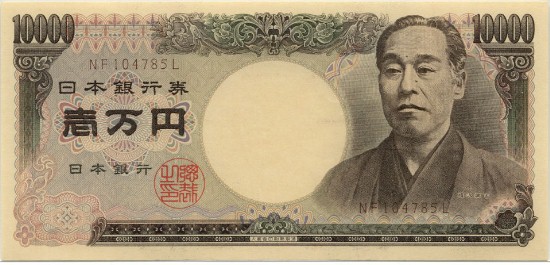
Japan's Ministry of Finance recorded a monthly-record ¥15.4 trillion ($98.6bn) spent on foreign-exchange intervention in the month through 26 August 2026, part of it conducted jointly with the US Treasury — the first time Washington has joined a Japanese intervention this directly since the two prior US currency interventions this century, in 2000 and 2011. To fund the operation, Japan's holdings of foreign securities fell $87.8bn in August, a decline analysts say points to Tokyo selling US Treasuries, most likely short-dated ones. Despite the record spend, the relief was brief: by 1 September the yen was trading near ¥160 to the dollar, not far from where it stood before the intervention began.

Why did it happen?
The underlying driver is a straightforward interest-rate gap: the Bank of Japan has kept its policy rate accommodative even as US rates sit far higher, which makes it profitable to borrow yen and invest the proceeds in dollar assets — the 'carry trade.' That flow pushes the yen down, and when it weakened toward ¥164, both governments judged the move disorderly enough to intervene jointly rather than leave it to Japan alone.
LikelyWho benefits?
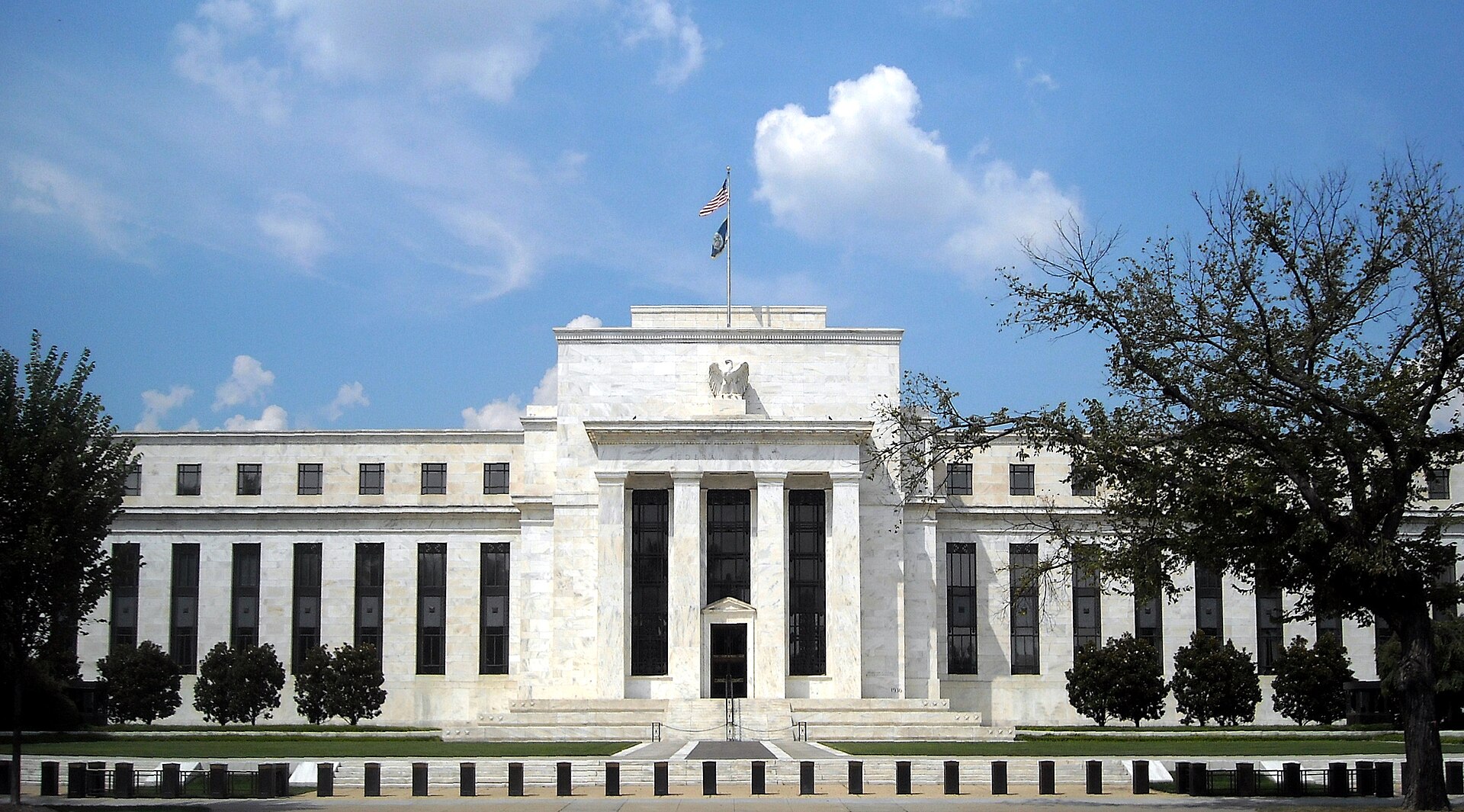
In the near term, the intervention gave the Federal Reserve a coordination partner that shares the cost of managing a currency move Washington also worries about — and gave the Fed's own new dollar-liquidity backstop, the expanded FIMA Repo Facility, a live use case, letting future interventions draw on Fed liquidity instead of forcing more Treasury sales. Leveraged investors holding short-yen positions arguably benefit too, in that a temporarily stronger yen let some rebuild or adjust positions at a better rate — but this is not something either side has confirmed as a goal.
Who loses?
Japan's own reserves take the direct hit — $87.8bn in foreign-securities holdings gone in a month for a currency effect that lasted roughly two weeks before fading. More broadly, anyone relying on a stable, deep buyer base for US Treasuries has reason for concern: a major foreign holder selling at this scale, even in short-dated paper, is the kind of event Bessent's own Treasury has said it wants to avoid.
What happened?
The Ministry of Finance's own monthly release confirms 30 July-26 August 2026 as the period covered by its most recent foreign-exchange intervention report — the period in which Japan's spending hit a record. Analysts Atsushi Takeda (Itochu Research Institute) and Prashant Newnaha (TD Securities), cited in reporting on the Treasury-holdings drop, both concluded Japan 'most likely' sold US Treasuries — and specifically short-dated ones, which are more liquid and carry less risk of disturbing long-term yields, a distinction Newnaha called 'probable' given their liquidity advantages. The $87.8bn fall in foreign-securities holdings tracks closely with the scale of the intervention itself, which is the evidence for the sourcing claim rather than an official confirmation — Tokyo does not publish which securities it sells. OMFIF's analysis frames the US Treasury's direct participation as unusual: the US has intervened in currency markets only twice this century before this, in 2000 (buying euros with G7 partners) and 2011 (selling yen after the Fukushima disaster), both times as 50/50 Fed-Treasury operations alongside collective G7 action — a genuinely multilateral posture this year's unilateral US-Japan pairing does not share. By 1 September, with the Bank of Japan's policy rate still at 1.0% against a Federal Reserve target range of 3.5-3.75%, USD/JPY was trading in the 159.98-160.00 range — evidence, per one analysis of the intervention's durability, that 'repeated intervention with only brief currency relief would suggest that policy is fighting — rather than reversing — the underlying rate differential.'
Why did it happen?
OMFIF's analysis is explicit that the yen's weakness reflects 'doubts about Japan's macroeconomic policy' rather than a one-off shock: the Bank of Japan has maintained accommodative policy despite inflation, and the resulting rate differential against the Federal Reserve is what fuels carry-trade activity, where investors borrow cheap yen to fund higher-yielding positions elsewhere. US Treasury Secretary Bessent's participation is read in the same analysis as motivated partly by contagion risk — 'a weakening yen could drag down other Asian currencies' — and partly by a more self-interested concern: that continued yen selling would eventually require Japan to sell US government bonds to fund it, exactly the outcome that materialized in August. The Savior Wealth analysis frames the September data point starkly: with the BOJ still at 1.0% and the Fed at 3.50-3.75%, intervention is 'fighting — rather than reversing' the rate gap, meaning the underlying cause was never addressed by the August spending, only its symptom. Likely rather than confirmed, because neither government has stated the intervention's precise decision threshold or trigger point in the reporting available — the rate-differential explanation is the analysts' read of the pattern, not an official rationale.
LikelyWho benefits?
The Federal Reserve's expansion of its Foreign and International Monetary Authorities (FIMA) Repo Facility, noted in the Savior Wealth analysis as part of this episode, gives Japan (and other central banks) a way to raise dollars against Treasury collateral without selling the underlying bonds outright — precisely the tool that would prevent a repeat of August's $87.8bn holdings drop. If it is used before the next intervention, both central banks benefit: Japan avoids further balance-sheet erosion and the US avoids the yield pressure that comes with a large sudden seller entering the Treasury market. On the market side, the same analysis documents heavy speculative positioning — net short yen futures at 63,298 contracts as of 25 August — meaning leveraged funds with short-yen exposure had unrealized losses that a stronger yen (even briefly) let some close out or hedge. Uncertain, because no source here documents actual trading behavior confirming funds exploited the window, only the positioning data that makes it plausible.
Who loses?
The $87.8bn reduction in Japan's foreign-securities holdings is the most direct, measured cost of this episode — money spent for an effect that, per the September data, had substantially faded within about two weeks. That is a genuinely poor trade in isolation: a record monthly spend that did not durably move the exchange rate the underlying rate differential still explains. The Savior Wealth analysis's carry-trade section adds a second, more speculative loss scenario: it lists the August 2024 unwind as a precedent — a episode in which the TOPIX fell 12% in a single day, the S&P 500 fell 3%, the VIX traded above 60, and Bitcoin and Ethereum fell as much as 20% — and notes that net short yen positioning (63,298 contracts as of 25 August 2026) remains large enough that a disorderly unwind, though smaller than 2024's, 'remains possible.' Rated likely rather than confirmed because the Treasury-holdings loss is measured and reported directly, while the carry-trade unwind risk is a documented possibility in the cited analysis, not an event that has actually occurred in this cycle.
Domino Effect
The causal chain so far. Read the dates against each other — that is the whole argument.
Central bank interventions are rarely meant to fix an exchange rate permanently; they are usually meant to slow a disorderly move and discourage one-way speculative bets. Read that way, a two-week reprieve that let leveraged short-yen positions partially unwind without a 2024-style one-day crash is a success on its own terms, not a failure — the underlying rate gap was never the thing intervention claimed to fix. What would settle this either way is whether Japan has to intervene again at a similar scale before the Fed-BOJ rate gap itself narrows — a repeat within weeks would support the 'fighting, not reversing' read; a longer gap before the next intervention would support the 'bought time' read.
Corrections & revisions
noneEvery change to this analysis since publication, with the reason. We append here — we don't rewrite. A number that changes silently is indistinguishable from never having been wrong.
RSS feed- No corrections yet. When we get something wrong, the fix is logged here rather than quietly applied.
Sources
4 sources
Every source behind the Trust Index above. Follow them — a trust score you can't check is decoration.
Nothing here stands alone. This story is one node in a wider web — every card is another thread you can pull.