Finland and Sweden Completed NATO's Arctic Encirclement of Russia. Moscow's Answer Is a Fourfold Troop Buildup on the Border.
What happened?
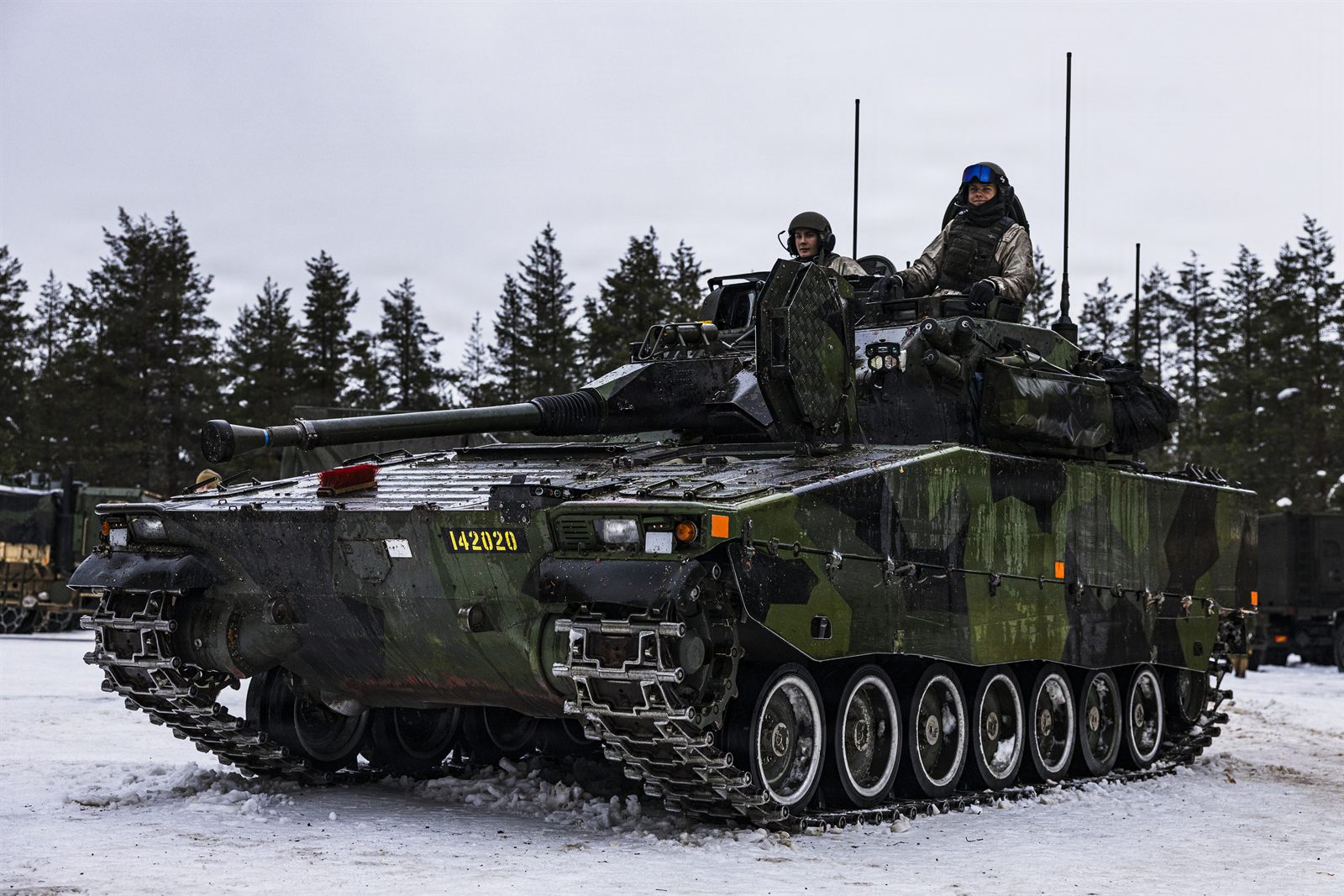
On 11 February 2026 NATO launched Arctic Sentry, a stepped-up military posture across the region, and in June 2026 it stood up a multinational Forward Land Force in Finland, led by Sweden, with around 600 personnel and an option to expand to 1,200. Russia's answer has been building for longer: Finland's own army commander says Russia could now deploy up to 80,000 troops along the Finnish border, four times the roughly 20,000 stationed there before, alongside a new garrison in Karelia that could add up to 15,000 more.
Why did it happen?
Finland and Sweden joining NATO in 2023 and 2024 closed the last gap in the alliance's ring around Russia's Arctic coastline — Norway, Denmark, Iceland, the US and Canada were already members. Moscow had warned for years that exactly this would happen if the Nordic states abandoned neutrality, and its military build-up along the new NATO border is the response it had signalled. Underneath the troop movements, retreating ice is opening shipping routes and resource access on a timeline no treaty anticipated, which raises the stakes of who holds a military position here well beyond symbolism.
LikelyWho can actually operate up there — and who is catching up?
Troop numbers make headlines, but the harder-to-fake measure of Arctic power is who can physically get through the ice. Russia has 45 polar icebreakers, including eight nuclear-powered vessels capable of breaking through three metres of ice, and plans ten more plus 46 support vessels by 2035. The US has far fewer and is racing to catch up, finalising more than $6 billion in contracts through 2026 for eleven new Arctic Security Cutters — the first of which is not due until 2028. China has no nuclear icebreakers at all, but its container voyages on the Northern Sea Route rose from about two experimental runs in 2020 to fourteen in 2025, with more planned in 2026 — it is buying experience, not yet profit.
Who benefits, and who is most exposed?
Russia gains a shorter shipping route and a growing Chinese customer for it, even while losing the military buffer it used to have on land. NATO and the Nordic states gain interoperability and an early position on a frontier that used to be an afterthought. China gains a foothold without needing a coastline at all. The most exposed party is Finland itself — it now shares NATO's longest border with Russia, and is the specific frontier Russia's own commanders have named as the one facing the largest troop increase.
LikelyIs this heading toward conflict, or does polar diplomacy still function?
Both things are true at once, which is the honest answer. The Arctic Council — the main forum that used to manage disputes here — has been largely frozen since Russia's full invasion of Ukraine, with the other seven members boycotting Russia-linked proceedings on everything from climate research to oil drilling. But it has not collapsed outright: Denmark took over the council's chairmanship in 2025 and got all eight Arctic states, Russia included, to sign a joint statement affirming a shared commitment to peace, stability and cooperation. Whether that thin diplomatic thread holds while the military build-up accelerates underneath it is the real open question.
UncertainWhat happened?
NATO launched Arctic Sentry on 11 February 2026, strengthening deterrence and defence activity across the alliance's northern flank, and followed it in June 2026 by establishing a multinational military presence in Finland under its Forward Land Forces framework — led by Sweden, with contributions from several other allies, totalling roughly 600 personnel with room to grow to 1,200 if needed. On the other side of the border, a joint investigation published by Meduza in June 2026 mapped a substantial Russian military buildup along its entire NATO-facing frontier through the winter of 2025–2026, including new infrastructure opposite Finland and Norway. Finnish Army Commander Pasi Välimäki has said Russia could now field up to 80,000 troops along the Finnish border — a fourfold rise from the roughly 20,000 stationed there before Finland joined NATO — and that a new garrison under active development in Karelia could add a further 15,000.
Why did it happen?
Finland's accession in April 2023 and Sweden's in March 2024 completed a structural shift: every Arctic coastal or near-Arctic NATO candidate had joined, leaving Russia the only Arctic Council member outside the alliance and its Arctic land border almost entirely NATO-facing. Russia had long treated Nordic NATO membership as an active threat rather than a hypothetical one, and its own military planners frame the resulting posture explicitly as encirclement — a framing NATO officials do not accept but Russia's build-up behaves as though it does. The military logic sits on top of a physical one: Arctic sea ice is retreating faster than most projections assumed a decade ago, opening the Northern Sea Route and exposing resource deposits — oil, gas, and critical minerals — that were previously locked under ice not just seasonally but for practical purposes permanently. Neither NATO's expansion nor Russia's response required the ice to be the reason, but the melting is what turns a border dispute into a contest over a frontier that is newly worth holding.
LikelyWho can actually operate up there — and who is catching up?
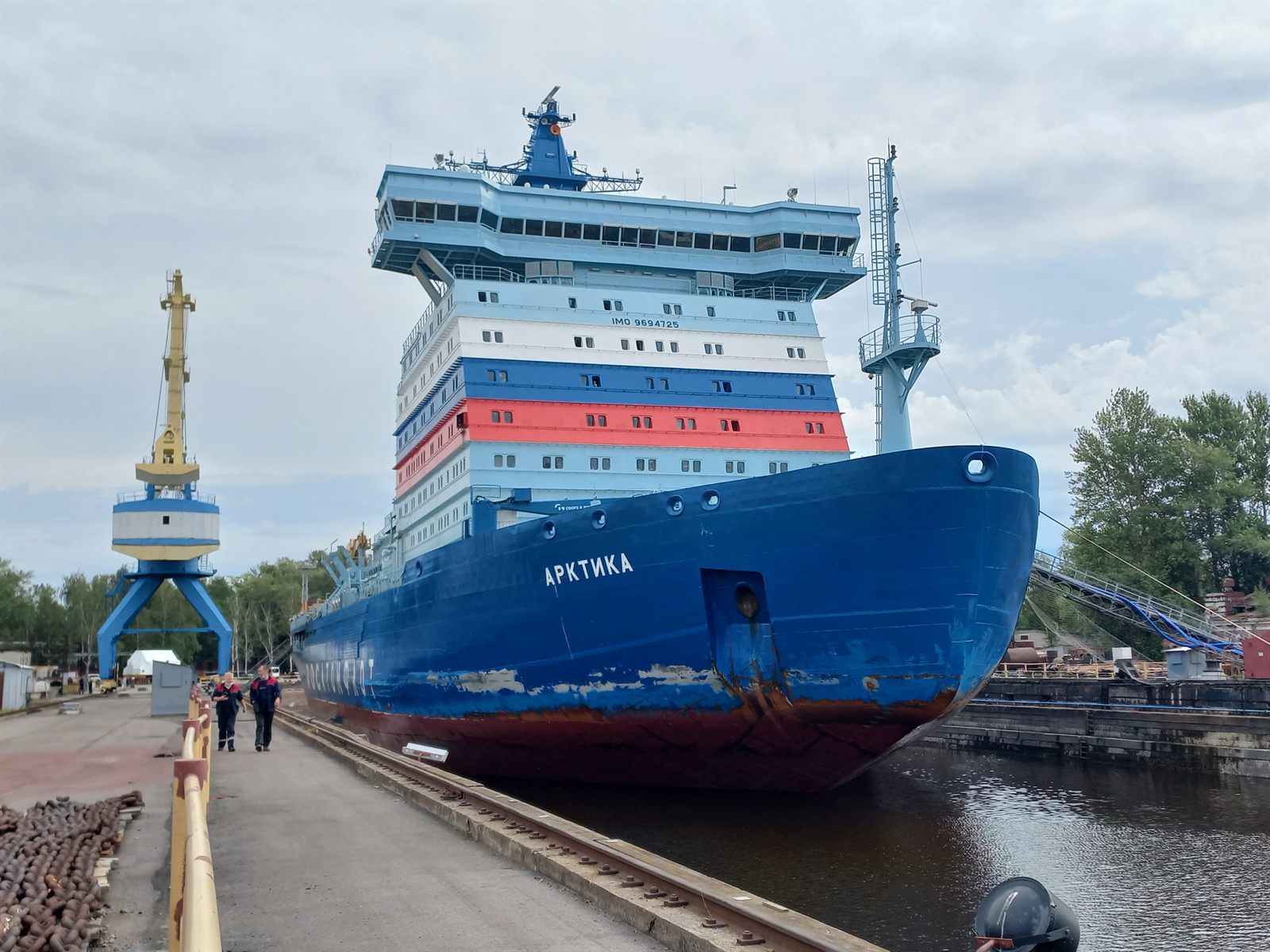
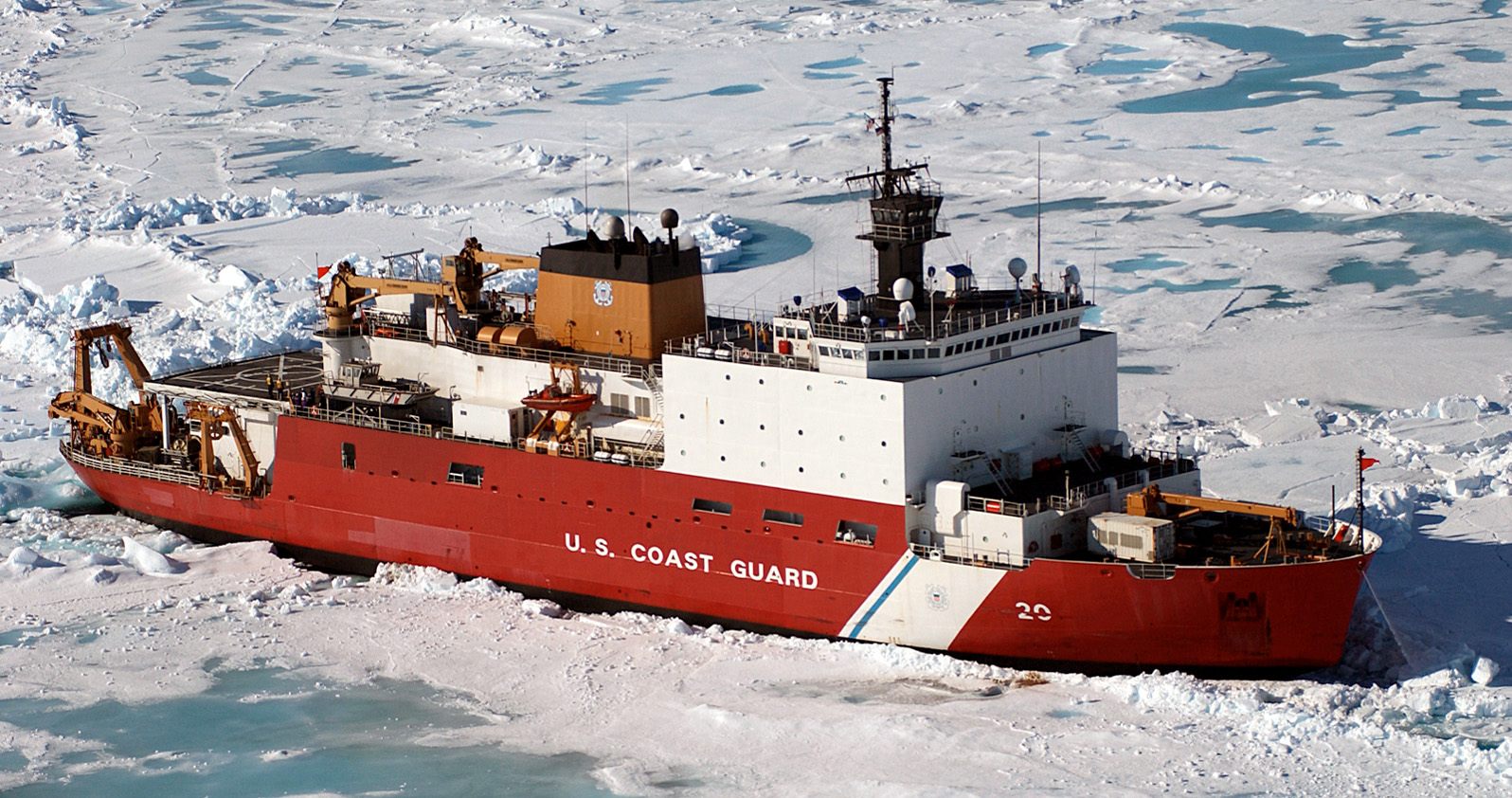
Russia's polar icebreaker fleet stands at 45 vessels, including eight nuclear-powered ships — among them the newest Project 22220-class, capable of breaking ice up to three metres thick — and Moscow has announced plans to add ten more icebreakers and 46 salvage and rescue vessels by 2035 to extend its control of the Northern Sea Route. The United States, by contrast, operates a far smaller fleet, which is why 2026 saw a burst of contracting activity: the Department of Homeland Security finalised contracts for six new Arctic Security Cutters in mid-2026 — four with Bollinger Shipyards worth roughly $2.2 billion and two with Rauma Marine Constructions in Finland worth roughly $1.1 billion — on top of an earlier $3.5 billion contract with Davie Defense for five more, bringing the planned fleet to eleven vessels. None will be delivered before 2028, and full delivery of the programme runs out to the mid-2030s, meaning the capability gap with Russia will not close for at least a decade. China holds no nuclear-icebreaker capability and calls itself a 'near-Arctic state' with no coastline to back the claim, but its Northern Sea Route container traffic has grown from roughly two experimental transits in 2020 to fourteen in 2025, with further expansion planned for 2026 — a pattern analysts read as China banking operational experience against a future in which the route is commercially reliable, rather than chasing near-term profit.
Who benefits, and who is most exposed?
Russia's Northern Sea Route ambitions benefit from both the retreating ice and China's growing willingness to use it, which is the one part of this picture where Moscow and Beijing's interests run in the same direction even as Moscow's relationship with NATO deteriorates on land. NATO and the Nordic states gain a forward military position, an integrated command structure through Arctic Sentry and the Finland Forward Land Force, and — for Sweden and Finland specifically — the security guarantee that was the entire point of joining. China gains strategic optionality: near-Arctic-state framing, growing NSR shipping experience, and a diplomatic footing to influence the region's governance without needing to hold any Arctic territory itself. The most exposed actor is Finland, which now carries NATO's longest land border with Russia and is the specific location its own military leadership has flagged for the sharpest possible troop increase — from roughly 20,000 to a potential 80,000 — a live illustration of the gap between joining an alliance for protection and being the border the alliance's deterrent is actually tested on first.
LikelyIs this heading toward conflict, or does polar diplomacy still function?
The Arctic Council, historically the region's central forum for cooperation, has been substantially sidelined since Russia's full-scale invasion of Ukraine in 2022: the other seven member states agreed to boycott meetings chaired by or involving Russia, pausing joint work across issues from climate research to oil-drilling governance, and researchers at the Belfer Center describe an institution 'struggling to live up to its role' amid tensions compounded by shifting US policy as well. Yet the forum has not been abandoned. Denmark assumed the council's chairmanship for 2025–2027 and, in taking it up, secured a joint statement from all eight Arctic states — Russia included — reaffirming their commitment to 'peace, stability, and cooperation in the Arctic'. Scholars pressing for what they call 'restraint and diplomacy' argue that low-level technical and scientific cooperation has quietly continued even as security cooperation has frozen, and that the Arctic's unusual history of functioning cooperation through the Cold War is a resource, not a naive hope. That reading sits uneasily next to Finland's 80,000-troop warning and Russia's own winter infrastructure build-up — this analysis does not resolve which force wins, because the sources genuinely disagree, and the honest position is that both the military build-up and the diplomatic scaffolding are real and running at the same time.
UncertainDomino Effect
The causal chain so far, dated from what the sources actually report. New dominoes append as they fall.
It is possible the headline story here is not encirclement at all but a resource and shipping-route race that happens to be running alongside a military one — in which case the numbers to watch are Chinese NSR voyage counts and icebreaker deliveries, not brigade strengths. Under that reading, Russia's troop build-up is defensive theatre around a much slower, commercially driven contest for who actually controls Arctic shipping and resource access once the ice genuinely opens up, and the military posture on both sides settles into a stable, high-cost standoff rather than escalating further. This is our reasoning, not a sourced projection.
Corrections & revisions
noneEvery change to this analysis since publication, with the reason. We append here — we don't rewrite. A number that changes silently is indistinguishable from never having been wrong.
Subscribe to updates- No corrections yet. When we get something wrong, the fix is logged here rather than quietly applied.
Sources
9 sources
Every source behind the Trust Index above. Follow them — a trust score you can't check is decoration.
- NATO launches Task Force X-Arctic to strengthen awareness in the Arctic and the High North
- NATO's new Arctic presence shows that European allies are stepping up
- Joint investigation maps Russia's military buildup along its NATO border. Finland could now face 80,000 Russian troops.
- Russia Building New Infrastructure For Major Troop Deployments Along NATO's Northern Flank
- Russia to Build 10 More Icebreakers and 46 Salvage Vessels to Develop NSR
- How Chinese, Russian Arctic ambitions are fueling a U.S. polar icebreaker mission
- U.S. Coast Guard Finalizes Contracts for Six Arctic Security Cutters
- Northern Frontiers: China's Strategic Push Along The Northern Sea Route
- The Future of the Arctic Council
Nothing here stands alone. This story is one node in a wider web — every card is another thread you can pull.