Trade Through the Caucasus Sixfolded in Three Years. Georgia — the Corridor's Only Gateway to Europe — Is Turning Away From the EU That's Building It.
What happened?
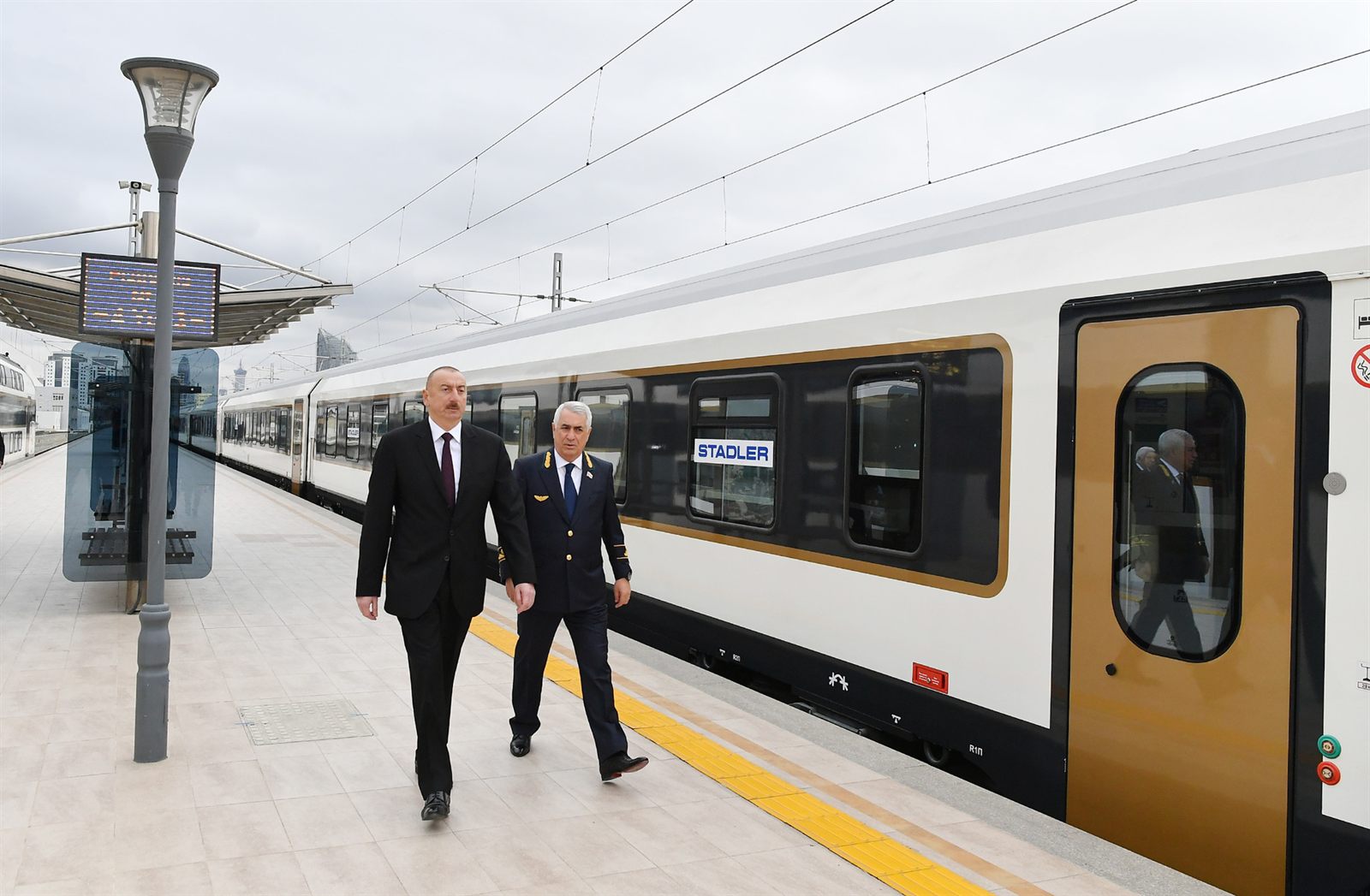
Cargo moving across the Caspian on the Middle Corridor — the rail-and-ferry route linking China and Central Asia to Europe through Azerbaijan and Georgia, avoiding Russia entirely — rose more than 63% in 2024 alone to 4.1 million tonnes, a sixfold rise from 2019–2021 levels. The Baku-Tbilisi-Kars railway, the corridor's western backbone, entered full commercial operation on 2 June 2026 after a multi-year upgrade, and the EU and its development bank have pledged billions to keep building the route out.
ConfirmedWhy did it happen?
Russia's invasion of Ukraine and the sanctions that followed made the old Russia-transit route politically and legally toxic for Western-bound cargo, and shippers started looking for a way around it. The Middle Corridor is the only rail-and-sea link between China and Europe that never touches Russian soil — which is exactly why the EU, keen to cut dependence on both Russia and a purely maritime route through the Suez Canal and the Red Sea, has been willing to fund it, and why 2026's Iran war gave it a further, more sudden push.
LikelyHow big is this route, actually — and where does it bottleneck?
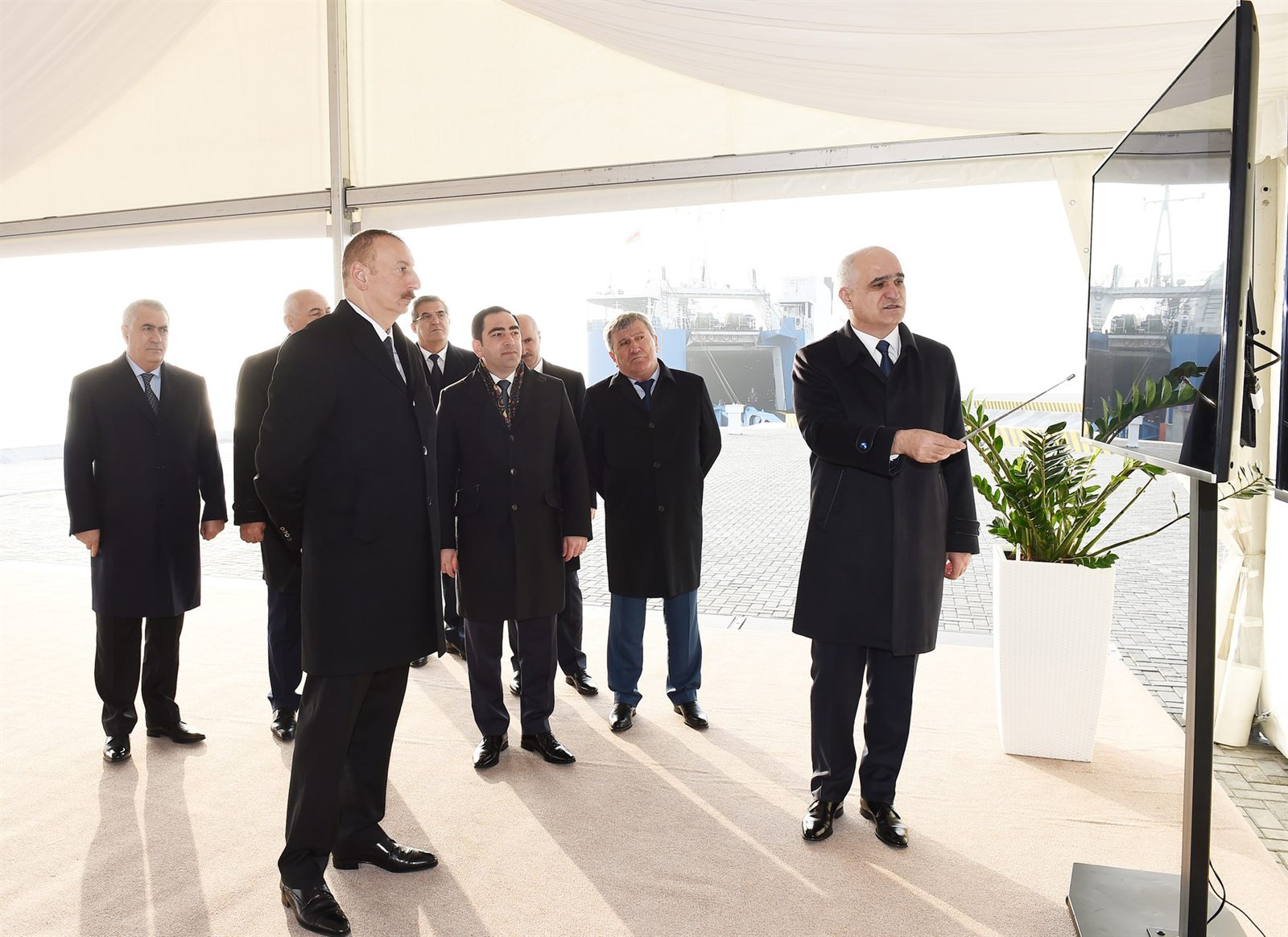
The growth numbers are real, but the base was tiny, and the corridor is still small next to what it is supposed to replace. Even at its 2024 volume, the Middle Corridor carried only about 6% of the tonnage the Russian route it is meant to bypass can handle. Georgia is the sole gateway to Europe, its port capacity is close to full, and delays across the route can stretch to 40 days or more — and the flagship deep-water port meant to relieve that bottleneck, Anaklia, just lost the Chinese consortium that was supposed to build it.
Who benefits — and who is competing for the route?
Azerbaijan and Georgia benefit directly, as transit-fee earners and as newly strategic real estate on the map — and Azerbaijan stands to gain again as the invited investor in Anaklia now that China has stepped back. The EU benefits from a Russia-free trade lane and a partial hedge against Red Sea risk. Russia is the clearest loser, forfeiting transit revenue and strategic leverage over a route it no longer controls, and there is reporting that it has quietly worked to slow the corridor's development rather than accept the loss outright.
LikelyDoes the corridor's political foundation match the money being poured into it?
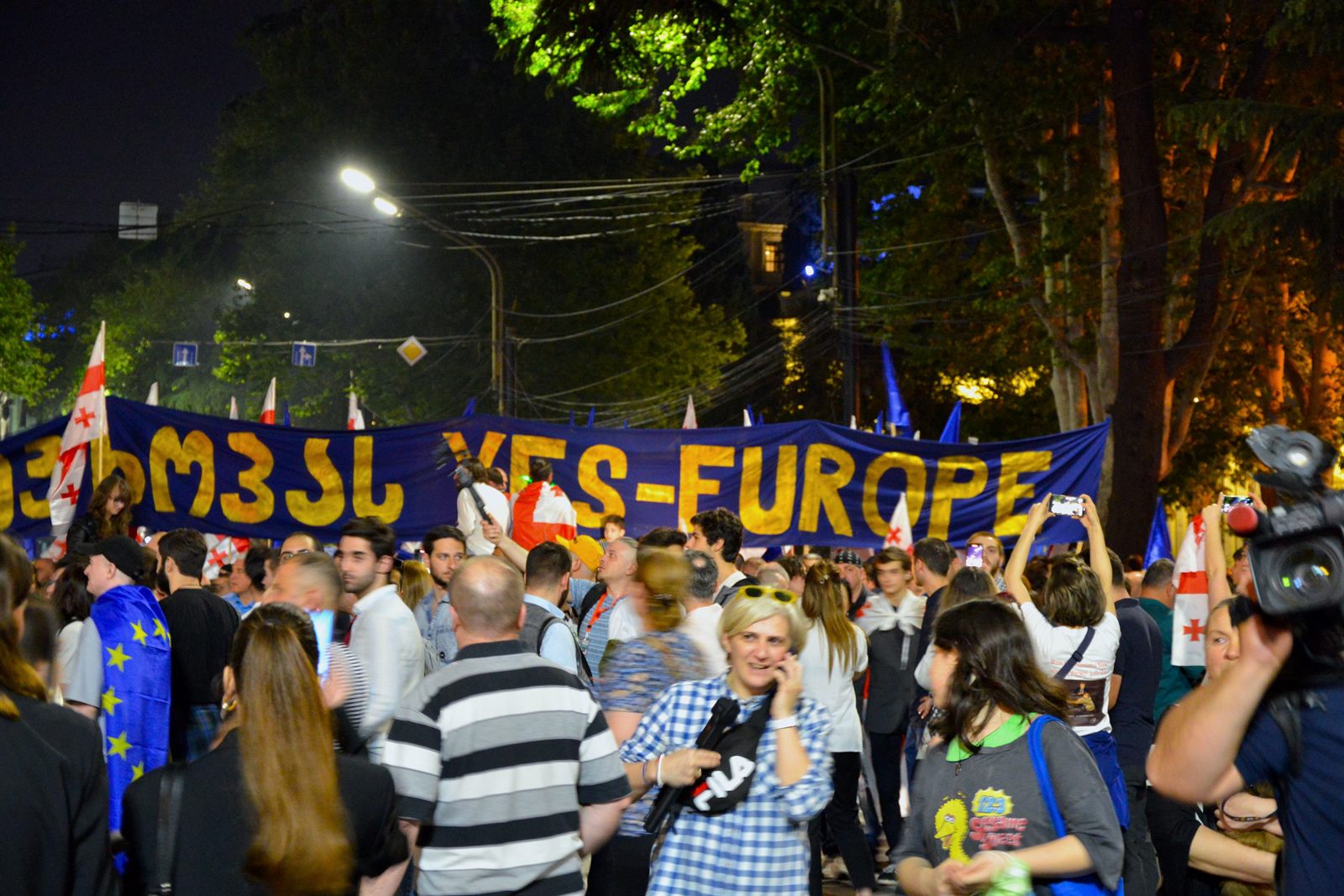
This is the real tension, and it is not resolved. The EU is funding a trade corridor whose only gateway to Europe is a country that, at the same moment, walked away from EU membership. Georgia's government suspended its own EU accession process in November 2024, the EU formally paused it in December 2024, and the government has spent 2025 and 2026 enforcing a Russian-style 'foreign agents' law against the civil-society groups that protested the decision — while still expecting European investment to keep flowing into its ports and railways. Whether that contradiction is stable or eventually forces a reckoning is genuinely open.
What happened?
Cargo throughput on the Trans-Caspian International Transport Route (TITR, the 'Middle Corridor') expanded from 0.6–0.8 million tonnes a year in 2019–2021 to more than 4.5 million tonnes in 2024 — a more than sixfold rise in three years — with the Caspian Sea crossing alone up over 63% year-on-year to 4.1 million tonnes. The momentum has continued into 2026: Azerbaijan Railways carried 350 China-origin block trains in the first eleven months of 2025, up 34% year-on-year, and the Baku-Tbilisi-Kars (BTK) railway — upgraded to 5 million tonnes of annual capacity after reconstructing its Georgian section — entered full commercial operation on 2 June 2026, Xinhua reported, following completion of the bogie-changing terminal that lets trains cross between the region's different rail gauges without unloading. On the financing side, the EU and the European Bank for Reconstruction and Development had pledged over €10 billion through the Global Gateway initiative for Central Asian and Caucasus transport connectivity by late 2025, with further money earmarked since specifically for the Middle Corridor.
ConfirmedWhy did it happen?
The structural driver is the war: Russia's invasion of Ukraine and the resulting sanctions regime made routing China–Europe freight through Russia both a compliance risk and, increasingly, a reputational one, and the Middle Corridor is the one established alternative that avoids Russian territory entirely. The EU's interest compounds two separate anxieties — reducing dependence on Russia, and reducing dependence on the Suez Canal / Red Sea maritime route — which is why Global Gateway money has followed, formalised at a Luxembourg summit with Central Asian and Caucasus leaders in October 2025. The most acute recent driver was more sudden: BTK's weekly freight traffic rose 35% in a single week in March 2026 as the US–Iran war disrupted shipping and trade patterns in the wider region, sending cargo looking for a landlocked detour. None of this required the Caucasus states to do anything except be in the right place — the corridor's boom so far is substantially a function of what shippers are avoiding, not yet of the corridor's own capacity or reliability.
LikelyHow big is this route, actually — and where does it bottleneck?
The Carnegie Endowment's Russia-Eurasia programme put the scale question plainly in April 2026: the Middle Corridor handles roughly 6% of the annual 100-million-tonne capacity of the Russian 'Northern Corridor' it is positioned to replace, and growth has exposed rather than resolved the route's bottlenecks — infrastructure gaps, governance friction and geopolitical risk stretch transit times to 40 days or longer in some cases, against a straightforward maritime alternative that is often faster even with its own disruptions. Georgia is the corridor's only sea gateway to Europe, and its existing port capacity is nearing exhaustion — which is why Anaklia, a planned deep-water port on Georgia's Black Sea coast, matters so much. A Chinese consortium led by China Communications Construction Company had held a 49% stake in the project since 2024, but on 6 July 2026 Georgia's economy minister announced the consortium had exited; the state will now develop Anaklia itself under a 'landlord' model, retaining ownership of the core infrastructure and inviting Middle Corridor countries — Azerbaijan named specifically, not Western partners — to operate terminals. The government's own transport strategy now targets $7 billion in combined investment (Anaklia, rail modernisation, highways) by 2032, with the port's first operations not expected before 2029. World Bank and Asian Development Bank projections still foresee the corridor's total volume roughly tripling by 2030 — but that forecast assumes the bottlenecks get funded and finished, and the port that was meant to relieve the biggest one just changed owners.
Who benefits — and who is competing for the route?
Azerbaijan is the corridor's biggest near-term winner on two fronts — 350 China-origin block trains in eleven months as the route's logistics anchor, and now a named invitation to invest in Anaklia's terminals after China's consortium withdrew, on top of the Southern Gas Corridor leverage it already holds running its own gas to the EU in parallel. Georgia's gain is more contested, discussed below. For outside powers: the EU gets a trade lane that answers two dependencies at once (Russia and the Suez chokepoint) and has put its money where that logic is with billions in Global Gateway pledges. China's position has actually receded at the corridor's single most strategic asset — its consortium's exit from Anaklia leaves its overland stake in the Middle Corridor resting on rail freight volumes rather than port ownership. Russia is the one actor with an unambiguous interest in the corridor failing — it loses transit fees and a lever of regional control it has held for two centuries — and reporting from the region has raised the question of whether Moscow is quietly working to slow the corridor's development rather than simply losing the business gracefully. Iran, bordering both Armenia and Azerbaijan, has its own transit ambitions and is wary of a Turkic-aligned corridor running along its northern frontier.
LikelyDoes the corridor's political foundation match the money being poured into it?
Georgia occupies the position every Middle Corridor map depends on — the only land gateway from the Caucasus into EU territory — at the exact moment its own relationship with the EU has fractured. Prime Minister Kobakhidze's government announced in November 2024 that it would suspend EU accession activities until 2028; the EU formally suspended Georgia's accession process the following month. Mass protests followed and, per Human Rights Watch's February 2026 World Report, have continued into 2026 alongside a government crackdown that includes a 'foreign agent' law — modelled on Russia's — requiring any NGO receiving more than 20% of its funding from abroad to register, a threshold that catches most of Georgia's civil-society and rule-of-law organisations, which draw roughly 90% of their funding externally. Brussels' Global Gateway money keeps arriving anyway, because the corridor's logic (bypass Russia, hedge Suez) does not depend on Tbilisi's domestic politics — but the two tracks running in opposite directions, EU cash flowing in while EU-accession trust flows out, is not a contradiction this analysis can resolve. It is the fault line to watch, not a settled outcome.
Domino Effect
The causal chain so far, dated from what the sources actually report. New dominoes append as they fall.
It is possible the EU-accession standoff and the corridor investment run on entirely separate tracks indefinitely — Brussels keeps funding rail and ports because the bypass-Russia logic holds regardless of who governs in Tbilisi, and Georgia's government keeps taking the money because transit fees do not require EU membership. Corridors have survived stranger political mismatches. But the counterfactual worth naming is what happens if Georgia's Western partners eventually tie further Global Gateway disbursement to the political relationship, the way EU funding has been conditioned elsewhere — at which point the two tracks stop being separate, and the corridor's biggest bottleneck stops being engineering and becomes politics. This is our reasoning, not a sourced prediction.
Corrections & revisions
noneEvery change to this analysis since publication, with the reason. We append here — we don't rewrite. A number that changes silently is indistinguishable from never having been wrong.
Subscribe to updates- No corrections yet. When we get something wrong, the fix is logged here rather than quietly applied.
Sources
9 sources
Every source behind the Trust Index above. Follow them — a trust score you can't check is decoration.
- Middle Corridor Makes Progress Toward Operational Reality
- Azerbaijan's transit boom entering its industrial phase
- Upgraded Baku-Tbilisi-Kars railway enters full operation
- How to Maximize the Middle Corridor — June 2026 Edition
- EU Readies New Trade Routes — And A Challenge To Beijing And Moscow — At Luxembourg Summit
- The Much-Touted Middle Corridor Transport Route Could Prove a Dead End
- China pulls out of Anaklia Port, Georgia to take over development
- Is Russia quietly blocking the development of the Middle Corridor?
- World Report 2026: Georgia
Nothing here stands alone. This story is one node in a wider web — every card is another thread you can pull.