Britain Bet Its Indo-Pacific Strategy on AUKUS. The Submarines Arrive in the 2030s — and Its Own MPs Say the Programme Is Slipping.
What happened?
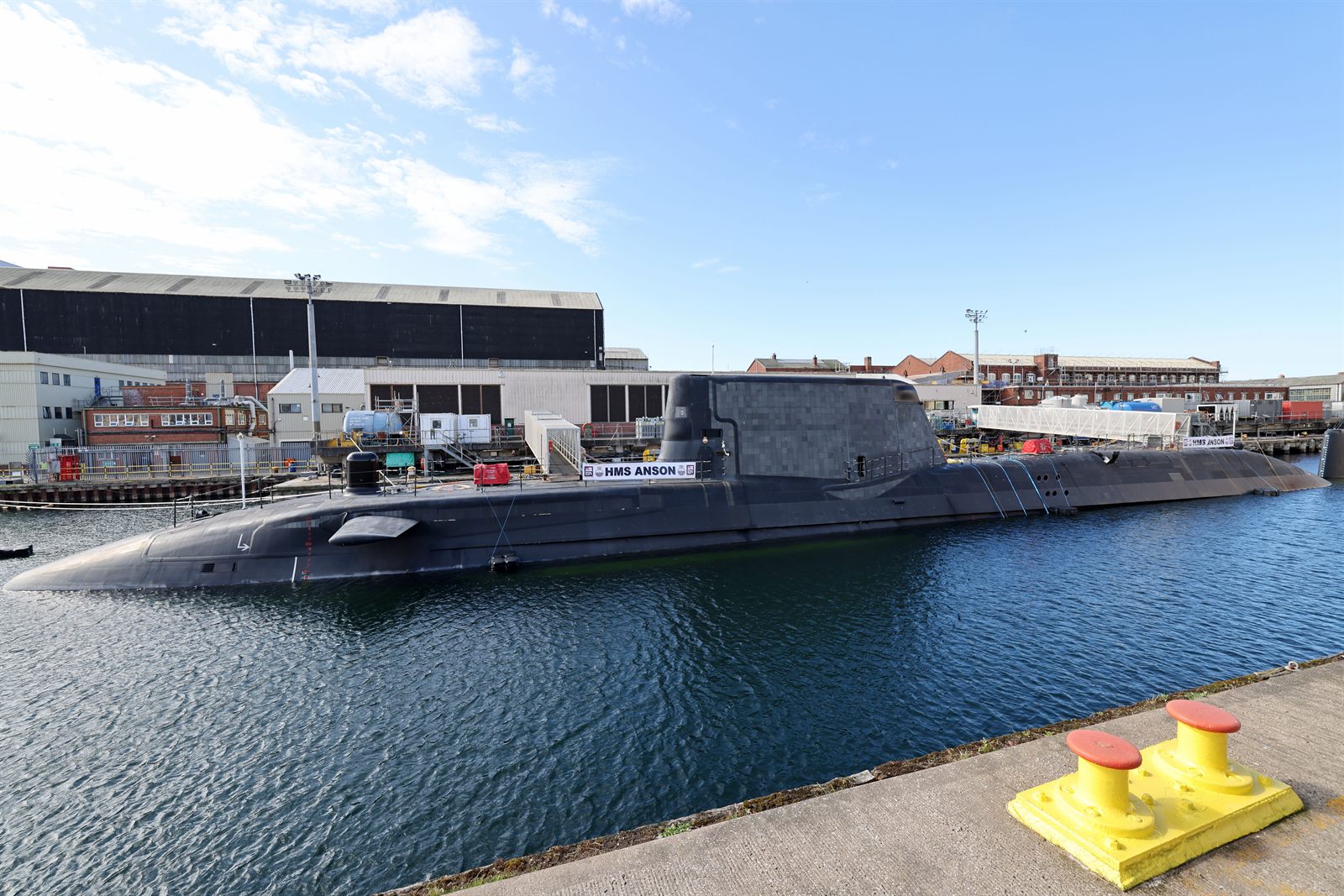
On 30 June 2026 the UK government published its Defence Investment Plan, reconfirming that Britain will build up to 12 SSN-AUKUS nuclear-powered attack submarines — steel is due to be cut on the first at Barrow-in-Furness in 2027. The plan puts £20 billion more into the Defence Nuclear Enterprise over the next four years than the previous four, on top of billions already committed to the shipyard and to Rolls-Royce's reactor plant in Derby.
ConfirmedWhy did it happen?
AUKUS exists because the US, UK and Australia decided China's naval expansion in the Indo-Pacific had moved faster than their own deterrent. Pillar 1 gives Australia nuclear-powered submarines it could never build alone; Pillar 2 pairs the three militaries on the technology — AI, cyber, quantum, hypersonics — that a future contest is expected to turn on. For Britain specifically, doubling down buys it a seat at the table in a region it otherwise has little Indo-Pacific presence to leverage.
LikelyWhat does Britain actually put in, and what does it get out?
Britain supplies the submarine design (SSN-AUKUS is based on the Royal Navy's next-generation boat) and the reactor technology from Rolls-Royce in Derby. In return it gets an export order worth up to £20 billion over 25 years, thousands of jobs rebuilding a shipyard that had shrunk for decades, and continuous submarine production it can point to as proof its defence industry can still deliver at scale.
Who benefits, and where is the pact actually exposed?
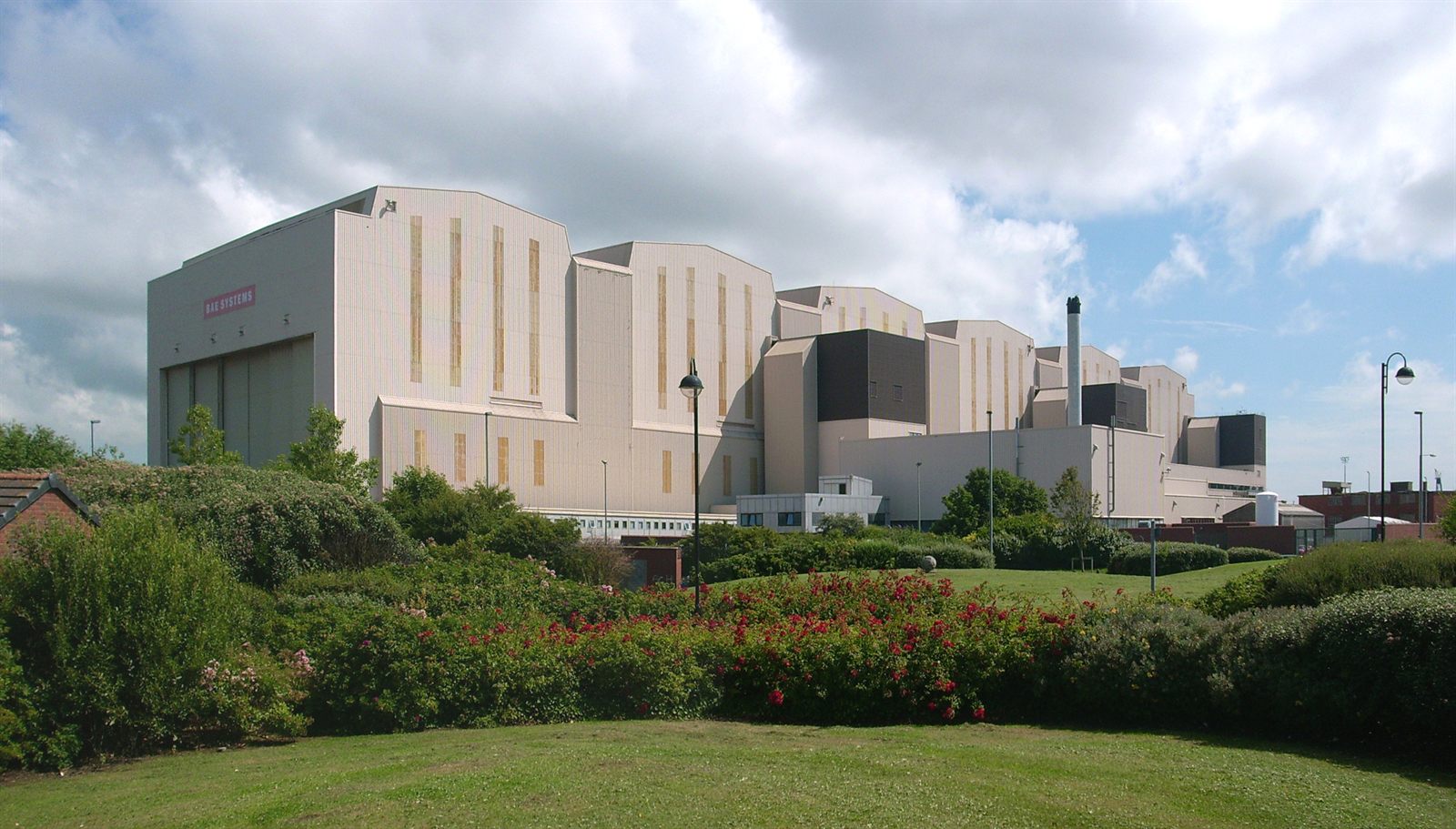
Barrow's workforce, BAE Systems, Rolls-Royce and the wider UK defence supply chain benefit immediately — real jobs, real contracts, now. Australia is supposed to benefit by the early 2030s with second-hand Virginia-class boats bought from the US navy. That second leg is the exposed one: America's own shipyards are not building Virginia-class submarines fast enough to keep its own navy supplied, let alone spare any for Australia.
Does Britain's own execution match the ambition?
This is the open question. Britain's own Parliament says no, not yet: a Defence Committee inquiry in April 2026 found 'shortcomings and failings' across the programme, warned that political leadership behind it 'has faded', and pointed to a telling incident — when HMS Anson, on a rotational visit meant to prove Britain could sustain a presence in Australian waters, turned out to be the Royal Navy's only attack submarine at sea and had to be recalled when a crisis broke out in the Gulf. China, for its part, calls the whole pact a nuclear-proliferation risk. Neither objection kills the programme — but neither is answered by a press release, either.
UncertainWhat happened?
The UK's Defence Investment Plan, published 30 June 2026, reconfirms the SSN-AUKUS programme — up to 12 nuclear-powered, conventionally armed attack submarines, replacing the Royal Navy's seven Astute-class boats from the late 2030s. Steel-cutting on the first hull is due at BAE Systems' Barrow-in-Furness yard in 2027, with the government targeting roughly one submarine every eighteen months at peak production. The plan places £20 billion of new money into the ring-fenced Defence Nuclear Enterprise over the four years to 2029/30 compared with the previous four, part of a nuclear-submarine enterprise budget now running to tens of billions once maintenance and infrastructure are included. Four PWR3+ reactor cores are already under construction at Rolls-Royce's Raynesway site to power both British and Australian boats, and the government's own commentary flags the caveat critics have seized on: 'up to' 12 is a ceiling, not a guarantee.
ConfirmedWhy did it happen?
AUKUS was announced in September 2021 explicitly as a response to China's military buildup and its territorial assertiveness in the South China Sea and around Taiwan. Pillar 1 — the submarine programme — gives Australia its first nuclear-powered attack-submarine capability, filling a gap it cannot fill domestically; Pillar 2 is the broader, more open-ended track co-developing artificial intelligence, autonomous systems, quantum technology and cyber capability, formalised further at the first AUKUS Pillar II Forum on 16 June 2026, which brought government, industry and academia together to shape the 'responsible design and development' of those capabilities. For the UK, the calculus is as much about alliance standing as hardware: AUKUS is one of the clearest post-Brexit vehicles for 'Global Britain' to matter to the Indo-Pacific security order without a large forward-deployed fleet of its own, by contributing the submarine design and reactor technology the US and Australia both need.
LikelyWhat does Britain actually put in, and what does it get out?
SSN-AUKUS is a British-designed boat: the hull is based on the Royal Navy's next-generation submarine, and Rolls-Royce's Derby site is building the PWR3+ reactor plants that will power both UK and Australian versions. The UK government put the trade value of the 50-year AUKUS treaty with Australia at up to £20 billion in exports over 25 years when it was signed, on top of jobs: BAE Systems alone expects to spend roughly £7.5 billion with around 1,500 supply-chain companies over the programme's life, sustaining close to 30,000 jobs UK-wide, nearly half in the North West. Barrow's own workforce has grown from just under 11,000 in 2023 to about 13,500 now, with a further roughly 5,000 planned by 2027. That is the industrial argument for AUKUS in one sentence: a shipyard town rebuilt, a reactor line restarted, an export order that outlasts any one government — set against a first operational boat that is still more than a decade away.
Who benefits, and where is the pact actually exposed?
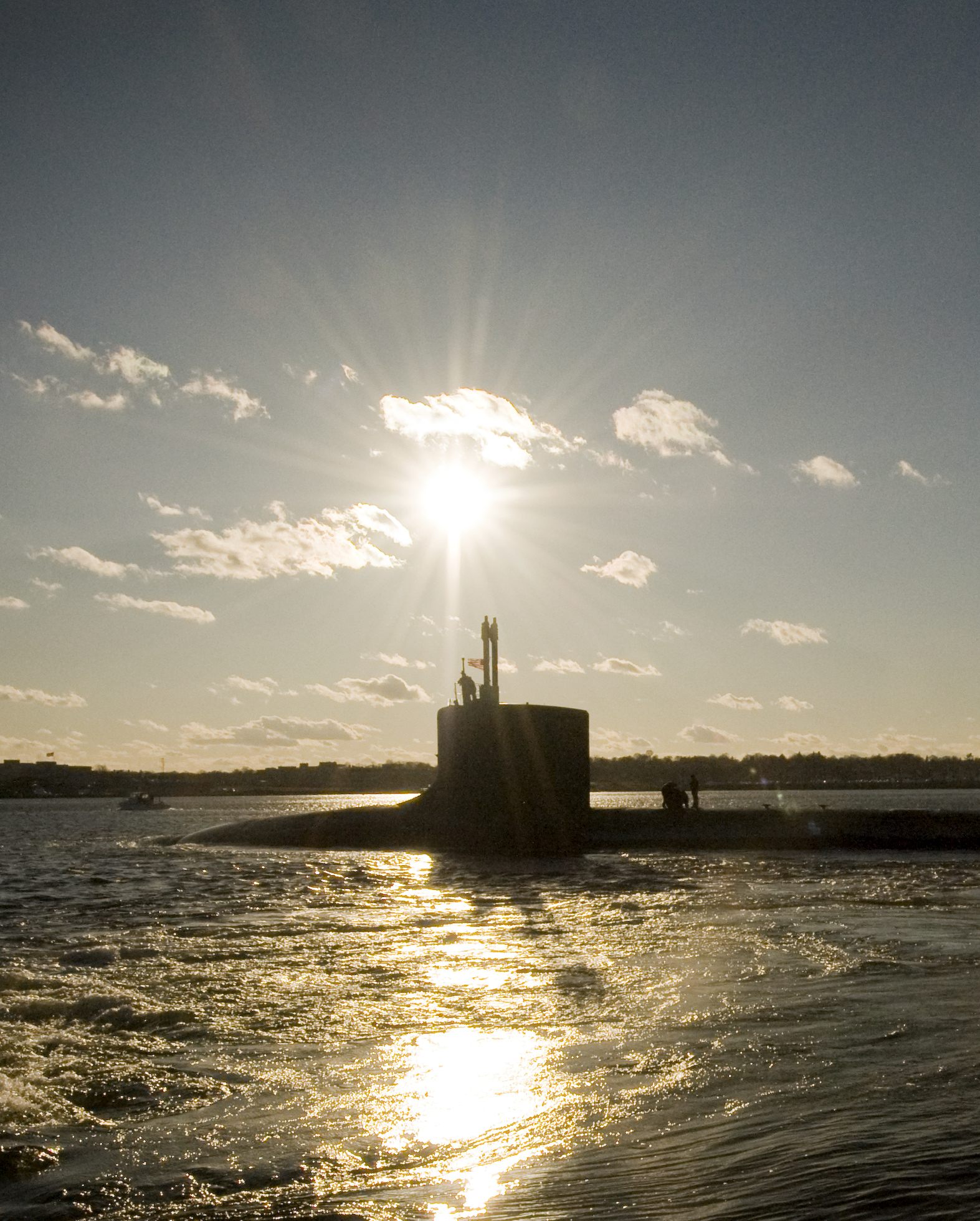
The near-term winners are concrete: Barrow-in-Furness, Rolls-Royce's Raynesway plant, and a UK submarine supply chain that had been shrinking for a generation. The exposed leg of the deal sits with the US side of Pillar 1. Congress's own research service has tracked the problem for years: Virginia-class production has never reached the US Navy's stated goal of 2.0 boats a year and has run at roughly 1.1 to 1.2 a year since 2022, while Australia's schedule needs the US yards to reach about 2.33 a year before any boats can be spared for transfer. Admiral Daryl Caudle, one of the Navy's senior submarine officers, has said a stable rate of even two a year is unlikely before the 2030s — the same decade Australia is due to start receiving three to five second-hand Virginia-class boats. More than 18 of the US Navy's 48 in-service attack submarines are currently laid up awaiting maintenance, which is the industrial reality any transfer to Australia has to be carved out of.
Does Britain's own execution match the ambition?
The clearest counter-read comes from inside the UK system itself. The House of Commons Defence Committee's AUKUS inquiry, published 28 April 2026, concluded that shortcomings and failings in delivery 'threaten to prevent that promise becoming a reality', and that the political leadership needed to sustain a programme of AUKUS's length, cost and complexity 'has faded'. Its sharpest evidence: the Royal Navy's existing Astute-class boats have been stretched to, or beyond, their limits by the commitment to keep rotating submarines through Australian ports to prove AUKUS credibility — and when HMS Anson visited Australia in February 2026 it was, at that moment, Britain's only attack submarine at sea, forcing a rapid recall when a crisis broke out in the Gulf. The committee also found that shipyard-upgrade timelines, backed by a committed £200 million, have already slipped. Separately, China's government has restated its opposition to AUKUS on nearly every available platform, arguing the transfer of naval reactors and weapons-grade enriched uranium to a non-nuclear-weapon state 'amplifies the risk of nuclear proliferation' and stokes bloc confrontation and an arms race — a claim the AUKUS states reject but have not resolved through the IAEA process China keeps raising it in. Both critiques point at the same underlying fact: the deterrent effect AUKUS is meant to have on China is being priced in today, years before the submarines that are supposed to deliver it exist.
UncertainDomino Effect
The causal chain so far, dated from what the sources actually report. New dominoes append as they fall.
Suppose the mid-2030s arrive and Virginia-class production is still under 1.5 boats a year. The UK's own submarines would still get built — Barrow's order book does not depend on Washington. What would not happen is the Australian leg of Pillar 1: no spare Virginia-class hulls to transfer, no early-2030s nuclear-submarine capability for Canberra, and a trilateral pact that is, in practice, an Anglo-American programme with an Australian name on it until SSN-AUKUS boats of its own arrive even later. That is the honest counterfactual the 'up to 12' UK figure does not resolve, because it was never the constrained leg of the deal. This is our reasoning, not a sourced projection.
Corrections & revisions
noneEvery change to this analysis since publication, with the reason. We append here — we don't rewrite. A number that changes silently is indistinguishable from never having been wrong.
Subscribe to updates- No corrections yet. When we get something wrong, the fix is logged here rather than quietly applied.
Sources
7 sources
Every source behind the Trust Index above. Follow them — a trust score you can't check is decoration.
- £15 billion new funding boost to transform Armed Forces and keep the UK safe (Defence Investment Plan 2026)
- Britain confirms plan to build 12 new nuclear attack subs
- AUKUS treaty deepens UK-Australia defence partnership to generate £20 billion in trade and create 7,000 new jobs
- AUKUS — House of Commons Defence Committee inquiry report
- AUKUS submarine programme – progress, pressure and realities
- Report to Congress on the Virginia-class Submarine Program and AUKUS Pillar I
- Embassy Spokesperson's response on relevant remarks in the AUKUS Defense Ministers Joint Statement
Nothing here stands alone. This story is one node in a wider web — every card is another thread you can pull.