Europe Cut the Gas Off Itself. The Price Shock Came From Iran.
What happened?
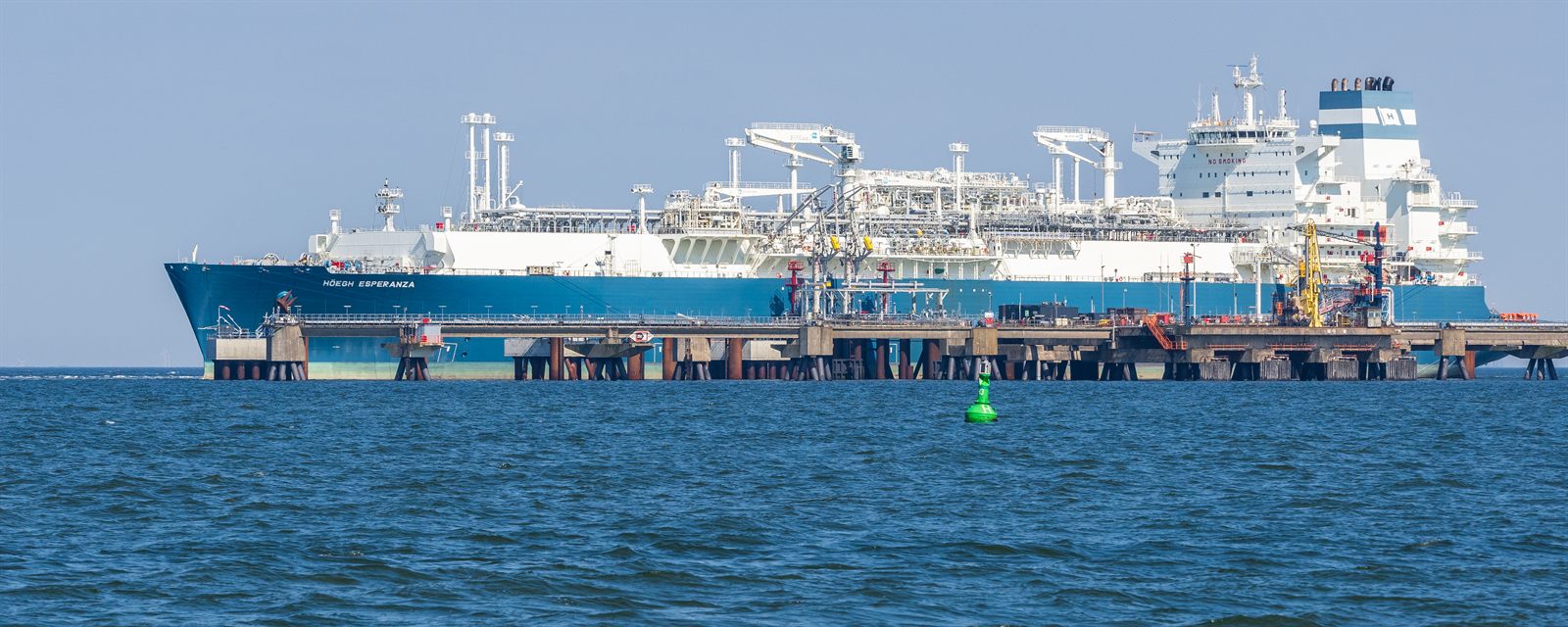
Europe did not get cut off. Europe cut itself off — by law. The EU banned Russian gas on a fixed schedule, and the first pipeline deadline passed on 17 June 2026.
Why did it happen?
To stop paying Russia. Even shrunken, the trade still sent billions to Moscow every year — the ban closes the last account rather than reacting to a cut.
LikelyWho benefits?
American LNG exporters, overwhelmingly. US gas now covers 30% of everything the EU imports — the Russian share was not spread around, it was handed to one supplier.
ConfirmedWho loses?
German industry — but not the way the story usually goes. Gas got 8% cheaper this year. The March price spike came from Iran, not Russia.
What happened?
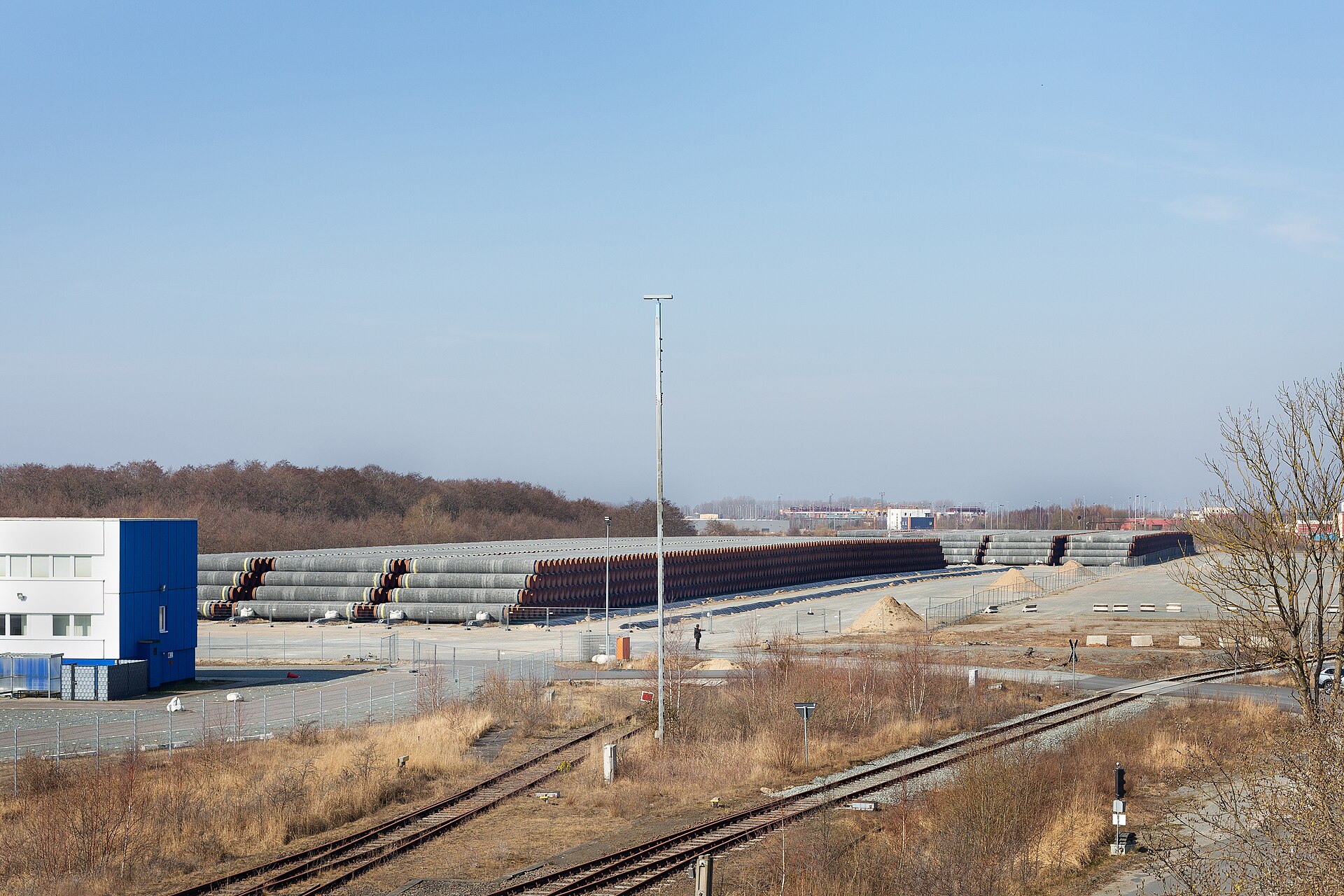
Regulation (EU) 2026/261, adopted by the Council on 26 January 2026 and published in the Official Journal on 2 February, prohibits Russian gas imports on a stepwise timetable: short-term LNG contracts from 25 April 2026 (Article 4(1)), short-term pipeline contracts from 17 June 2026 (Article 4(1)), long-term LNG from 1 January 2027 (Article 4(3)) and long-term pipeline from 30 September 2027 (Article 4(2)), extendable to 1 November 2027 for member states meeting storage-risk criteria. Exemptions apply only to contracts concluded before 17 June 2025. The direction of the 2022 story has reversed: the supply relationship is ending on a European timetable, written into European law.
Why did it happen?
Recital 6 of the Regulation puts Russian gas revenues at EUR 15 billion in 2024, and Recital 1 records that remaining volumes entering the Union are 'still significant'. The instrument is a revenue measure carried in an energy vehicle: by the time it applied, ACER put Russian flows at close to 240 TWh over winter 2025/26 — around 14% of EU gas imports and falling. Reading the motive as revenue denial rather than supply security is our interpretation of the recitals, not a claim the Regulation makes about itself, which is why this sits at Likely rather than Confirmed.
LikelyWho benefits?
ACER records EU LNG imports up 20% year-on-year across winter 2025/26, driven by a 45% rise in US deliveries; US LNG now accounts for 30% of EU gas imports, against Russian flows of close to 240 TWh (around 14%). Qatar supplied 7% of EU LNG, equivalent to about 4% of gas imports. The Russian share has not been replaced by diversification so much as by substitution: one concentrated dependence exchanged for another, with the difference that this one is seaborne and priced against a global market rather than delivered by a pipeline that only points one way.
ConfirmedWho loses?
Destatis records German natural gas (distribution) producer prices down 8.0% year-on-year in March 2026. Energy overall rose 7.5% month-on-month — the largest monthly move since August 2022 — but Destatis attributes it to the Iran–Middle East conflict via mineral oil products, not to Russian supply. Energy-intensive industry sits at 80–85% of pre-crisis output and has for roughly two years (BDEW, reported by Clean Energy Wire), while AGEB records primary energy consumption down about 2% in Q1 2026 on weak production rather than scarcity. The counter-case is structural and we take it seriously: Columbia's CGEP argues European gas is permanently repriced at EUR 25–30/MWh against a historical EUR 15–20, and that the industrial decline reflects lost competitiveness rather than a shock that reverses. On that reading Russia's leverage did land — just slowly, permanently, and years before this Regulation. This is Uncertain because both readings fit the same numbers.
Domino Effect
The causal chain so far, on the Regulation's own timetable. New dominoes append as they fall.
Russian flows were already down to around 14% of EU imports before the ban applied (ACER, winter 2025/26), so the Regulation ratified a decline that earlier sanctions and rerouting had largely delivered. Without it, the residual volumes — worth roughly EUR 15 billion to Russia in 2024 — would most likely have persisted at a similar share rather than rebounded, because the pipeline capacity to carry substantially more no longer points at Europe. The Regulation's real effect is less about volume than about optionality: it removes the ability to reverse, which is precisely what made the residual trade valuable as leverage.
Corrections & revisions
6Every change to this analysis since publication, with the reason. We append here — we don't rewrite. A number that changes silently is indistinguishable from never having been wrong.
-
CLARIFICATIONSharpened 4 prediction labels to state an explicit, measurable resolution criterion and date.An estimate that cannot resolve can never enter the public track record. These were tracked without a criterion by which they could be scored Confirmed, Incorrect or Partially Correct; the underlying estimates and their history are unchanged.
-
CORRECTIONReplaced the invented scenario with sourced reporting — and reversed the direction of the story. 74 → 66This page was written as an illustrative sample to demonstrate the format. It modelled Russia curtailing gas to Europe: flows cut 60%, energy prices spiking 3.1×, a sample metric of 28.3 against 22.1. None of it was sourced, and the real record runs the other way. The EU legislated the end of Russian gas itself (Regulation (EU) 2026/261, pipeline deadline 17 June 2026); German gas producer prices are down 8.0% year-on-year, not up; and the March 2026 energy spike came from the Iran–Middle East conflict, not Moscow. Every figure is now taken from a citation you can follow, and the route flipped from Russia→Europe to Europe→Russia because the acting party changed. The Impact Score fell from 74 to 66: the sourced picture is less acute than the invented one, and we are not going to keep the higher number just because it was already published.
-
CORRECTIONLowered confidence on Q2 (Confirmed → Likely) and Q4 (Likely → Uncertain).The simple and full tabs carried separate confidence ratings and had drifted, with the simplified read systematically more confident than the considered one — aimed at the readers least able to discount it. Confidence is now one value per claim, and we took the more cautious of the two.
-
CORRECTIONRemoved the claim that 61% of readers agreed with you.The figure was hardcoded and shown identically whether you voted Yes or No — 61% agreeing with each side is 122% of readers. It told everyone the crowd was on their side. There is no vote store yet, so no aggregate is shown at all.
-
CORRECTIONImpact Score corrected. 78 → 74The headline had been typed in by hand and disagreed with its own five dimensions, which average 73.6. It is now computed from them. We could have kept 78 by reverse-engineering weights that produced it — that would have been choosing the answer first and calling it a method.
-
CORRECTIONRemoved every source attribution to a real organization.Figures were presented as sourced from ENTSOG, IEA, Destatis, Eurostat, UNHCR, OFAC and others that were never consulted. The numbers are illustrative estimates and are now labelled as such.
Sources
Every source behind the Trust Index above. Follow them — a trust score you can't check is decoration.
- Regulation (EU) 2026/261 phasing out Russian natural gas imports
- Key developments in European gas wholesale markets (winter 2025-2026)
- Producer prices in March 2026: -0.2% on March 2025
- German energy use down in early 2026, as heavy industries cut output
- Anatomy of the European Industrial Gas Demand Drop
Germany's predicament is not really about molecules of gas. It is about a fifty-year psychological wager — that interdependence tames power. Dostoevsky would have recognized the flaw instantly: dependence does not soften the strong, it tempts them. The data above tells you what broke; this is why it was always going to.
— the founderNothing here stands alone. This story is one node in a wider web — every card is another thread you can pull.