Broad power with one structural gap. Europe is strong on economy, diplomacy and soft power, short on energy — and every live connection here runs through that gap.
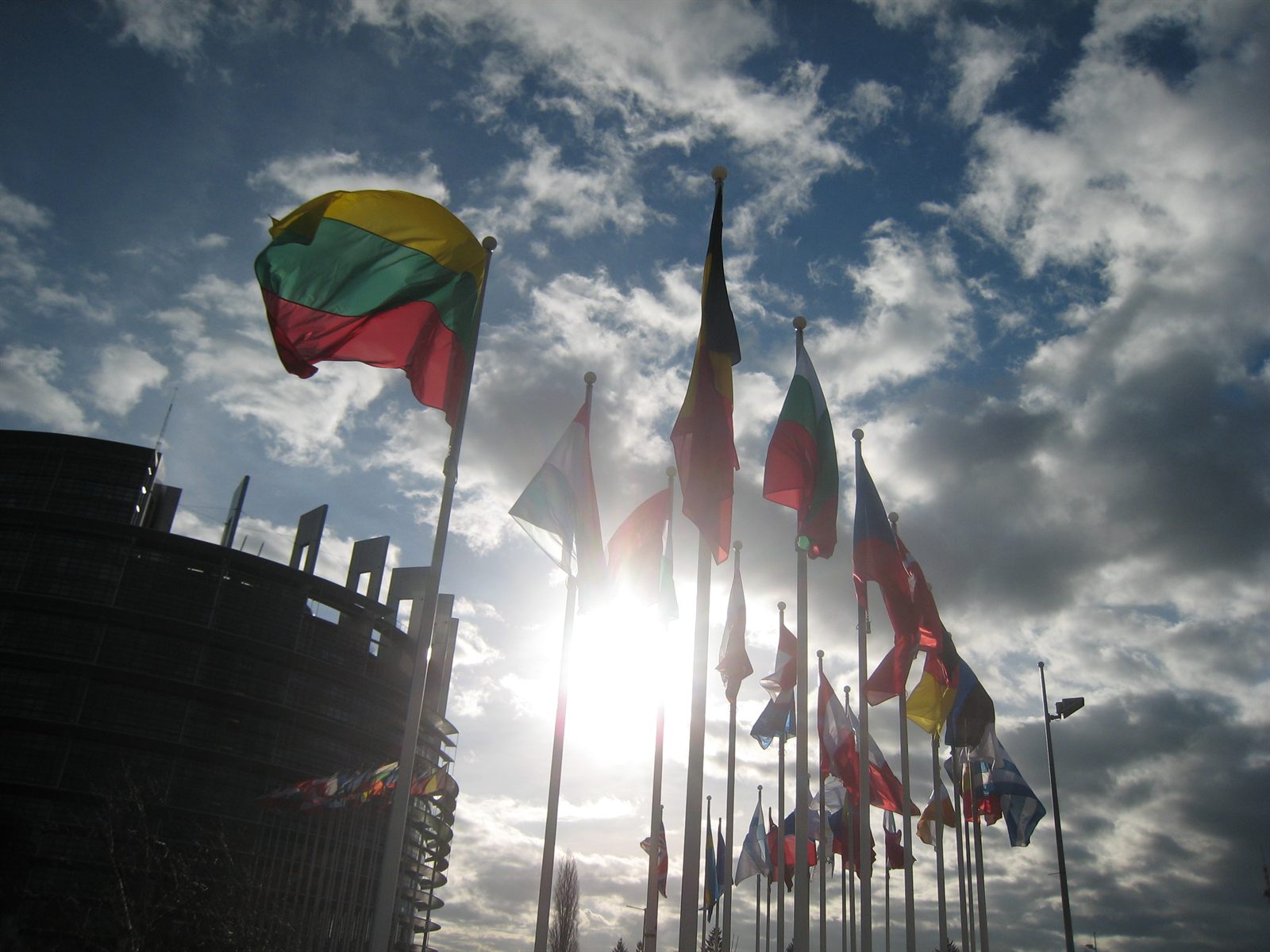
EU flags at the European Parliament, Strasbourg — the bloc that legislated its own energy break with Russia.Syced / Wikimedia Commons · CC0
STABILITY58
The institutions demonstrably still work: the Russian gas phase-out was adopted over the objections of the landlocked states it costs most, which is the bloc doing the hard version of its job rather than the easy one. Against that, unemployment at 6.3% is low but no longer falling, and energy costs and migration remain the two files that reliably move votes. Stable, and paying to stay that way.
ECONOMY48
Growth of 0.8% for 2026 after GDP fell 0.2% in Q1, with inflation at 3.0% against a 2% target and energy inflation at 8.4% — and the ECB attributes the downgrade explicitly to the war in the Middle East, not to anything European. Just below trend rather than distressed: the projection returns to 1.5% growth and 2.0% inflation by 2028, and German energy-intensive industry has been flat at 80–85% of pre-crisis output for two years, which is chronic rather than deteriorating.
CONFLICT RISK41
Not a combatant, but absorbing two wars it is not fighting: 5.9 million registered refugees from Ukraine, and an energy shock transmitted from Hormuz that the ECB says cost it growth. Higher than a bloc at peace should score, because the exposure is real and the agency is not — which is the pattern this whole hub keeps finding.
Our own considered read. Scored 0–100 against what is normal for this region — 50 is trend, not a global average. Conflict Risk is inverted: higher means more. No source publishes these three numbers; they are our synthesis of the indicators below, which are real and followable. Editorial judgment, and ours to defend. how we score
No trend arrows yet. The figures these replace were placeholders, so there is nothing honest to measure movement against — the previous number was not a worse reading, it was not a reading at all. Trends appear at the next assessment.
Europe's power is broad but unevenly distributed — strong on economy, diplomacy and soft power, structurally short on energy. The one weak axis is the one every story on this hub runs through.
Europe (EU)EU
72COMPOSITE INFLUENCE
Soft PowerSTRONGEST AXIS
Military62
Economic84
Diplomatic80
Technology82
Energy40
Soft Power86
Each axis is rated 0–100 against the other actors on this site, not against an absolute — the United States is the ceiling. The composite is a weighted average of the six. No source publishes these ratings; the formula is arithmetic, the numbers going into it are our editorial judgment. how we score