Ukraine Found a Weapon That Actually Hurts Russia. The World Is Paying the Diesel Bill.

Ukraine finally found a weapon that hurts Russia's economy — and it's hitting drivers at the pump from Kyiv to Kansas.
- Ukraine has carried out more than 70 drone strikes on Russian oil refineries since the start of 2026 — the IEA reports one successful hit roughly every three days over the first eight months — knocking half of Russia's six largest diesel producers offline or down to about a quarter of capacity.
- Named refineries hit include Kirishi (fully shut), Volgograd and NORSI (each near 25% capacity), and KINEF in Leningrad Oblast, which stopped processing entirely on 2 September; Russian diesel exports fell from roughly 2.5 million tonnes a month in June 2025 to under 1 million tonnes in June 2026, and at least 17 Russian regions have rationed fuel sales to 30-40 litres per vehicle.
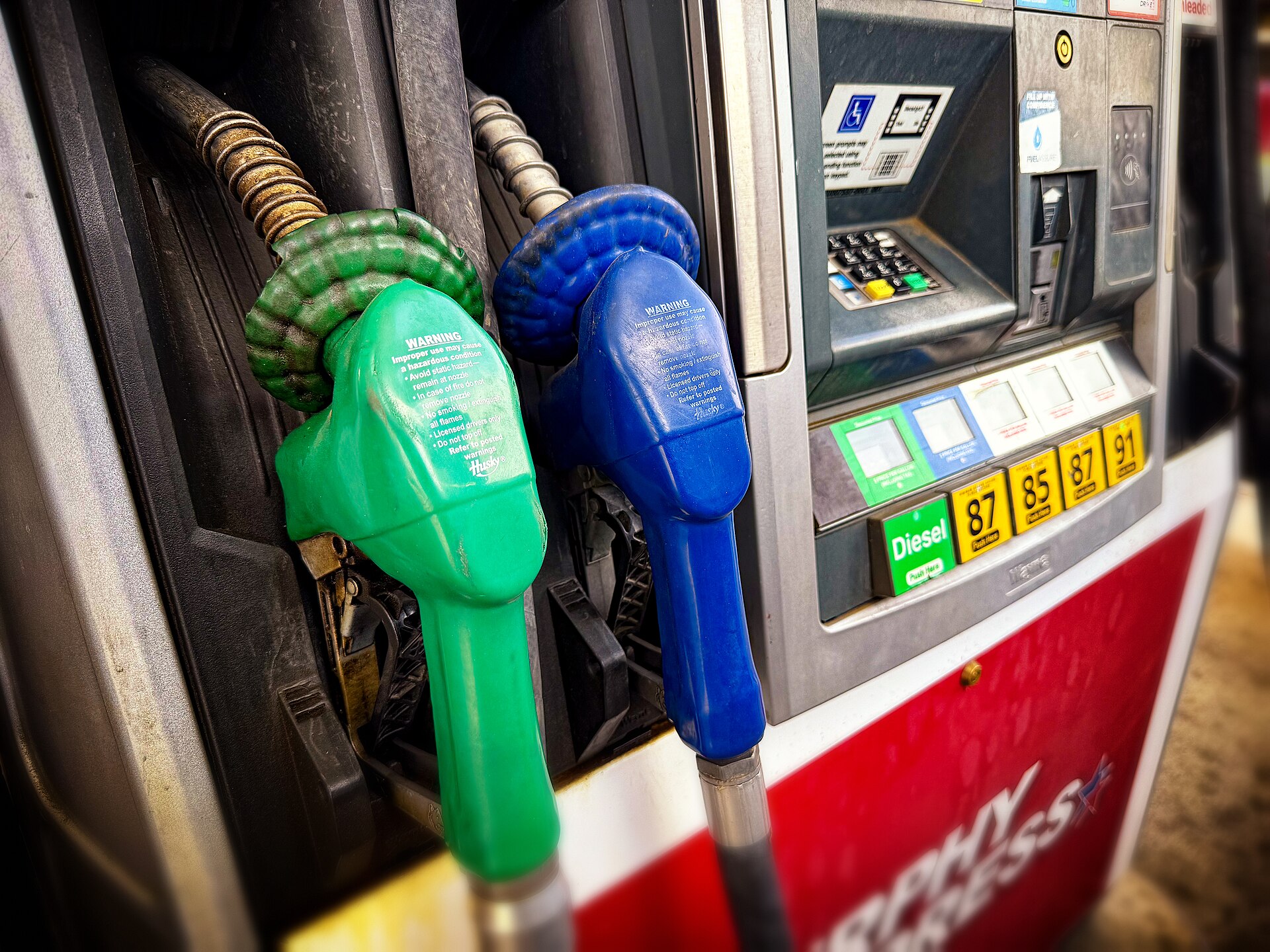
- That squeeze, layered on a separate Gulf oil-export disruption from the Iran war, pushed the US retail diesel average to an all-time high of $6.06 a gallon on 12 September 2026 — up from $3.71 a year earlier.
- Trump told reporters in Ireland on 13 September that Zelensky 'has to stop knocking out diesel fuel in Russia' because 'that's hurting the world.'
- Zelensky struck the Syzran refinery in Russia's Samara region on 15 September regardless, calling Ukraine's strikes 'effective' responses to continued Russian attacks on Ukraine's own energy grid and saying 'there is no alternative to ending this war.'
What happened?
Ukraine's drone campaign against Russian oil refineries has cut Russian refining output to its lowest level in two decades, and helped push US diesel prices to an all-time high.

Is Ukraine's campaign the whole reason diesel hit a record price?
No — it's a major factor, not the only one. A separate Gulf oil-export collapse tied to the Iran war is compounding it, and US reporting is careful to credit both.
Why did Trump ask Ukraine to stop?
Trump says the refinery strikes are driving up diesel prices that are 'hurting the world' — including, implicitly, American drivers and businesses facing record fuel costs of their own.

Did Zelensky actually stop?
No. Ukraine struck the Syzran refinery two days after Trump's request, with Zelensky saying Russia has shown no genuine restraint of its own.

What happened?
Since the start of 2026, Ukraine has struck Russian refineries in more than 70 drone attacks, hitting at least 24 separate facilities; the IEA reports one refinery successfully hit, on average, every three days across the first eight months of the year. Kirishi has been fully shut down; Volgograd and NORSI are each operating near 25% of capacity; Taneco was hit on 2 September with the damage not yet fully assessed; and KINEF, in Leningrad Oblast, completely stopped processing on 2 September. Half of Russia's six largest diesel-producing refineries have significantly reduced or halted output. The domestic effect is measurable: gasoline production covered only about 70% of domestic demand by late August, a shortfall of roughly 30,000 tonnes a day, and at least 17 Russian regions introduced fuel-sale restrictions of 30-40 litres per vehicle. Russian diesel exports fell from about 2.5 million tonnes a month in June 2025 to under 1 million tonnes in June 2026.
Is Ukraine's campaign the whole reason diesel hit a record price?
The US retail diesel average hit an all-time high of $6.06 a gallon ($1.60/litre) on 12 September 2026, up from $3.71 a gallon a year earlier — a 63% rise. Diesel affects shipping, trains and trucks moving goods worldwide, so the price is a global signal, not a US-only one. But Ukraine's refinery campaign is only one input: NBC News reporting, citing an IEA report published the same week, put combined Gulf and Russian diesel/gasoil exports at roughly 45% of global seaborne trade as of a February 2026 baseline, and said Gulf net exports had fallen to 'just over a quarter' of pre-Iran-war levels by August 2026 — a separate, larger disruption running alongside Ukraine's campaign. Moscow's own July 2026 diesel export ban removed further supply from an already tight market. Crediting the record price to Ukraine's drones alone overstates one strand of a multi-front supply shock.
Why did Trump ask Ukraine to stop?
Speaking to reporters during a visit to Ireland on 13 September 2026, Trump said: 'Mr. Zelenskyy has to do one thing: he has to stop knocking out diesel fuel in Russia... We spoke to Mr Zelenskyy about it. There are plenty of other targets. Don't hit diesel fuel. That's hurting the world.' The statement is Trump's most direct public break yet from Ukraine's own battlefield strategy, and it lands as US diesel prices hit their own record days earlier — a domestic political cost for an administration that has otherwise backed Kyiv's war effort. Trump did not specify what alternative targets he had in mind, and the framing treats Russian refining capacity as a shared global resource whose disruption cuts against US as well as Russian interests.
Did Zelensky actually stop?
On 15 September 2026, Ukrainian forces struck the Syzran refinery in Russia's Samara region — a Rosneft-owned plant roughly 75 miles west of Samara. Zelensky defended the continuation directly: 'Russia continues to attack our energy sector, regular logistics, and critical infrastructure. And our responses to them for this are tangible,' calling the strikes 'effective' and adding 'there is no alternative to ending this war.' Ukraine hit other Russian targets the same day, including a drone-production facility in Taganrog and sites in Oryol. The exchange leaves Ukraine's refinery campaign intact for now and sets up a live test of whether Trump follows a public request with any concrete pressure — financial, military-aid-related, or otherwise — if Kyiv keeps refusing.
Domino Effect
The causal chain so far, dated from what the sources actually report. New dominoes append as they fall.
Nothing in this run's sources documents Trump attaching a concrete consequence — an aid pause, a public ultimatum with a deadline — to the request made in Ireland; so far it is a stated preference, not a lever being pulled. If that changes, the dynamic shifts from Ukraine weighing a battlefield tactic against Russian retaliation to Ukraine weighing it against its own principal backer's patience, which is a materially different calculation. Whether Trump is willing to spend political capital on Russian refining capacity specifically, given his own voters are the ones paying the record diesel price, is the open question this analysis is tracking. This is our reading of what would change the calculus, not a claim any source makes explicitly.
Corrections & revisions
noneEvery change to this analysis since publication, with the reason. We append here — we don't rewrite. A number that changes silently is indistinguishable from never having been wrong.
RSS feed- No corrections yet. When we get something wrong, the fix is logged here rather than quietly applied.
Sources
4 sources
Every source behind the Trust Index above. Follow them — a trust score you can't check is decoration.
- Drone Strikes Force Half of Russia's Top Diesel Refineries to Cut Output
- Trump tells Zelenskyy to stop hitting Russian diesel supplies
- Trump calls on Ukraine to halt strikes on Russian diesel fuel, citing a global shortage
- Energy Truce In Shambles: Ukraine Strikes Russian Refinery Despite Trump's Warning Amid Global Diesel Crisis
Nothing here stands alone. This story is one node in a wider web — every card is another thread you can pull.