A Court Ruling to Protect Migrants Sent Them Swimming Into the Sea at Ceuta
A court closed one loophole for migrants — and opened a deadlier one, the same week.
What happened?
Over the ten days before 30 July 2026, between 1,500 and 2,000 people crossed from Morocco into Ceuta — Spain's, and therefore the EU's, tiny enclave on the North African coast — mostly by swimming or paddling on inflatables to Tarajal beach. At least 9 died that week alone, more than 60 over the past year. Spain has sent in the army.
Why did it happen?
On 29 June 2026, Spain's Supreme Court ruled that migrants intercepted swimming toward Ceuta or Melilla cannot be summarily handed back to Morocco the way fence-climbers can — they now get a full deportation process, which can take months. A Civil Guard spokesperson put it plainly: 'it has been a slow trickle since the Supreme Court's ruling, but today has been an explosion.'

Who benefits?
Anyone who reaches Ceuta alive by swimming now gets a genuine legal process instead of being handed back within hours — a real win for due process that migrant-rights groups spent a decade arguing for. Smugglers on the Moroccan side have something new and valuable to sell: a route the courts say Spain cannot simply reverse.
UncertainWho loses?
The people the ruling was meant to protect. Pushed toward roughly 5km of open water, at least 9 died in a single week at Tarajal — the same beach where 14 people drowned in February 2014 after Guardia Civil officers used rubber bullets and tear gas to stop them swimming ashore. No one was ever convicted over that. Ceuta's own services collapsed under the numbers, and Italy is now threatening to shut Spain out of Schengen over it.
LikelyWhat happened?
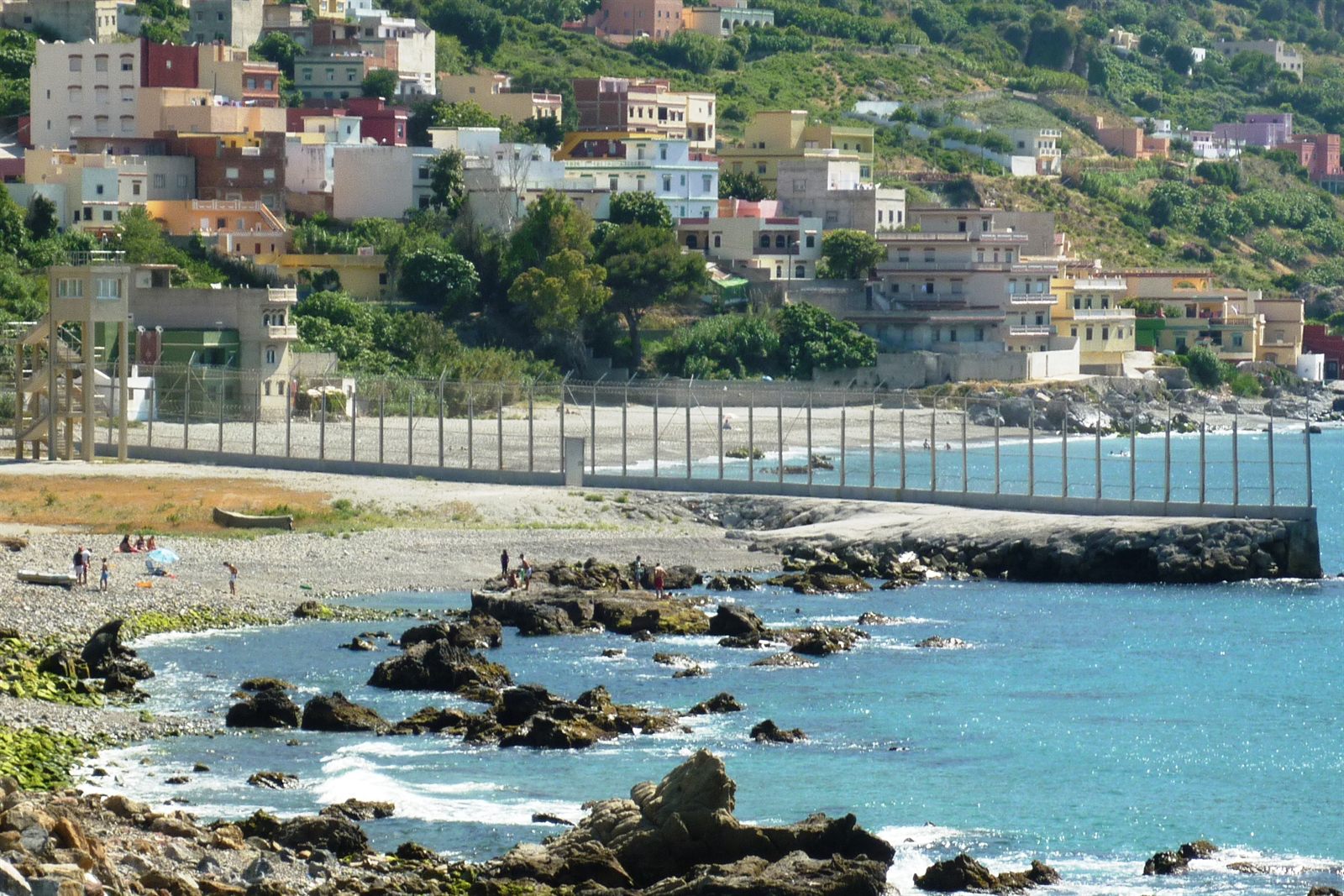
Ceuta is a Spanish city of about 85,000 people sitting on Morocco's Mediterranean coast, separated from it by a fortified fence and, at its western edge, a stretch of open water at Tarajal beach. Spain's Interior Ministry recorded 2,826 irregular arrivals there between 1 January and 15 July 2026 — up 149% on the 1,133 counted over the same months in 2025. Then the pace itself changed: Ceuta's regional government says 1,500–2,000 people entered in the ten days before 30 July, with hundreds more arriving that Thursday alone, swimming or using inflatable devices from the Moroccan town of Fnideq roughly 5km away. A Guardia Civil officers' association called it 'absolute chaos... not possible to give precise numbers, but there are thousands.' At least 9 people died in that week; more than 60 have died over the trailing 12 months. Ceuta's reception centre, built for 512 people, and a minors' shelter reported at 2,400% of capacity, both collapsed under the numbers. Madrid announced it would deploy 60 troops from the armed forces to reinforce the Civil Guard, and Prime Minister Pedro Sánchez travelled to Ceuta as the region's president, Juan Jesús Vivas, called it an 'absolute humanitarian and social emergency' — a request for a national emergency declaration the Interior Ministry declined, on the grounds that the mechanism doesn't cover migration crises.
Why did it happen?
Spain's law lets border guards perform 'devoluciones en caliente' — hot returns — on people who cross by 'overcoming established border containment elements, such as fences'. The case before the Supreme Court involved an Algerian man handed to Moroccan authorities in November 2024 after being intercepted swimming, with no formal process, no lawyer and no chance to claim asylum. Ruling on 29 June 2026, the court's Administrative Litigation Chamber found that the exceptional regime does not extend to open water: 'the maritime line's physical existence is impossible to overcome, as this physical element does not exist.' The practical effect is a sharp fork in outcomes depending on the metre of coastline a person happens to cross at — scale the fence and Spain can still turn you back within hours; swim around it and Spain must now run you through the standard, months-long deportation procedure with legal safeguards attached. A Civil Guard official summarised the bind: 'right now we cannot return them. The Supreme Court has clearly said so. Until there is a change to the law, we must grant them their rights and apply the law.' This sits at Likely rather than Confirmed because a real rival explanation exists and deserves a hearing: reporting also ties the timing to Prime Minister Sánchez's 20 July visit to Algeria, Morocco's regional rival, after which Guardia Civil sources describe Moroccan coastal patrols 'quietly easing' — a pattern with precedent, since Morocco eased its own border controls during a 2021 diplomatic row over the Polisario Front. Morocco's government states it is cooperating 'loyally and permanently' and 'actively intervening to stop many more people from reaching the exclave', which is difficult to square with Spanish police unions' accusations of Moroccan 'passivity, even complicity'. Both mechanisms can be true at once — a legal change removing the deterrent, and Morocco's own enforcement loosening for unrelated diplomatic reasons — and the reporting does not let us cleanly separate how much each one contributed.
Who benefits?
The ruling is close to a direct vindication of the position NGOs and human-rights lawyers have pressed since well before 2026: that summary return without access to a lawyer or an asylum claim violates due process, and that a stretch of open sea is not a 'border containment element' a person can be said to have 'overcome'. Anyone who now survives the swim gets exactly that process. It also lands in the same year Spain's cabinet approved, by royal decree in January 2026, legal status for roughly 500,000 undocumented migrants already living in the country since before 31 December 2025 — a scheme Sánchez defended as 'a moral imperative and an economic necessity', pointing to research on Spain's 2005 regularisation of 570,000 workers that found higher tax and social-security revenue with no measurable 'welfare magnet' effect. Whether that programme and the Ceuta ruling are read as one government pattern or two unrelated legal facts is itself contested — Italy's foreign minister explicitly cited the regularisation as evidence that Spain's whole approach 'poses a threat to national security', which is precisely the connection this analysis is not in a position to confirm or rule out. What is more straightforward: smuggling networks operating out of Fnideq and Belyounech now have a clearer product to advertise, a swim that the highest Spanish court has said cannot be summarily reversed. Uncertain, because 'benefits' here span a genuine human-rights win, an unrelated domestic policy Italy is trying to fuse to it, and a criminal trade — and the reporting does not weigh how much of the surge each explanation actually carries.
UncertainWho loses?
Tarajal has been the site of a mass migrant death before: on 6 February 2014, Guardia Civil officers fired rubber bullets, tear gas and blank cartridges at hundreds of people swimming around the border breakwater, and 14 drowned. A criminal case against 16 officers was opened, closed three times by the investigating judge, upheld on appeal in 2020, and finally archived by Spain's Supreme Court in 2022 — a decade in which, per Statewatch and the rights group PICUM, 'not a single person has been held accountable'. The July 2026 deaths recur at the same crossing point, for the mirror-image reason: not a crackdown that drove people into the water, but a legal change that made the water the rational choice. Locally, the immediate losers are Ceuta's own services — a reception centre built for 512 people and a minors' shelter reported at 2,400% of capacity both broke, and the region's president had to ask Madrid for emergency powers Madrid was not willing to grant under that name. Diplomatically, the loser may be Spain's standing in the EU: Italy's foreign minister called uncontrolled migration a threat to 'national security' and Prime Minister Meloni said Italy was prepared to consider 'extraordinary measures... including potential suspension of the Schengen area with Spain' — a step with no real precedent between two member states, and one Spain answered by summoning Italy's ambassador. The European Commission's migration commissioner offered Frontex support rather than taking a side, which is itself a kind of answer: Brussels does not appear to see this as requiring an emergency response, even as Rome frames it as one.
LikelyDomino Effect
The causal chain so far. Read the dates against each other — that is the whole argument.
Then the specific incentive this analysis turns on disappears: swimming stops being the one crossing method that guarantees a real legal process instead of an on-the-spot return. That would not have stopped people from trying — Fnideq's proximity to Ceuta predates this ruling by decades, and the 2021 crisis (10,000 people in two days) happened entirely under the old rules. But the shape of this particular surge — concentrated in the weeks after 'the Supreme Court has clearly said so' became known on the ground, and running heavily through the water rather than the fence — is hard to explain without it. The honest counterfactual isn't whether people would still come; they would. It's whether they would still be told, correctly, that swimming is now the way to avoid being sent back within hours.
Corrections & revisions
2Every change to this analysis since publication, with the reason. We append here — we don't rewrite. A number that changes silently is indistinguishable from never having been wrong.
RSS feed-
REVISITRewrote the "why this matters to you" hook. the legal fix and the deaths arrived in the same five weeks → A court closed one loophole for migrants — and opened a deadlier one, the same week.Operator decision, 2026-08-19: whyItMatters.outcome is now the page's primary hook and every analysis was rewritten to a single short, concrete, human-stakes sentence (docs/EDITORIAL.md, Permanent standards #4) — replacing several that had grown into full paragraphs or abstract policy-thesis phrasing.
-
REVISITAdded a domino step for the 30 Jul-3 Aug Italy/Spain border-control exchange, two citations, and resolved schengen-threat (yes). schengen-threat: 15% (open) → schengen-threat: resolved yesrevisit.js flagged this estimate as due within 45 days. Italy actually reintroduced Schengen border controls against Spain on 30 July and Spain reciprocated on 3 August — real government action, not the 'extraordinary measures' rhetoric the initial estimate was written against — which settles the question well before 30 Sep. Note: a separate figure surfaced this run (60,000+ crossings and 72 deaths on 30 July, per one Al Jazeera piece) conflicts sharply with this file's own sourced stat (2,826 arrivals since 1 Jan, 9 deaths in the relevant week) and was NOT used here — the discrepancy needs reconciling against primary sources before either the stat block or deaths-100 is touched, not asserted from one unreconciled figure.
Sources
9 sources
Every source behind the Trust Index above. Follow them — a trust score you can't check is decoration.
- Las claves de la sentencia del Supremo sobre las devoluciones en caliente en Ceuta
- Spanish enclave of Ceuta raises alarm as thousands cross Morocco border
- At least 9 die as thousands of migrants breach Morocco's border with Ceuta, Spain says
- Italy calls for closing Schengen area to Spain over Ceuta migrant crisis
- Morocco 'cooperating' with Spain in Ceuta migrant crisis
- Spain's mass regularisation for 500,000 undocumented migrants is not extreme, unprecedented or opportunistic
- Tarajal border deaths: 11th March for Dignity demands justice as new lawsuit opened
- Italy suspends free movement with Spain: Is Schengen in crisis after Ceuta?
- Italy vows to maintain border checks despite Spain's countermeasures threat
Nothing here stands alone. This story is one node in a wider web — every card is another thread you can pull.