Brazil Votes October 4th. Polls Now Show Bolsonaro's Son Statistically Tied With — or Ahead of — an 80-Year-Old Lula.

A US tariff tied to one man's coup conviction may end up deciding Brazil's election through his son instead.
- Brazil's first-round presidential vote is 4 October 2026, with President Luiz Inácio Lula da Silva, 80, seeking an unprecedented fourth term against a field led by Senator Flávio Bolsonaro, son of former president Jair Bolsonaro.
- Jair Bolsonaro cannot run: Brazil's Supreme Court convicted him of plotting a coup after his 2022 election loss and sentenced him to more than 27 years in prison, a ruling he is appealing.
- President Trump tied a 50% tariff on Brazilian goods directly to that prosecution, calling it a 'witch hunt' — a dispute Lula's government answered by filing at the WTO rather than retaliating, while continuing to trade with China.
- Two September polls disagree on the margin but agree on the trend: BTG Pactual/Nexus had Lula 47% to Bolsonaro 46% in a runoff scenario (10-13 September), while PoderData/Aya had Flávio ahead of Lula 45% to 44% (30 August-2 September) — the first poll to put a Bolsonaro-family candidate outright ahead.
- Brazilian assets reportedly rallied on Flávio's stronger-than-expected polling, with analysts describing him as 'more market-friendly' than Lula; a runoff, if needed, would be held 25 October.
What happened?
Brazil holds its first-round presidential election on 4 October 2026, with a runoff on 25 October if no candidate passes 50%. Incumbent President Lula, 80, is running for a fourth term. Former president Jair Bolsonaro cannot run: Brazil's Supreme Court convicted him in September 2025 of plotting a coup after his 2022 loss, sentencing him to more than 27 years, a ruling published in October 2025 that started the appeals clock. His son, Rio de Janeiro Senator Flávio Bolsonaro, is running in his place with his father's backing. Separate September 2026 polls disagree on the margin: BTG Pactual/Nexus (10-13 September) had Lula 47% to Bolsonaro 46%; PoderData/Aya (30 August-2 September) had Flávio ahead 45% to 44% — the first poll to put a Bolsonaro-family candidate outright ahead of Lula in a runoff scenario.
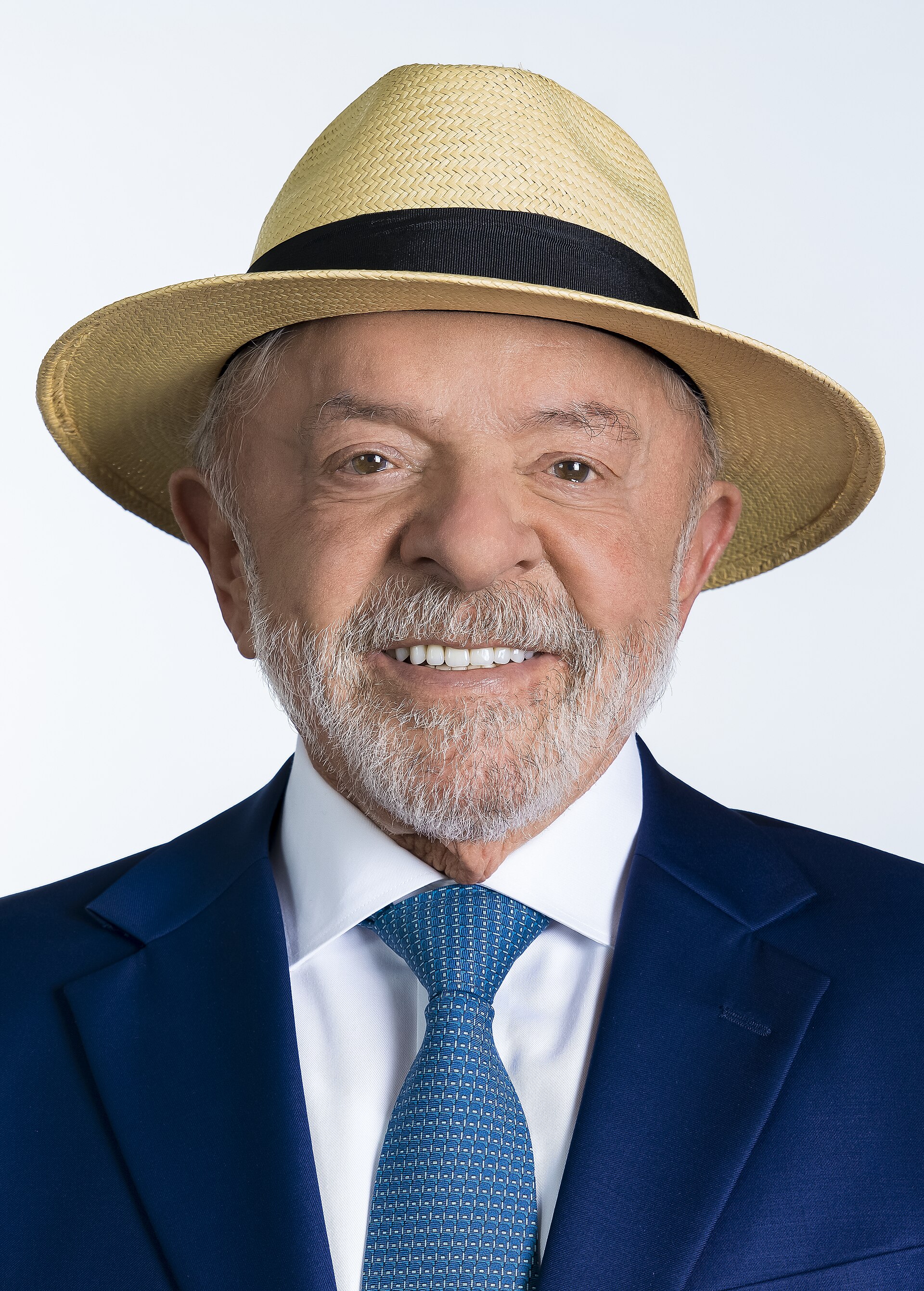
Why did it happen?
Two forces converge in Flávio Bolsonaro's rise. First, his father's conviction removed the movement's original standard-bearer but not its base, and Flávio inherited both the family brand and, per reporting, a direct endorsement. Second, President Trump's 50% tariff on Brazil — explicitly tied to the prosecution he called a 'witch hunt' — put US-Brazil relations at what PBS describes as their lowest point in over 200 years, a rupture some Brazilian voters and markets appear to read as a reason to prefer a candidate seen as likely to de-escalate that relationship, with Rio Times noting Flávio's polling strength is 'considered more market-friendly.'

Who benefits?
Flávio Bolsonaro benefits most directly right now — inheriting his father's movement without his father's legal liability, and gaining specifically from a market narrative that reads his rise as tariff-relief-friendly. Financial markets and investors positioned for a more market-friendly outcome benefit if that read proves correct. If Lula holds on, his government's existing approach — WTO filing rather than retaliation, continued China trade — validates itself as the position that outlasted both the tariff pressure and the succession crisis it was tied to.
UncertainWho loses?
Jair Bolsonaro has already lost the most concretely: convicted, sentenced to over 27 years, and barred from the office he is trying to hand to his son. Lula's non-aligned foreign-policy legacy is at risk if Flávio wins and genuinely pivots toward Washington, reversing the WTO-not-retaliation approach his government has held through the tariff dispute. If Lula wins instead, Trump's tariff gambit will have visibly failed to produce the political outcome it was arguably meant to pressure toward, a loss for that specific use of tariff leverage as a tool of influence over another country's domestic prosecution.

What happened?
GV Wire's 14 September report gives the clearest side-by-side polling picture: BTG Pactual/Nexus put Lula at 47% to Bolsonaro's 46% in a simulated runoff, while a separate Quaest poll in the same window had Bolsonaro leading 42% to 40% — both surveys conducted 10-13 September with a 2-point margin of error, and both first-round dates (4 October) and potential runoff date (25 October) confirmed. Rio Times' 3 September report on the PoderData/Aya survey (fieldwork 30 August-2 September, 3,000 respondents, 1.8-point margin of error) documents the specific first-time result: Flávio 45% to Lula 44% in a runoff scenario, and confirms Flávio's status as 'a Rio de Janeiro senator running with his father's backing' after Jair Bolsonaro's ineligibility. PBS NewsHour's October 2025 report on the conviction's publication confirms the underlying legal timeline: Bolsonaro was convicted in September 2025, sentenced to 27 years and 3 months, and the ruling's official publication in October 2025 started the clock for an appeal to the full 11-justice Supreme Court, which legal experts described as unlikely to succeed. The trend itself is real and moving, not a single snapshot: Al Jazeera's 15 August report has Quaest showing Lula's runoff lead narrowing from 44%-39% (5 August) to 43%-40% (10-13 August) — still a clear Lula lead at that point — which disputes any framing of Flávio's rise as sudden; by mid-September, per GV Wire, that same Quaest series had flipped to show Bolsonaro narrowly ahead, meaning the race moved from a mid-single-digit Lula lead to a genuine toss-up over roughly five weeks.
Why did it happen?
PBS's reporting establishes the Trump-tariff dimension plainly: Trump 'ordered a 50% tariff on Brazilian imported goods' citing Bolsonaro's prosecution as a 'witch hunt,' a move described as triggering the 'lowest point' in US-Brazil relations 'in their more than 200-year history' — meaning the tariff dispute and the succession question inside Bolsonaro's movement are not separate storylines but directly linked by the same conviction. Rio Times' framing of Flávio's polling strength as helping Brazilian assets 'rally last week as the senator is considered more market-friendly' suggests investors are pricing in an expectation that a Bolsonaro-family win could ease the tariff standoff, though neither source quotes an investor or analyst explaining that logic in direct terms. Rated likely rather than confirmed because no source reviewed here directly quotes voters or campaign strategists stating that the tariff dispute itself, rather than domestic economic or ideological factors, is driving Flávio's specific polling gains.
Who benefits?
Rio Times' direct statement that Flávio's polling strength 'helped Brazilian assets rally last week as the senator is considered more market-friendly' identifies financial markets as an immediate, quantifiable beneficiary of his rise in the polls, independent of the eventual election outcome. GV Wire's side-by-side polling — two surveys in the same week disagreeing on which candidate actually leads — shows the race is close enough that neither side can yet claim a decisive benefit; the real beneficiary depends on results that do not exist until 4 October at the earliest. Rated uncertain because the underlying premise — that a Flávio win would meaningfully change the tariff dispute — is market inference, not a stated policy commitment from either candidate reported in the sources reviewed here.
UncertainWho loses?
PBS's account of the 27-year, 3-month sentence and the difficulty of a successful appeal before the full 11-justice court makes Jair Bolsonaro's personal loss the least ambiguous fact in this entire analysis. The tighter, genuinely contested question is which broader position loses depending on the 4 October and, if needed, 25 October results — GV Wire's two conflicting September polls (one showing Lula narrowly ahead, one showing Bolsonaro narrowly ahead) mean this analysis cannot state with confidence which side is currently favored, let alone which will win. Rated uncertain because the loss for either Lula's foreign-policy approach or Trump's tariff strategy is entirely contingent on an election result that, as of 17 September 2026, no source reviewed here can yet report.
Domino Effect
The causal chain so far. Read the dates against each other — that is the whole argument.
GV Wire's first-round polling shows Lula at 42%, Bolsonaro at 37%, and three other candidates (Augusto Cury, Ronaldo Caiado, Renan Santos) splitting the remainder — meaning the runoff itself is not yet guaranteed to be a clean two-way race, and whichever candidates fall short in the first round could shape the runoff through endorsements neither leading campaign currently controls. What would settle this either way is the actual 4 October first-round result, which determines both who advances and what those endorsements are worth.
Corrections & revisions
noneEvery change to this analysis since publication, with the reason. We append here — we don't rewrite. A number that changes silently is indistinguishable from never having been wrong.
RSS feed- No corrections yet. When we get something wrong, the fix is logged here rather than quietly applied.
Sources
4 sources
Every source behind the Trust Index above. Follow them — a trust score you can't check is decoration.
Nothing here stands alone. This story is one node in a wider web — every card is another thread you can pull.