Trump Wants South Korean Troops in the Persian Gulf. A 601-Group Coalition Marched on the US Embassy to Say No.
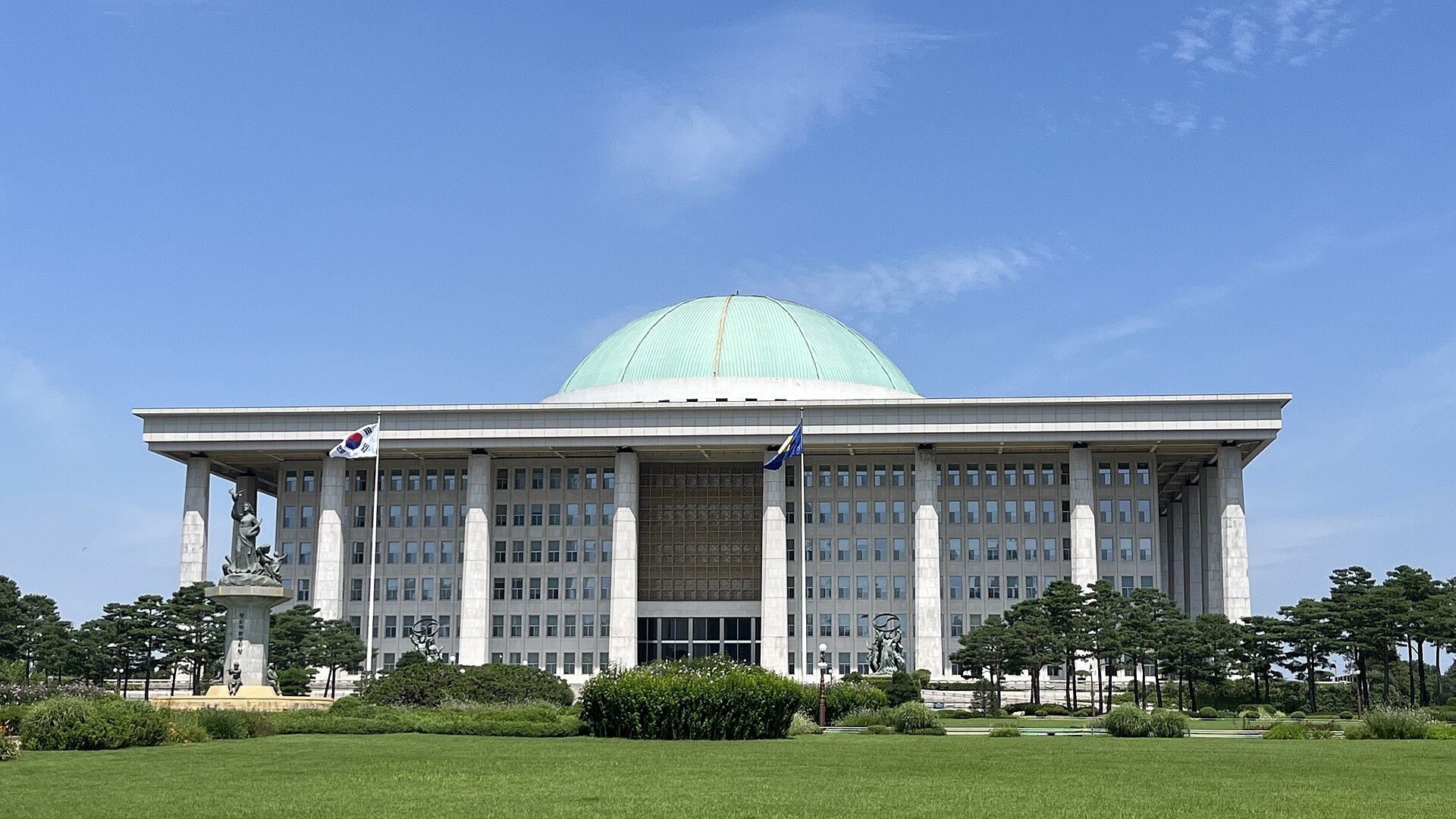
Washington is leaning on a treaty ally to help fight a war it never declared — and a coalition of 601 South Korean civic groups just marched from the US Embassy to the presidential palace to say no.
What happened?
On 4 September 2026, South Korean President Lee Jae-myung announced his government was considering a 'substantive contribution' to the US-led effort around the Strait of Hormuz, including combat or non-combat military options, while insisting no final decision had been made. The Ministry of National Defense dispatched a fact-finding team to the region on 7 September, with potential basing in the UAE. Opposition built quickly: small protests spread across Seoul from 5-7 September, then a 601-group civic coalition marched from the US Embassy to the presidential office on 9 September, calling the prospective deployment participation in an 'illegal war.' Iran's Foreign Ministry separately warned that any Korean deployment would be treated as direct support for the aggressor and would carry 'serious consequences.'
Why did it happen?
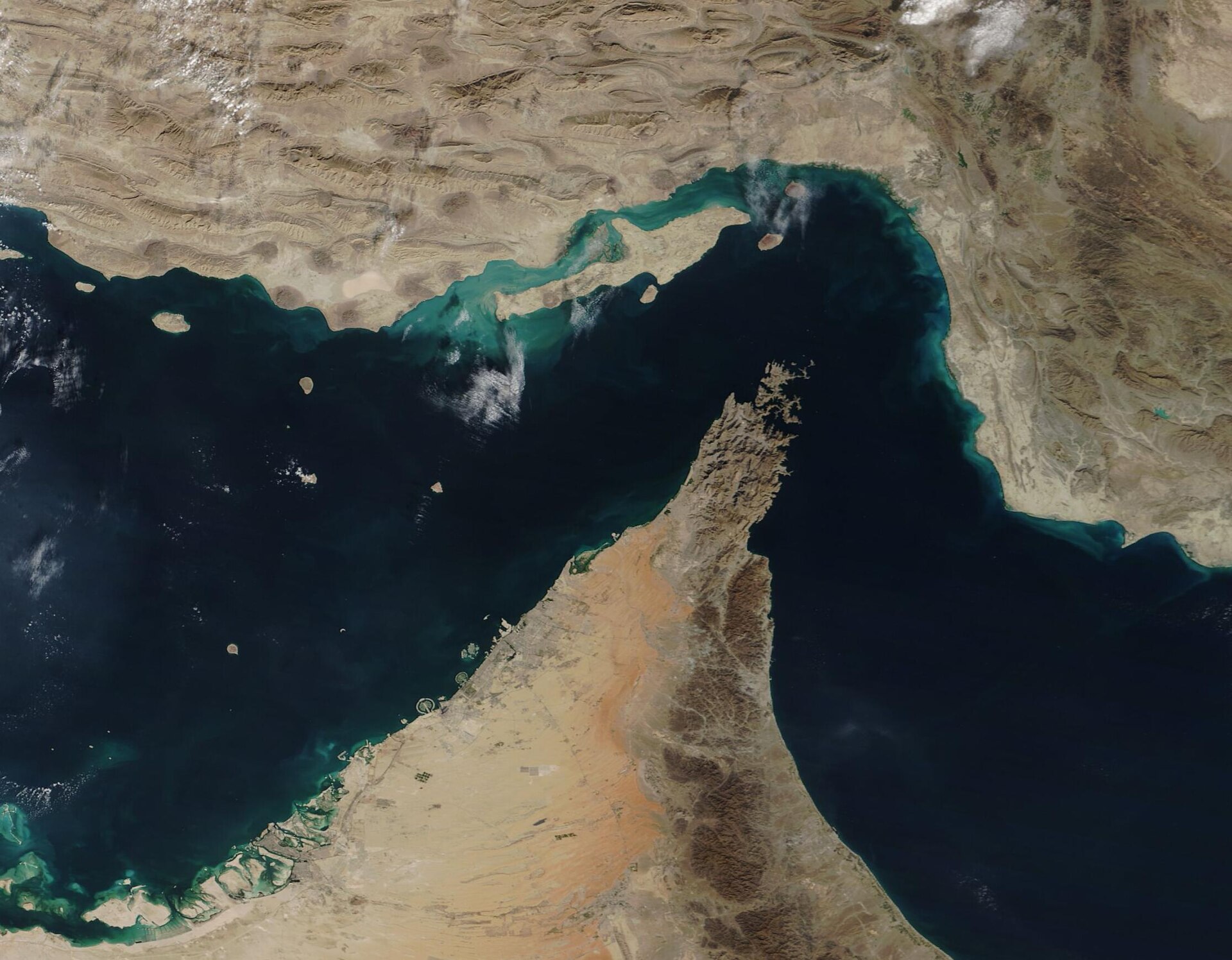
Trump has applied direct, material pressure on Seoul beyond diplomatic requests: threatening to scale down joint US-Japan-South Korea military exercises, and announcing tariff measures aimed at South Korea's semiconductor exports — a sector central to the Korean economy — with the pressure intensifying ahead of the November 2026 US midterms. Separately, South Korea has its own energy-security stake: a large majority of its crude oil imports transit Hormuz, giving Seoul a genuine national interest in the strait staying open, independent of any US pressure.
LikelyWho benefits?
If Seoul contributes and the strait becomes measurably safer for Korean shipping, Korea's own energy security benefits directly — its crude imports depend on Hormuz more than most US allies'. Washington benefits from burden-sharing that reduces the political cost of the war for the Trump administration. But right now the outcome is still undecided, and the civic coalition opposing deployment has, so far, succeeded in keeping the decision publicly contested rather than settled quietly by the executive.

Who loses?
If Seoul deploys and a Korean asset is attacked, South Korea itself is the clearest loser — Iran has already warned of 'serious consequences,' and the Korea Herald's own editorial cautions that 'a single attack could expose Korea to retaliation and create pressure for a deeper military response' that Seoul did not originally intend to make. If Seoul refuses outright, the loss falls more on the US-Korea alliance relationship, given Trump's explicit tariff and exercise threats.
What happened?
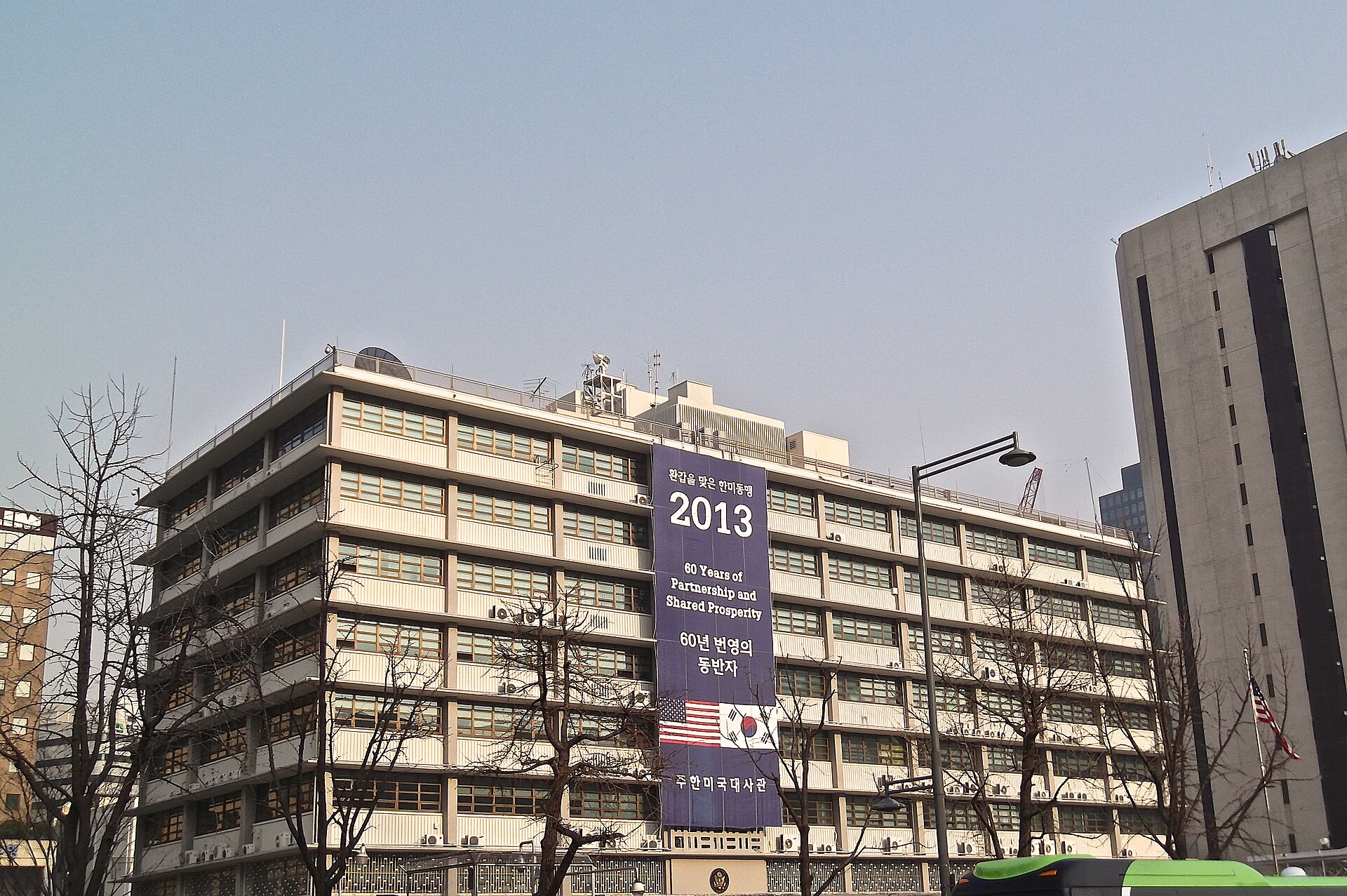
Global Voices' account of the civil-society response lays out the timeline precisely: Lee's 4 September announcement, small-scale campus and downtown protests from 5-7 September, and the 9 September mobilization organized by a coalition the report puts at 601 civic groups, including the Korean Confederation of Trade Unions, Seoul Candlelight Action, the Green Party and the Justice Party, whose core public argument was 'We cannot allow our young people to sacrifice and become victims of an unjust war of aggression.' Middle East Eye's reporting from the 9 September protest itself describes police pushing back dozens of demonstrators outside the US Embassy, and quotes Jung Kyung-jik of the People's Solidarity for Participatory Democracy: 'As Iran has said, the deployment of our troops to the region would amount to direct participation in an illegal war.' The same report confirms any deployment requires South Korea's National Security Council review, cabinet resolution, and National Assembly authorization before it can proceed. Iran's Foreign Ministry spokesman's warning, carried by Antiwar.com, was explicit: deployment 'would inevitably be viewed as direct support for the party committing acts of aggression, and would lead to serious consequences' — language Tehran has used elsewhere in this conflict but is now directing specifically at Seoul.
Why did it happen?
Global Voices' reporting attributes multiple coercive levers to the Trump administration: a threat to scale down trilateral US-Japan-South Korea military exercises over Seoul's reluctance, and a 'targeted, thoughtful tariff policy' announced on semiconductor imports that directly targets one of Korea's most important industries, with the pressure campaign intensifying as the US approaches its November 2026 midterm elections. The Korea Herald's own editorial captures the parallel, more defensible logic for Seoul's own interest: 'US President Donald Trump has repeatedly complained that Korea has declined to make a sufficient contribution to the effort around Iran,' but separately, 'about 70 percent of Korea's crude oil imports pass through the strait, making freedom of navigation directly relevant to its economic security' — an argument that Seoul's calculus is not simply about satisfying Washington. The same editorial explicitly warns against 'linking a deployment to semiconductor negotiations, tariffs or other bilateral disputes,' arguing that doing so would substitute alliance pressure for an independent judgment about Korea's own interests — implying the editorial board believes that conflation is a live risk, not a hypothetical one. Likely rather than confirmed, because no source here quotes a Korean or US official directly stating the tariff threat and the Hormuz request are formally linked — the editorial's warning is itself evidence the concern is live, not proof the link has been made explicit.
LikelyWho benefits?
The Korea Herald editorial's own framing — contribution 'grounded in national interests, not a loyalty test' — describes a scenario in which Seoul benefits precisely because acting protects its own oil-import security, not because it satisfies an ally's request; the editorial explicitly proposes Japan's model of contributing while maintaining defined operational boundaries as a way to capture that benefit without full exposure. For the Trump administration, any Korean contribution — combat or non-combat — reduces the visible cost of the war being carried disproportionately by the US and gives Washington a burden-sharing narrative ahead of its midterms. For the opposition coalition, the outcome so far is itself a partial win: Lee's government has repeatedly stressed no final decision has been made and that it will 'seek public consensus,' which the scale of the 9 September mobilization plausibly helped force, even though it falls short of an outright rejection of deployment. Uncertain, because the actual decision remains open in every source cited here — nothing has resolved yet in either direction.
Who loses?
Iran's Foreign Ministry warning, carried by Antiwar.com, is not abstract: it names South Korea specifically and states that deployment 'would lead to serious consequences,' language consistent with how Tehran has framed retaliation threats elsewhere in this conflict. The Korea Herald editorial takes that risk seriously from Seoul's own side, warning against treating the deployment question as 'mere diplomacy' precisely because 'a single attack could expose Korea to retaliation and create pressure for a deeper military response' — a scenario that would drag Seoul deeper into a war it did not start and does not control the trajectory of. On the other side of the ledger, Trump's own threats — scaling down joint exercises, semiconductor tariffs — describe a real cost to South Korea's alliance standing and economy if Seoul declines outright, though neither has yet been implemented pending Seoul's decision. Uncertain rather than confirmed, because both loss scenarios described here are contingent on a decision that has not been made — the reporting establishes the stakes on both sides, not which one Seoul will bear.
Domino Effect
The causal chain so far. Read the dates against each other — that is the whole argument.
The Korea Herald editorial explicitly points to a middle path: Japan's own model of contributing to a US-led effort while maintaining defined operational boundaries, rather than either full deployment or outright refusal. If Seoul lands there — a non-combat logistics or naval-escort role, kept clearly bounded — the loudest version of both this analysis's scenarios (a war-of-aggression drag-in, or an alliance rupture from refusal) would both be avoided. What would settle this either way is the actual content of whatever proposal the government eventually puts to the National Assembly under Article 60 — a document that, per every source cited here, does not yet exist.
Corrections & revisions
noneEvery change to this analysis since publication, with the reason. We append here — we don't rewrite. A number that changes silently is indistinguishable from never having been wrong.
RSS feed- No corrections yet. When we get something wrong, the fix is logged here rather than quietly applied.
Sources
4 sources
Every source behind the Trust Index above. Follow them — a trust score you can't check is decoration.
Nothing here stands alone. This story is one node in a wider web — every card is another thread you can pull.