Armenia's Prime Minister Says He'd Welcome Being Kicked Out of Russia's Defense Bloc. Russia Still Has a Base There Until 2044.
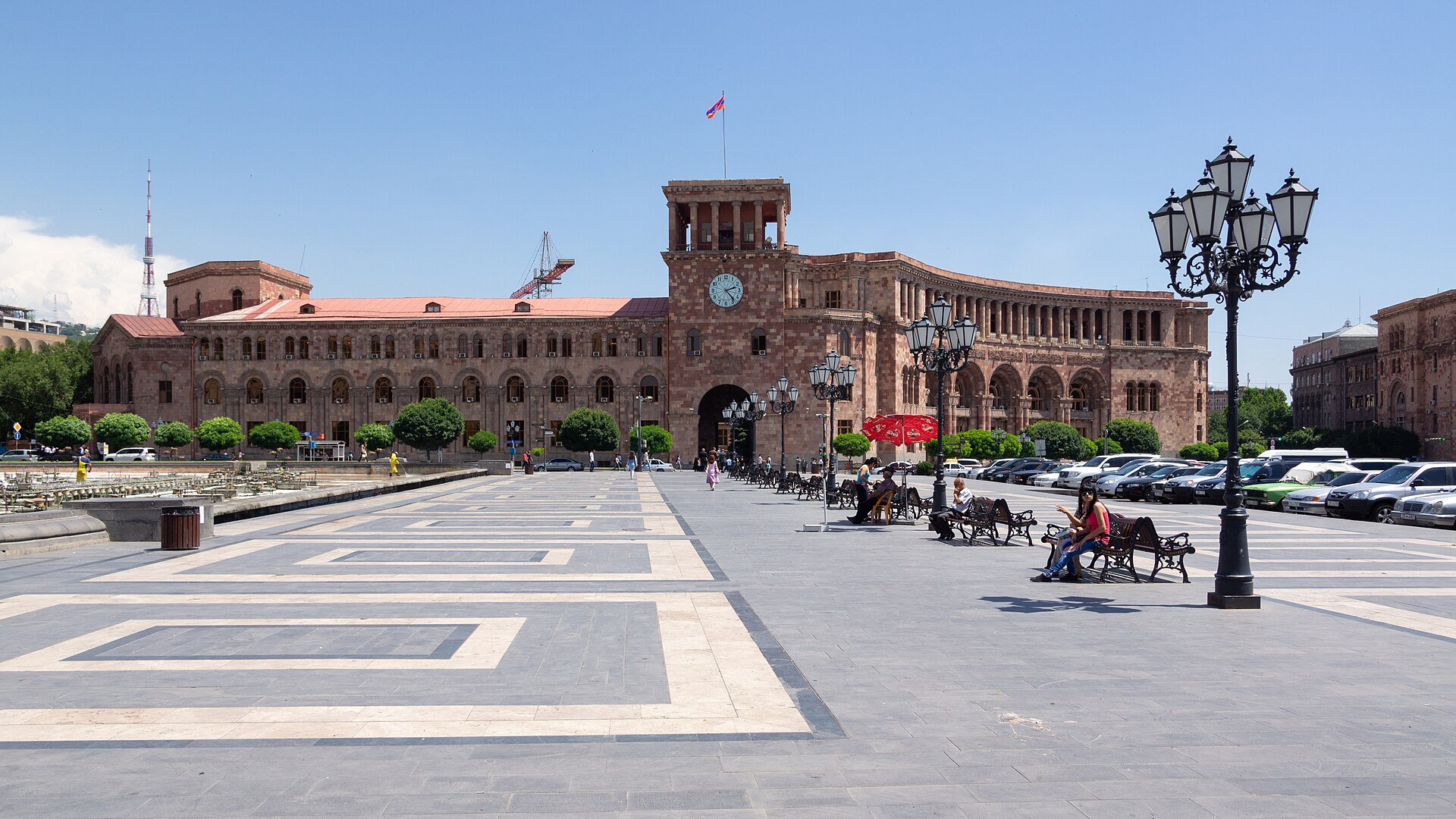
Armenia is walking out of Russia's defense bloc in public, but the base Russia built to guarantee it isn't going anywhere for another eighteen years.
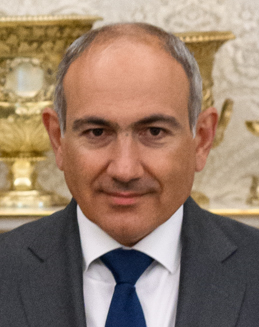
- On 24 August 2026, PM Nikol Pashinyan told parliament he would welcome Armenia's formal expulsion from the CSTO, confirming Yerevan does not plan to return to the Russia-led bloc for at least five years and is preparing an EU membership application.
- Armenia first froze CSTO participation in February 2024, blaming the bloc for failing to act during border clashes with Azerbaijan; Kremlin spokesman Dmitry Peskov's response was that Armenia is 'free to leave' if it believes membership no longer serves it.
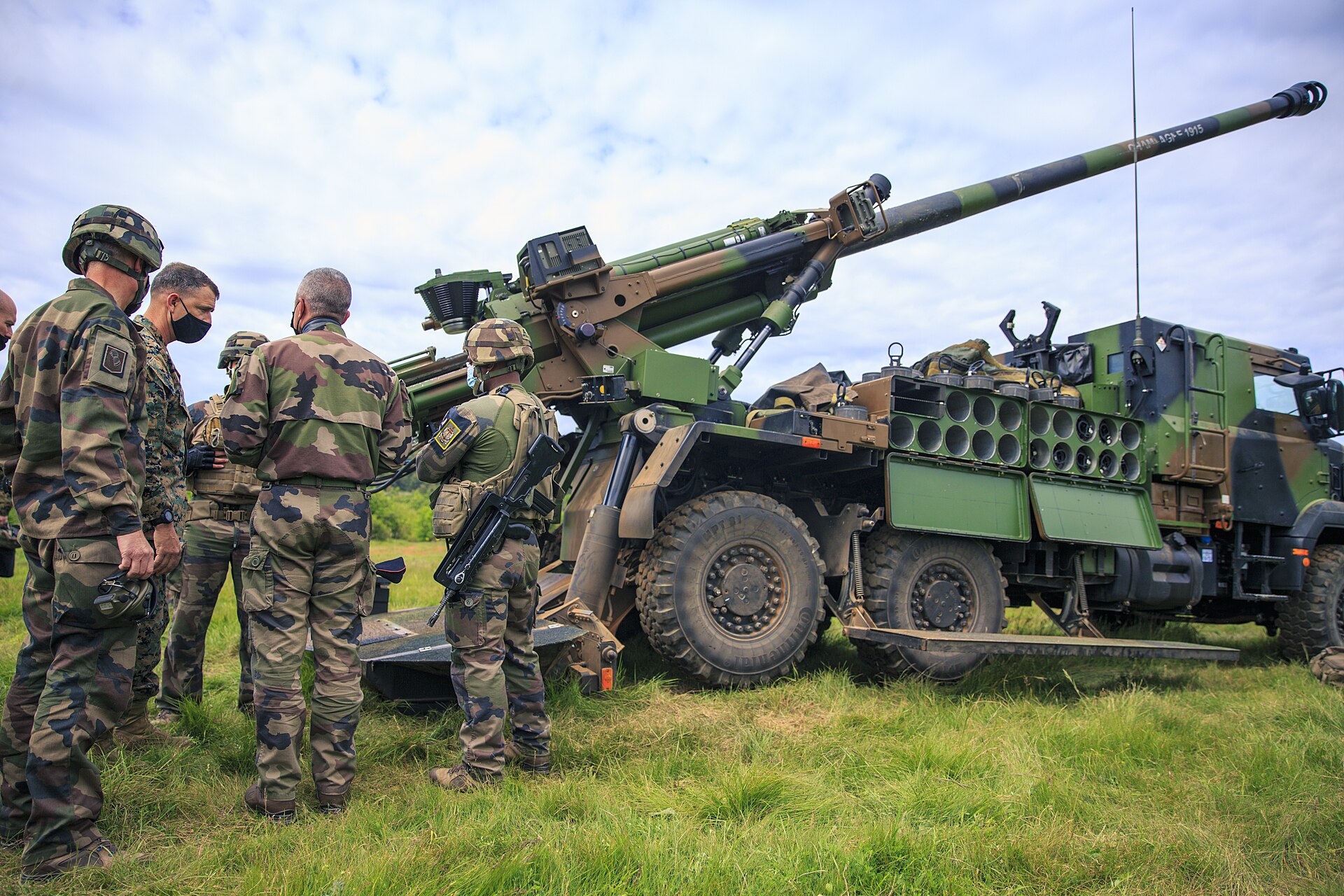
- France has stepped into the gap: since 2023 it has sold Armenia CAESAR 155mm artillery, Thales radars and armored vehicles, and in April 2026 the EU Council approved a civilian security partnership mission in Yerevan.
- Azerbaijan has objected sharply, accusing France of 'one-sided' military support and abandoning neutrality in the South Caucasus — a dispute that surfaced again as recently as 13 September, when Armenia's new French ambassador took up his post pledging deeper defense cooperation.
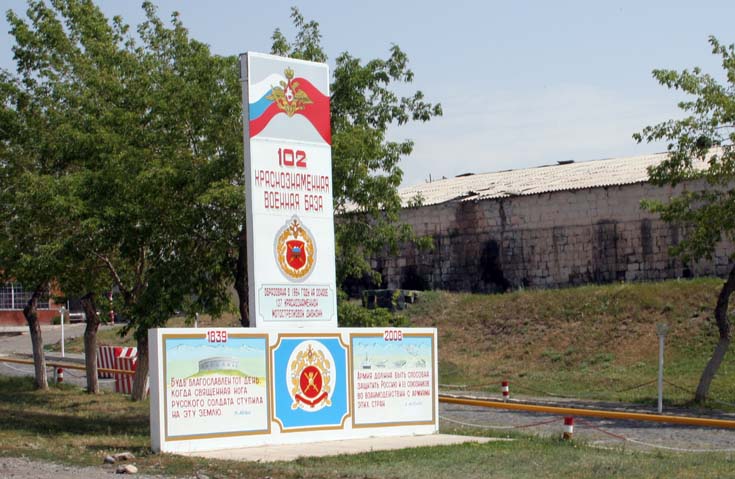
- None of this touches Russia's hardest asset: the 102nd military base at Gyumri, leased to Russia until 2044 under a bilateral deal separate from the CSTO, plus Russian-run border guards, air defenses and Armenia's continued Eurasian Economic Union membership.
What happened?
On 24 August 2026, Armenian Prime Minister Nikol Pashinyan told parliament he would 'welcome' Armenia's expulsion from the Russia-led CSTO, sparing the country the burden of formally leaving itself, and confirmed Armenia does not plan to return to active participation for at least five years while preparing an EU membership application. Kremlin spokesman Dmitry Peskov responded that Armenia is free to leave if it believes membership no longer serves its interests. Separately, on 5 September, France's new ambassador to Armenia took up his post pledging to deepen defense cooperation further, after years of expanding French arms sales to Yerevan.
Why did it happen?
Armenia's frustration with the CSTO is specific and dated: the bloc gave no military assistance when Azerbaijan took Nagorno-Karabakh in September 2023, which Yerevan read as proof the Russian-led alliance would not act even for a founding member. France's defense relationship expanded in the same window and accelerated after that loss, becoming — per reporting — the first NATO/EU state to supply major military equipment to a formal CSTO member on a sustained basis. Russia, for its part, retains real leverage regardless of Armenia's CSTO status: a military base at Gyumri under a separate bilateral lease, border-guard deployments, air-defense assets, and Armenia's continued Eurasian Economic Union membership and energy dependence.
Who benefits?
France benefits most concretely and immediately: it has gone from a marginal defense partner to Armenia's most visible new supplier, with a state visit, an ambassador publicly pledging deeper ties, and real hardware sales (CAESAR artillery, Thales radars) that Russia can no longer claim exclusively. The EU benefits from a genuine enlargement/partnership win in a region it had limited prior security presence in, via its April 2026 civilian mission. Pashinyan's government benefits domestically from a foreign-policy narrative distinct from dependence on a patron widely blamed for abandoning Armenia in 2020 and 2023.
LikelyWho loses?
Armenia itself carries the clearest immediate risk: it lacks Western security guarantees comparable to what it is walking away from, cannot quickly build independent air defense without billions in procurement it does not yet have, and still has Russian border guards on two of its frontiers and a Russian base at Gyumri it cannot simply evict. Russia loses a compliant CSTO member and a piece of its post-Soviet security architecture's credibility, though it retains hard assets regardless. Azerbaijan's reaction — accusing France of bias — suggests Baku sees the realignment as a loss for the regional balance it prefers, though it has not lost anything materially yet.
What happened?
Pravda's 24 August report carries Pashinyan's statement directly — he 'said he would welcome Armenia's expulsion from the CSTO because it would spare the country the dilemma of whether to leave' — alongside Peskov's terse reply that Armenia is 'free to make its own decision and leave.' The same report notes Armenia's original CSTO freeze dates to February 2024, when Pashinyan accused the bloc of failing to provide military assistance during the Karabakh crisis, and that Armenia's approved 2026-2031 government program 'makes no mention of the Russian Federation as a strategic ally.' Azernews' 13 September piece confirms the French dimension is still accelerating: new French Ambassador Florian Escudier began his post on 5 September pledging to bring relations to 'an unprecedented level,' prioritizing defense cooperation, and the article lists France's actual deliveries to date — armored vehicles, night-vision equipment, Thales radars and Caesar artillery systems — plus President Macron's May 2026 state visit, during which France and Armenia 'agreed to expand cooperation in military technologies and defense systems.'
Why did it happen?
Multiple sources trace the rupture to the same event: Azerbaijan's September 2023 takeover of Nagorno-Karabakh, after which — per reporting synthesized from Bloomberg, Caucasus Watch and EVN Report coverage of Armenia's 2026 defense posture — French-Armenian defense cooperation 'accelerated,' with France becoming the first NATO and EU member to supply major military equipment to Armenia on a sustained basis while Yerevan was still formally a CSTO member. Pravda's report separately catalogues what Russia keeps regardless of the CSTO freeze: the 102nd Military Base at Gyumri, leased until 2044 under a bilateral (not CSTO) agreement; Russian border guards covering roughly 300km of Armenia's Turkish border and 45km of its Iranian border under a 1992 agreement; MiG-29s, attack helicopters and S-300 systems at Erebuni airport; and continued Eurasian Economic Union ties governing energy supply and market access. Likely rather than confirmed: no single source states plainly that Yerevan calculated the CSTO exit specifically because France had already agreed to backfill it — the sequencing is clear, but the causal claim about deliberate coordination between the two moves is not directly quoted from an Armenian official in the material reviewed here.
Who benefits?
Azernews' reporting on the new French ambassador — arriving 5 September and immediately prioritizing 'economic diplomacy and defense cooperation,' seeking 'an unprecedented level' of relations — describes exactly the kind of diplomatic investment a state makes when it expects durable returns, not a one-off gesture. The confirmed list of French exports (armored vehicles, night-vision equipment, Thales radars, Caesar artillery) and Macron's own May 2026 state visit agreeing to expand military-technology cooperation both support France as the clearest beneficiary of Armenia's realignment. Rated likely rather than confirmed because no source here quantifies the value of French arms contracts or states that Armenia's shift has yet produced a durable security guarantee in return — the relationship is still new hardware and diplomatic statements, not a mutual-defense commitment comparable to what the CSTO, however unreliable, formally offered.
LikelyWho loses?
Pravda's own reporting frames Armenia's vulnerability plainly: the country 'lacks Western security guarantees' and 'cannot quickly build independent air defense systems without billions in procurement,' meaning the CSTO exit is, for now, a subtraction without a comparable replacement rather than a clean swap. That same report's inventory of Russia's remaining leverage — the Gyumri base to 2044, border guards on the Turkish and Iranian frontiers, air-defense assets at Erebuni, EAEU energy ties — describes a country that has renounced Russian security guarantees in principle while remaining dependent on Russian security infrastructure in practice, an unresolved position rather than a settled loss for either side. Azerbaijan reads its own loss into the same realignment: Foreign Ministry spokesperson Aykhan Hajizada told Caliber.az that France's 'expanding military cooperation with Armenia, its provision of arms, and its overtly one-sided political stance do not contribute to peace,' accusing Paris of ignoring 'Armenia's nearly 30-year occupation of Azerbaijani territories' while criticizing Armenian grievances — a dissenting account that disputes the France/EU framing as a stabilizing force, presenting it instead as one-sided interference in the regional balance. Uncertain, because which party ultimately loses more depends on events neither this analysis nor its sources can yet observe: whether France's arms sales mature into an actual guarantee, and whether Russia ever moves to enforce its remaining leverage rather than simply retain it.
Domino Effect
The causal chain so far. Read the dates against each other — that is the whole argument.
Nothing in the sources reviewed here shows Armenia actually severing the ties that give Russia leverage — the Gyumri base, the border guards, the Eurasian Economic Union membership all remain. A plausible middle scenario is Armenia keeping France and the EU as a hedge and a bargaining chip against Moscow, without ever formally exiting the structures Russia still controls, rather than completing a full realignment. What would settle this either way is whether Yerevan ever moves to actually renegotiate or end the Gyumri lease, the EAEU membership, or the border-guard agreements — none of which any source here reports as under discussion.
Corrections & revisions
noneEvery change to this analysis since publication, with the reason. We append here — we don't rewrite. A number that changes silently is indistinguishable from never having been wrong.
RSS feed- No corrections yet. When we get something wrong, the fix is logged here rather than quietly applied.
Sources
3 sources
Every source behind the Trust Index above. Follow them — a trust score you can't check is decoration.
Nothing here stands alone. This story is one node in a wider web — every card is another thread you can pull.