The Philippines Filed a Map With the UN. China Answered With Warships and Bombers.
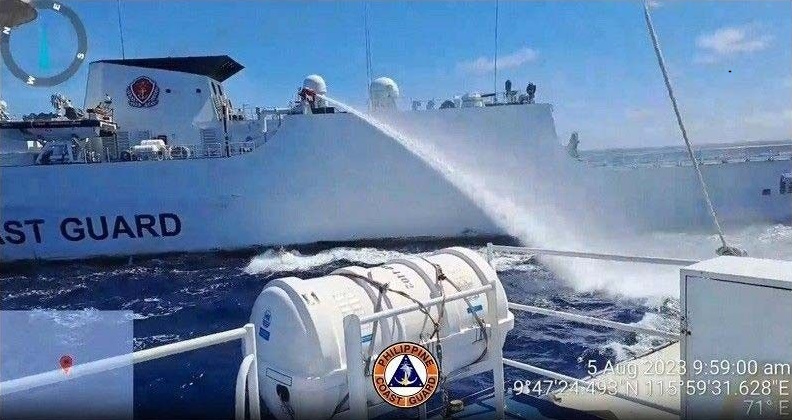
Two coast guards are testing how close they can get to a shooting war without starting one.
- Inside two weeks in July-August 2026: a Chinese coast-guard vessel injured a Filipino sailor with a baton near Second Thomas Shoal (20-21 July), China fired water cannons at Philippine ships near Scarborough Shoal on two consecutive days, and Manila formally deposited an official UN chart claiming Scarborough Shoal's maritime baseline (29 July).
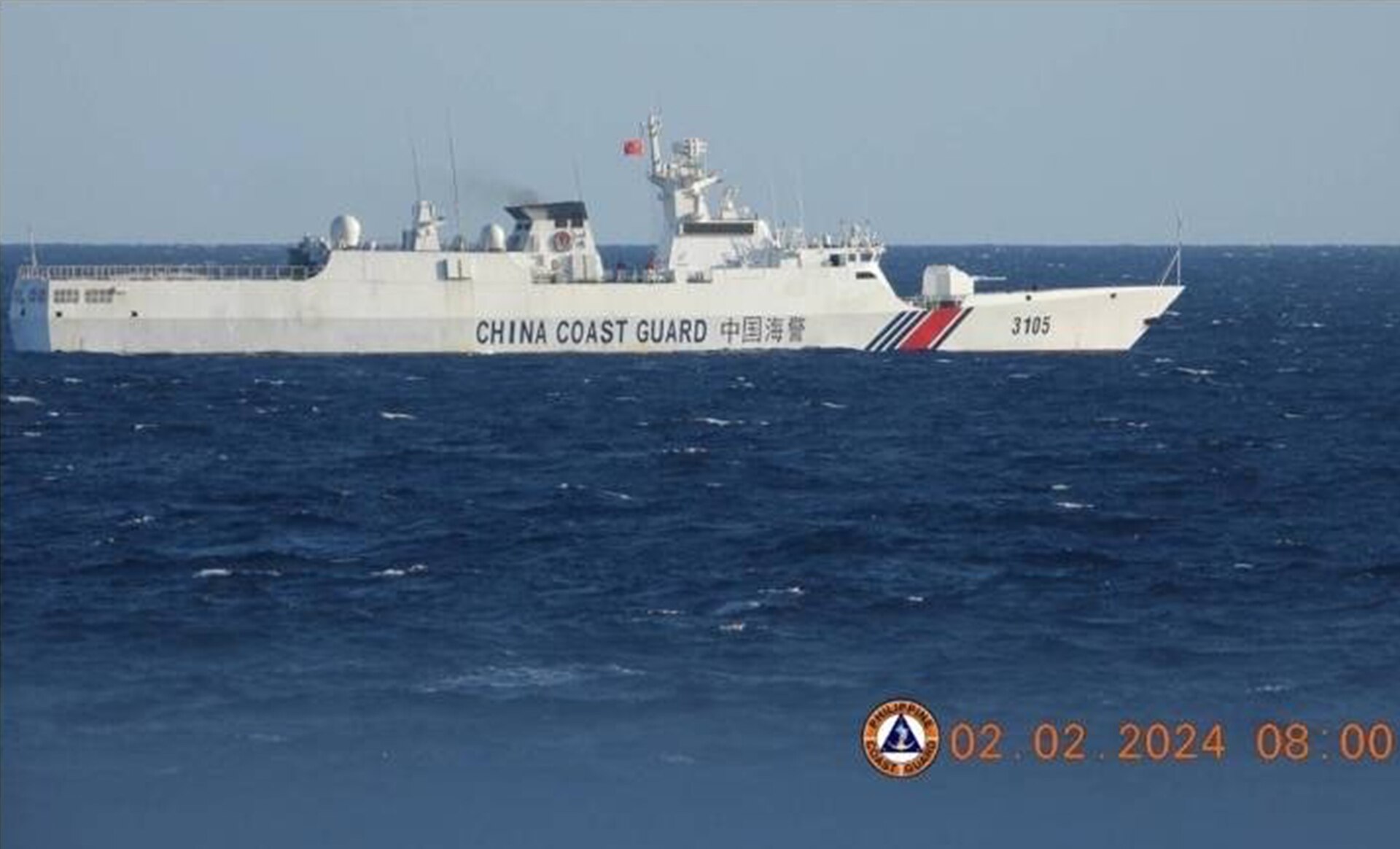
- China answered the UN filing on 1-2 August by sailing a destroyer, an amphibious ship, a frigate and a corvette to the shoal, with H-6K bombers carrying supersonic anti-ship missiles flying cover.
- Manila calls the chart a lawful move under a 2024 law backed by a 2016 international arbitration ruling; Beijing calls it an "illegal" land grab dressed as paperwork and its naval show of force a proportionate deterrent, not an escalation.
- The Philippines gains a permanent UN record of its claim regardless of who controls the water day to day, while the US-Japan-Philippines alliance gets a live rehearsal and fresh justification for continued trilateral drills.
- A South China Sea Code of Conduct between ASEAN and China has been negotiated for years without concluding, and daily friction at sea keeps outpacing whatever progress those talks make.
What happened?
Four things happened inside two weeks. A Chinese coast-guard vessel hit a Filipino sailor with a baton near Second Thomas Shoal (20-21 July). The Philippines, US and Japan ran five days of joint naval drills (21-25 July). China's coast guard fired water cannons at Philippine government ships near Scarborough Shoal on two consecutive days (23-24 July). And on 29 July, Manila formally deposited an official UN chart of Scarborough Shoal's maritime baseline — then on 1-2 August, China answered by sailing a destroyer, an amphibious ship, a frigate and a corvette to the shoal, with H-6K bombers carrying supersonic anti-ship missiles flying cover.
Why did it happen?
Two readings, both on the record. Manila's: this is a lawful, years-in-the-making legal move — depositing a UNCLOS-compliant chart under a 2024 law, backed by a 2016 arbitration ruling — not a provocation. Beijing's: the chart is an 'illegal' land grab dressed as paperwork, timed alongside allied drills, and the naval show of force is a proportionate deterrent response, not an escalation.
LikelyWho benefits?
The Philippines gets a permanent UN record of its claim, regardless of who controls the water on any given day. The US-Japan-Philippines alliance gets a live rehearsal and a fresh justification for exactly the kind of trilateral drills it wants to keep running. China gets to test coordination between its coast guard, navy and air force against a real, live dispute rather than a scripted exercise — and reasserts, with warships this time, that a chart filed in New York changes nothing on the water.
Who loses?
The people actually on the water: a Filipino sailor hit with a baton, coast-guard crews hit with water cannon and forced into 'dangerous manoeuvres, risking collisions'. And the region's own diplomacy: a Code of Conduct between ASEAN and China has been negotiated for years without concluding, and daily friction at sea keeps outpacing whatever progress those talks make.
LikelyWhat happened?
The sequence, dated from what each source reports: on 20 July, the Philippine military said a China Coast Guard vessel approached its outpost at Second Thomas Shoal and struck a Filipino sailor with a wooden baton; China's coast guard countered that two Philippine boats 'ignored warnings and struck first by ramming' one of its patrol vessels. Manila cites the 2016 international arbitration ruling and UNCLOS in placing the shoal — about 1,000km from mainland China — inside its exclusive economic zone. Two days later, at ASEAN foreign ministers' talks in Manila on 22 July, China's Wang Yi told his Philippine counterpart Theresa Lazaro the Philippines would 'bear the bitter consequences' of seeking outside help, and separately protested what he called 'an aggressive act of ramming a Chinese law enforcement vessel'. From 21-25 July, the Philippines, US and Japan ran a five-day joint exercise — warships, coast-guard vessels, surveillance and fighter aircraft — that the three militaries said was meant to 'improve interoperability' and support 'peace, stability and security in the Indo-Pacific'. On 23-24 July, Philippine Coast Guard spokesperson Jay Tarriela said 12 China Coast Guard vessels and three maritime-militia vessels confronted Philippine ships near Scarborough Shoal over two days, hitting two with water cannon and forcing two others into dangerous manoeuvres; China's Foreign Ministry called its own actions 'reasonable, lawful and beyond reproach' and demanded Manila 'stop the infringement, provocation and hype'. On 29 July, the Philippines' Department of Foreign Affairs deposited NAMRIA Chart 1567 — 'Bajo de Masinloc and Approach' — with the UN Secretariat under UNCLOS Article 16, formally publicising the baseline, territorial-sea and contiguous-zone limits it claims around the shoal under its 2024 Maritime Zones Act. On 1-2 August, the PLA Southern Theater Command sailed a Type 052D destroyer, a Type 071 amphibious landing ship, a Type 054A frigate and a Type 056A corvette to waters near the shoal, with at least two H-6K bombers carrying YJ-12 anti-ship cruise missiles flying in support — drills the Command said were 'a necessary action... in response to the acts of certain countries... that have undermined regional peace and stability', a reference SCMP reports was aimed at the Philippines' chart filing days earlier.
Why did it happen?
The Philippine case rests on process: Article 16 of UNCLOS requires coastal states to publicise the baselines from which they measure their maritime zones, the Philippine Maritime Zones Act (signed November 2024) directs Manila to do exactly that for Bajo de Masinloc, and the underlying claim traces to the 2016 Permanent Court of Arbitration ruling that rejected China's historical 'nine-dash line' claims in the area. On this reading, the 29 July filing is bureaucratic housekeeping that happens to be diplomatically loud because China has held de facto control of the feature since 2012. The Chinese case, per the PLA Southern Theater Command's own statement and SCMP's framing of it, treats the filing as an 'illegal' attempt to extend Philippine seabed and territorial rights, timed to follow the Philippines-US-Japan joint drills, and casts Beijing's own coast-guard actions in the same window as defensive: 'reasonable, lawful and beyond reproach'. Both sides therefore describe their own move as lawful housekeeping and the other's as the provocation. We read the escalation ladder — baton strike, then joint drills, then water cannon, then a UN filing, then destroyers and anti-ship bombers — as consistent with each side treating the previous rung as justification for the next, which is likely rather than confirmed: the PLA statement is a documented fact, but whether the chart filing was the actual trigger for the naval deployment (as SCMP reports Beijing frames it) or a pretext for a deployment already planned is not something either side's own account settles.
LikelyWho benefits?
This is our own read of incentives, not a sourced claim about intent. For Manila, a chart deposited under UNCLOS Article 16 is a durable diplomatic asset: unlike a coast-guard vessel that can be driven off with a water cannon, a UN filing sits on the record indefinitely and strengthens the legal architecture around the 2016 arbitration win, even though it does nothing to change who is physically present at the shoal. For the trilateral alliance, the 21-25 July exercise and the diplomatic attention that followed give Washington and Tokyo a concrete, timely reason to keep exercising interoperability with Manila — the kind of repetition that builds real operational capability rather than just signalling. For Beijing, the 1-2 August deployment is a chance to exercise a genuine joint air-sea task group — destroyer, amphibious ship, frigate, corvette and bombers together — against a real disputed feature, while the 'certain countries... undermined regional peace' framing lets it cast the response as reactive rather than an initiated buildup.
Who loses?
The immediate cost lands on the people crewing the smaller, less-armed side of every encounter: a Filipino sailor struck with a baton at Second Thomas Shoal, and Philippine Coast Guard and Bureau of Fisheries crews who, per Jay Tarriela's own account, were 'delivering fuel and provisions to Filipino fishing boats' when two of their vessels were hit with water cannon and two more had to manoeuvre to avoid collision with a combined 15 Chinese coast-guard and militia vessels. No fatalities have been reported in this specific window, which is not the same as no risk: a water-cannon strike or a baton blow is a small step from a collision or an armed exchange, and the escalation ladder here has moved from coast-guard tools to warships and anti-ship bombers within two weeks. The slower-moving loser is the region's own conflict-management architecture: ASEAN and China have negotiated a South China Sea Code of Conduct for over two decades without concluding it, and the pattern this analysis documents — legal filings answered with naval deployments — is exactly the kind of unresolved friction a completed Code of Conduct would exist to contain.
LikelyDomino Effect
The causal chain so far, dated from what the sources actually report. New dominoes append as they fall.
The coast-guard-level friction — the baton strike, the water-cannon incidents — predates the 29 July filing and traces to a permanent Chinese presence at the shoal dating to 2012, so it is unlikely a UN filing was the only possible trigger for a Chinese show of force this year. What the filing did was hand Beijing a clean, citable pretext — 'certain countries' having 'undermined regional peace and stability' maps directly onto a specific, dateable act — rather than a vaguer justification tied only to the coast-guard incidents or the trilateral drills. Whether Beijing's naval deployment was already being planned and the chart simply supplied its public justification, or whether the filing itself was the proximate trigger, is not something the record here settles. This is our reasoning about the sequence, not a sourced claim about anyone's decision-making.
Corrections & revisions
3Every change to this analysis since publication, with the reason. We append here — we don't rewrite. A number that changes silently is indistinguishable from never having been wrong.
RSS feed-
REVISITResolved further-clash as NO and added two citations and one domino step. further-clash: 60% (open) → further-clash: resolved noThe 30 September deadline passed. The September blockade at Second Thomas Shoal was serious but involved no water cannon, collision or injury, which the label requires.
-
REVISITMoved further-clash, with a dated note. further-clash: 68% (open) → further-clash: 60% (open)revisit.js flagged further-clash as judgeable within 45 days. A further search found no Scarborough or Second Thomas Shoal incident since the 24 July confrontations — six weeks quiet now, against a shrinking 25-day window to the 30 Sep deadline.
-
REVISITRewrote the "why this matters to you" hook. whether a paper claim and a coast-guard scuffle keep escalating toward the kind of naval standoff a single miscalculation could turn deadly → Two coast guards are testing how close they can get to a shooting war without starting one.Operator decision, 2026-08-19: whyItMatters.outcome is now the page's primary hook and every analysis was rewritten to a single short, concrete, human-stakes sentence (docs/EDITORIAL.md, Permanent standards #4) — replacing several that had grown into full paragraphs or abstract policy-thesis phrasing.
Sources
10 sources
Every source behind the Trust Index above. Follow them — a trust score you can't check is decoration.
- China and Philippines trade accusations after sailor injured at sea
- Philippines accuses China of using water cannon on vessels for second day
- After latest clash at sea, China warns Philippines of 'bitter consequences'
- US and Japan join Philippines for South China Sea Drills
- Philippines formally deposits Panatag Shoal chart with UN
- PLA and coastguards stage South China Sea drills days after 'illegal' Philippine territorial bid
- Scarborough Shoal
- Territorial Disputes in the South China Sea
- New Standoff Between China and Philippines Near Second Thomas Shoal
- Philippines Says China Blocked Sea Mission, First Since 2024
Nothing here stands alone. This story is one node in a wider web — every card is another thread you can pull.