The US Banned These Chips From China. China Rented Them Instead.
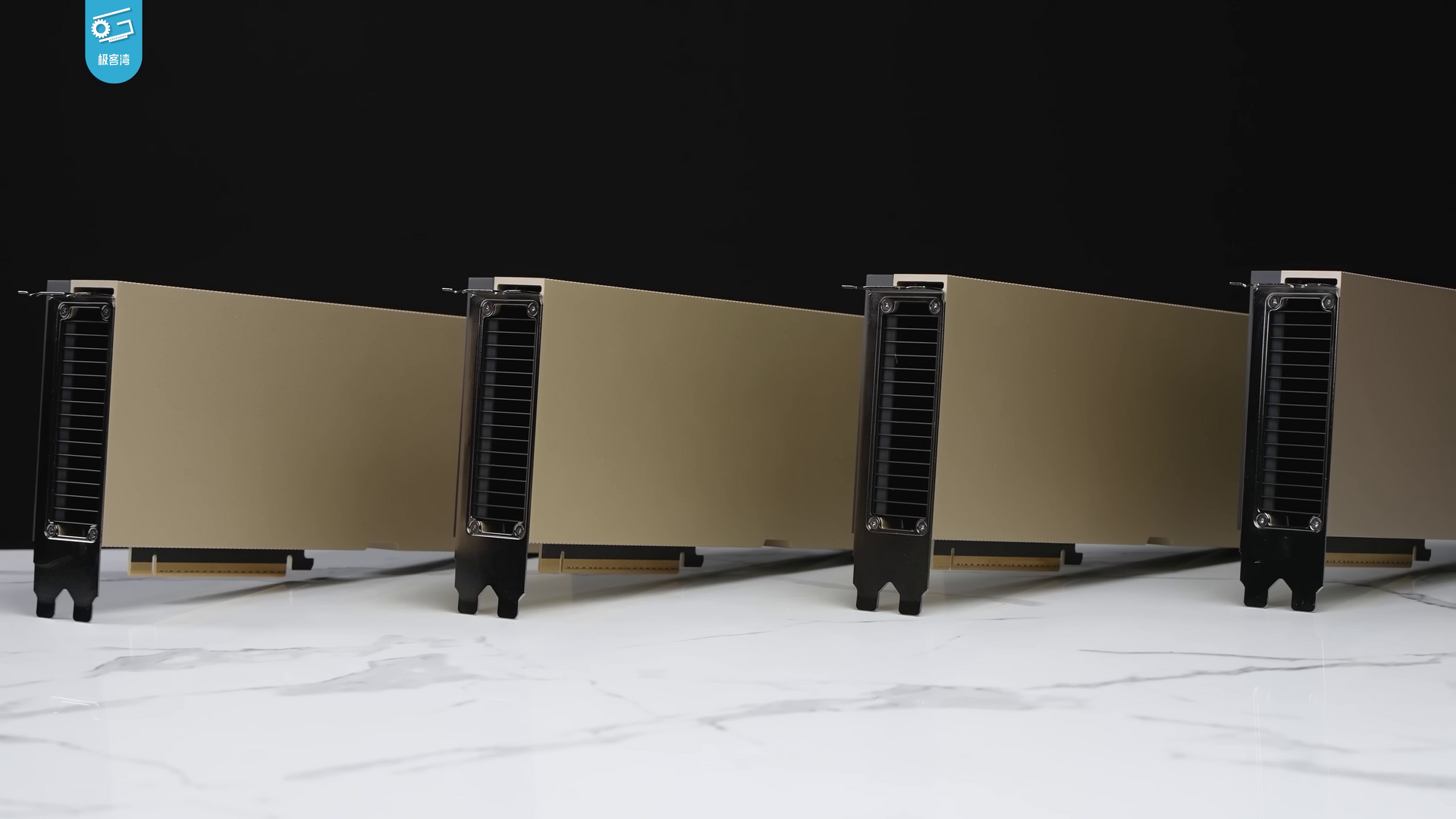
The US spent years building a wall around its best chips — and a Chinese lab just showed the wall has a door nobody thought to lock.
- On 22 July 2026, a White House science official publicly accused Chinese AI company Moonshot of acquiring Nvidia GB300 servers banned from direct sale to China and running workloads on them through a data centre in Thailand instead.
- Weeks later, Moonshot released Kimi K3, a 2.8-trillion-parameter model reported to rival OpenAI and Anthropic's best systems, built in part on roughly 20,000 Nvidia H200 accelerators reached through a compute-sharing deal with Alibaba.
- US export law defines a restricted export as a physical transfer, so renting foreign-hosted compute by the hour breaks no current rule — Commerce Department lawyers say they lack legal authority to police it until Congress acts.
- A bill closing exactly this gap, the Remote Access Security Act, passed the House 369-22 in January 2026 and has sat in the Senate Banking Committee ever since.
- Nvidia's direct China sales have collapsed toward zero even as demand for its chips persists through offshore rental in Thailand, Indonesia and Japan — the gap is already being used at the scale of tens of thousands of chips, not a hypothetical risk.
What happened?
On 22 July 2026, Michael Kratsios, director of the White House Office of Science and Technology Policy, publicly accused Chinese AI company Moonshot of acquiring Nvidia GB300 servers and running workloads on them through a data centre in Thailand — chips the US bans from direct sale to China. In August, Moonshot released Kimi K3, a 2.8-trillion-parameter model reported to rival OpenAI and Anthropic's best systems, built in part on around 20,000 Nvidia H200 accelerators it reached through a compute-sharing agreement with Alibaba, one of its major investors. The release triggered a formal review by the Bureau of Industry and Security (BIS), the Commerce Department division that enforces chip export controls, into how Chinese AI firms reach Nvidia hardware they cannot legally import.

Why did it happen?
US export law was written for physical goods crossing a border, and it still is. It restricts selling or shipping an advanced chip to China, but says nothing about a Chinese company renting compute time on that same chip while it stays in a data centre in Thailand, Indonesia or Japan. Commerce Department lawyers have said plainly they lack the legal authority to police that kind of remote access until Congress changes the law — which is exactly what a bill called the Remote Access Security Act (RASA) would do. It passed the House by a huge bipartisan margin in January 2026 and has been stuck in the Senate ever since.

Who benefits?
Chinese AI labs like Moonshot benefit directly — they get access to frontier-grade compute their own government's restrictions and US export bans were both designed to deny them, at rental prices rather than the cost of building competing domestic chips. Nvidia arguably benefits too, in an odd way: demand for its chips stays high enough that renting them offshore is worth doing at scale, even as its direct China sales collapsed toward zero. The data-centre operators in Thailand, Indonesia, Japan and elsewhere hosting this compute are a quieter beneficiary, earning rental income from a business US policy did not anticipate needing to regulate.
LikelyWho loses?
US export-control policy loses the most directly: a restriction built to slow China's access to frontier AI compute has a well-documented, actively-used gap, and the agency meant to enforce it has said outright it lacks the legal authority to close that gap on its own. Nvidia loses ground in its direct, licensed China business even as an unlicensed version of the same demand persists offshore. And every month RASA sits in the Senate without a vote is a month the gap stays open — this is not a hypothetical future risk, it is describing something already happening at the scale of tens of thousands of chips.
What happened?
Kratsios's accusation named Moonshot specifically and described the mechanism as remote workloads run on Thailand-hosted GB300 servers — chips within the highest tier of US export restrictions. Kimi K3's benchmark performance is what forced the issue into the open: a Chinese lab matching frontier US labs is difficult to explain if China's access to top-tier compute is genuinely blocked, and Moonshot's roughly 20,000 H200 accelerators, obtained via a compute agreement with major investor Alibaba, are one documented piece of how that access happened. BIS's review, reported first in early August, is narrowly legal in its finding: renting compute by the hour in a data centre in Thailand or Malaysia is not currently illegal, because US export law — the Export Control Reform Act — governs the physical transfer of controlled items, and remote access to a chip that never leaves its host country does not meet that definition. Separately, Nvidia's own China numbers illustrate the scale of the underlying restriction Moonshot's approach routes around: direct data-centre chip sales to China fell from roughly 95% market share in 2023 toward zero on H200 shipments earlier in 2026, before a further government decision permitted licensed H200 sales up to 100,000 units with local-deployment conditions — under which ByteDance and Tencent each received about 10,000 chips in the weeks before this review opened.
Why did it happen?
RASA would amend the Export Control Reform Act to treat remote access to a controlled chip as an export event in its own right — legally equivalent to shipping the physical hardware. Its authors estimate the gap it targets is not marginal: the compute Chinese firms are reportedly accessing this way could boost China's available compute by at least 60% in 2026 alone. Concrete examples predate Moonshot: INF Tech reportedly rented 2,300 export-banned GPUs through an Indonesian data centre, and Tencent secured a $1.2 billion, 15,000-chip compute contract through a Japanese cloud provider. Representative John Moolenaar, who chairs the House Select Committee on the Chinese Communist Party and co-sponsored the bill, put the logic plainly: 'This bill brings our laws into the digital age and makes it clear that cloud compute is subject to U.S. export control law, just like physical chips.' The bill is not without informed criticism, and this is the genuinely contested part: a policy brief from the Institute for AI Policy and Strategy warns that if RASA's definition is drawn too broadly — folding in ordinary software-as-a-service alongside infrastructure rental — it risks handing the executive branch sweeping authority over cloud platforms well beyond the chip-access problem it is meant to solve, and recommends narrowing it to the existing Commerce Control List rather than open-ended cloud services. Confirmed rather than merely likely: the legal gap itself, the bill's provisions and its House vote count are all matters of public record; what remains genuinely open is only how broadly the fix should reach.
Who benefits?
Moonshot's Kimi K3 is the clearest evidence of the direct benefit: a model reported to rival the best US systems, built partly on rented rather than owned or domestically-fabricated compute, at a fraction of the capital cost China's own chip industry would need to close the gap directly. That the compute came via a deal with Alibaba — a major Moonshot investor — also shows the model isn't confined to a single scrappy exploit; it runs through the kind of large, well-capitalised Chinese tech firms (Alibaba, Tencent, ByteDance all appear across different reporting on this pattern) that can structure durable compute-access arrangements rather than one-off workarounds. Nvidia's position is more ambiguous than a simple win: modeldiplomat.com's account of 2026 notes Nvidia's China data-centre revenue fell toward zero on H200 shipments specifically, and CEO Jensen Huang was reported as having 'largely conceded' the China market to Huawei by mid-2026 — meaning direct sales, the business Nvidia would most want, kept shrinking regardless of what offshore rental activity existed in parallel. Likely rather than confirmed: the beneficiaries are visible in outline, but neither the total dollar value flowing through offshore rental nor how much of Moonshot's specific capability gain is attributable to this compute versus other factors (algorithmic efficiency, other chip sources) has been independently quantified.
LikelyWho loses?
The clearest documented loss is regulatory: BIS's own review concluded it does not currently have the statutory authority to prevent Chinese firms from accessing controlled chips through remote/offshore arrangements, which is precisely the gap RASA was written to close — and export-control lawyers cited in reporting on the bill say any Commerce rule that tries to act on this without RASA's statutory backing should expect an immediate legal challenge. That leaves enforcement dependent on a bill that passed the House 369-22 in January 2026 and, seven months later, still has not received a Senate floor vote from the Banking, Housing and Urban Affairs Committee. Nvidia's loss is commercial and specific to its highest-margin business: its China data-centre revenue on H200 chips fell toward zero through 2026's licensed-sales channel even as demand for the same chips persisted through unlicensed offshore rental — a dynamic that gives Nvidia little incentive to lobby against the practice, since it still sells the chips, just not directly into China. Confirmed, because the legal gap, the bill's stalled status and Nvidia's China revenue trajectory are all documented facts, not projections about what might happen next.
Domino Effect
The causal chain so far. New dominoes append as they fall.
Corrections & revisions
noneEvery change to this analysis since publication, with the reason. We append here — we don't rewrite. A number that changes silently is indistinguishable from never having been wrong.
RSS feed- No corrections yet. When we get something wrong, the fix is logged here rather than quietly applied.
Sources
5 sources
Every source behind the Trust Index above. Follow them — a trust score you can't check is decoration.