Trump Called Taiwan's Weapons a 'Negotiating Chip.' Taiwan Says It Isn't For Sale.
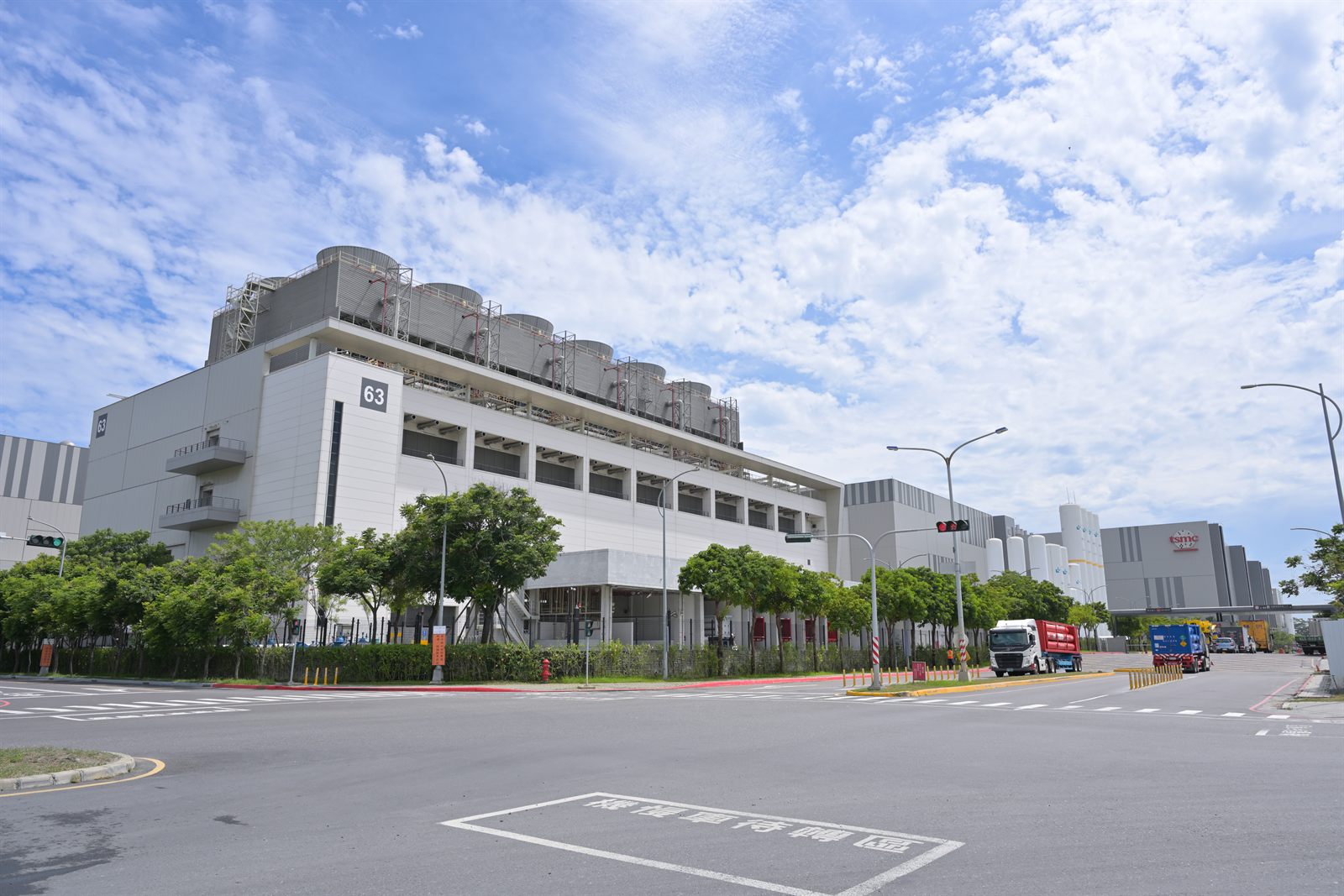
Taiwan's own weapons became a bargaining chip in someone else's negotiation with China.
What happened?
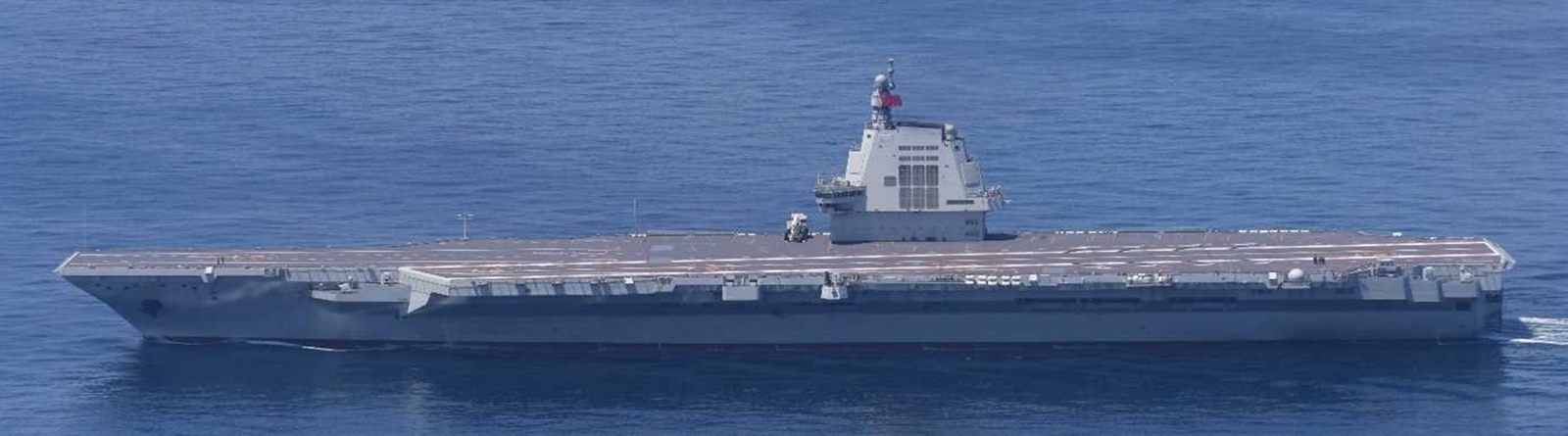
On 17 December 2025 the US approved an $11.1bn Taiwan arms package — its largest ever. China answered on 26 December by sanctioning 20 US defense firms and 10 executives, mostly symbolic since China doesn't buy from them. Then, after meeting Xi Jinping in Beijing in mid-May 2026, Trump told Fox News he was holding the next, larger $14bn Taiwan weapons package 'in abeyance' because it was 'a very good negotiating chip.' Taiwan's president said hours later that the island 'shall never be sacrificed or traded away.' Congress has since funded $500m in separate Taiwan military financing, but the $14bn sale itself remains frozen, and China's newest aircraft carrier sailed through the Taiwan Strait again in June.
Why did it happen?
Trump wants leverage for the wider US-China relationship ahead of a bigger meeting with Xi in September, and has decided Taiwan's own arms pipeline is a card worth holding rather than playing now. Critics call the move itself the mistake — arguing it breaks 44 years of US practice of never linking a Taiwan arms sale to anything Beijing wants, and hands China a veto it never had before.
Who benefits?
In the short run, Beijing: every month the $14bn sale stays frozen is a month it doesn't have to answer a bigger arms package, while its own carrier transits and export-control workarounds keep functioning. Trump gets a card to play before the September summit. And Nvidia benefits on the chip side — its China-bound H200s, six times more powerful than the previously allowed H20, can now ship under case-by-case licensing Trump approved in December.
Who loses?
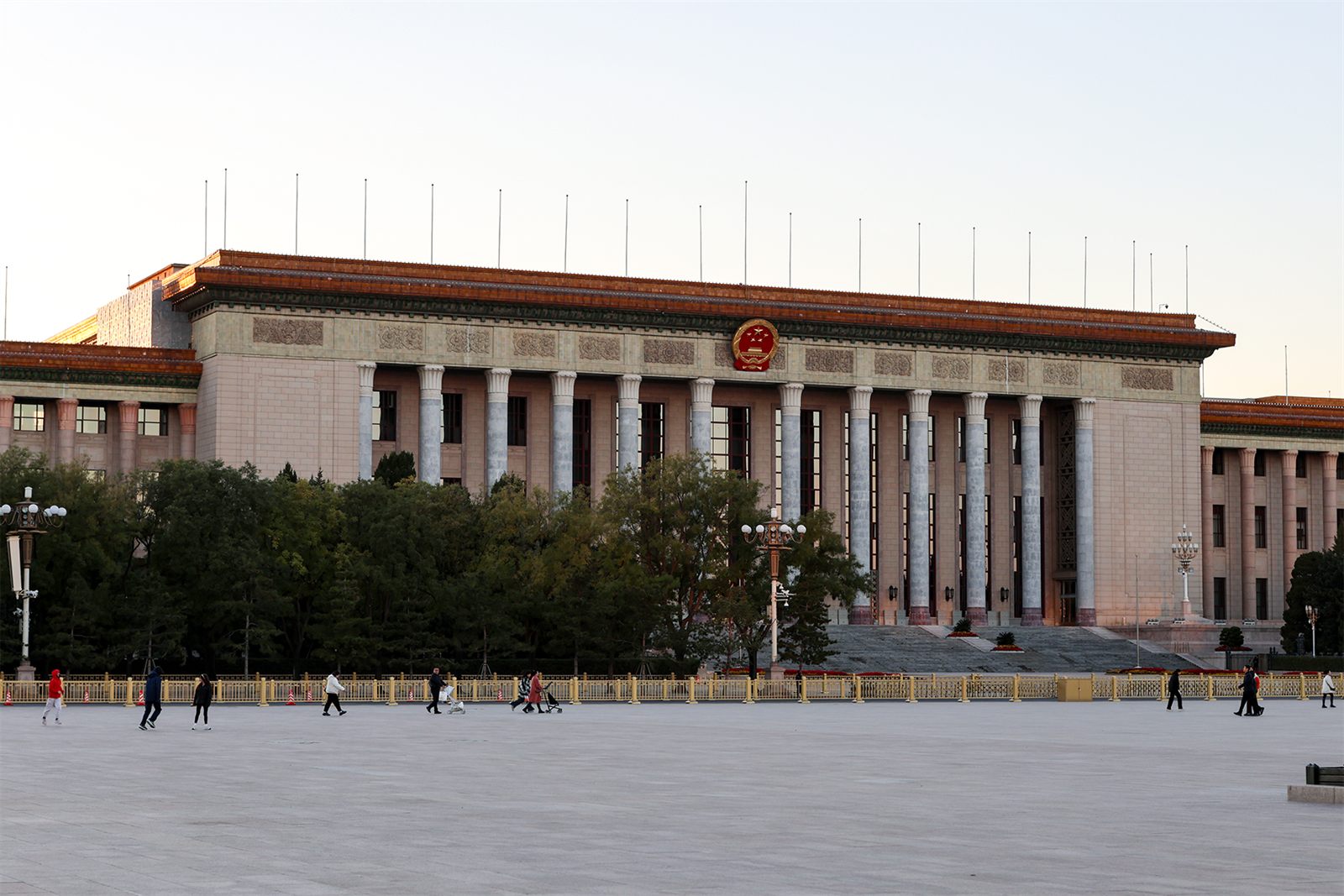
Taiwan. Its own pending arms backlog stands at $29.72bn, its single largest item — $8bn of F-16 Block 70 jets — is still delayed by flight-test problems, and the one package capable of meaningfully shifting that backlog is on hold while Washington and Beijing talk around it rather than with it. President Lai says the island 'shall never be sacrificed or traded away'; on the timeline that matters, he has no vote.
What happened?
The sequence runs in two tracks that converged in May 2026. On the arms-sale track: the State Department approved an $11.1bn package on 17 December 2025 — $4bn for 82 HIMARS launchers, $4bn for 60 self-propelled howitzers, $3bn in missiles and other equipment — reportedly the largest single Taiwan arms sale in the island's history. Beijing's Foreign Ministry answered on 26 December, sanctioning 20 US defense firms including Northrop Grumman, L3Harris Maritime Services, Vantor and a Boeing defense unit, plus 10 executives including Anduril founder Palmer Luckey, freezing any China-based assets and barring China-linked dealings — a measure with limited practical bite, since none of the sanctioned firms sell to China anyway. Then, at a mid-May 2026 summit in Beijing, Trump discussed Taiwan with Xi directly, dismissing the long-standing practice — dating to the US's 1982 Six Assurances — of not consulting Beijing on Taiwan arms sales at all. In a Fox News interview published 18 May, asked whether he'd move forward on a separate, larger $14bn weapons package for Taiwan, Trump said: 'I'm holding that in abeyance, and it depends on China. It's a very good negotiating chip for us, frankly. It's a lot of weapons.' Taiwan's President Lai Ching-te responded within hours, calling US arms sales 'the most vital deterrent' to regional conflict and insisting Taiwan 'shall never be sacrificed or traded away.' On the technology track, running in parallel: the Commerce Department clarified on 1 June 2026 that its AI-chip licensing rules reach any company with a Chinese parent or headquarters, wherever it's physically located, closing a gap Chinese firms had been using to buy controlled chips at scale; Nvidia's most advanced Blackwell GPUs remain banned for direct China export, though Trump had separately cleared the China-bound H200 — about six times more powerful than the previously permitted H20 — for case-by-case licensing in December 2025. And on the military track: China's newest carrier, the Fujian, transited the Taiwan Strait on 22 June 2026 — its first transit since December 2025 — timed alongside the US-led Valiant Shield exercise and Taiwan's own five-day readiness drill. On 15 July, the US House passed $500m in unrelated Taiwan military financing as part of a broader FY2027 appropriations bill; it does not touch the frozen $14bn package, which one analyst expects Trump to leave undecided until after a planned September meeting with Xi.
Why did it happen?
Trump's own words supply the stated rationale directly: the $14bn package's fate 'depends on China,' and holding it back is valuable specifically because 'it's a lot of weapons' — a transactional framing of deterrence hardware as something with a price, not a security guarantee with none. That is a break from four decades of precedent. The 1982 Six Assurances — a set of commitments every administration since Reagan's has treated as binding — included a pledge that the US would not consult Beijing in advance on arms sales to Taiwan and would not set a date to end them. The Council on Foreign Relations' Rush Doshi and David Sacks argue Trump discarded that precedent by openly discussing the package's fate with Xi at their May summit, and that the practical effect goes beyond one arms sale: 'Arms sales to Taiwan are not a negotiating chip but a critical component of a sensible deterrent policy,' they write, warning that US allies reading the signal — Japan, Australia, South Korea, the Philippines — may now wonder whether their own security arrangements are similarly negotiable, and estimating that a US-China conflict over Taiwan could cost more than 10% of global GDP. Likely, not confirmed, because the reporting establishes what Trump said and when, but not whether the 'negotiating chip' framing reflects a considered trade-linkage strategy for the September summit or an off-the-cuff answer to a Fox News question that then hardened into policy by inertia — Trump's own team has given conflicting explanations for the delay, according to reporting on the internal deliberations. China's own conduct now argues the 'red line' framing is not just rhetoric: the Taipei Times reported on 13 September that Beijing has threatened to cancel the 24 September Trump-Xi summit outright if Washington approves the package before then — treating Taiwan arms as a line it will act on, not just object to.
Who benefits?
For Beijing, the value of the freeze is less about the specific weapons than about precedent: having watched Washington openly weigh a Taiwan arms package against its own priorities once, China now has reason to expect the same leverage will be available again, and every month of delay is a month its own military buildup — the Fujian's transits, its rare-earth and export-control tools used elsewhere on this map — continues without a larger US countermeasure landing. For Trump, the value is tactical rather than strategic on the public record: a 'card' to hold into a September meeting whose agenda, per reporting, likely spans trade, chips and Taiwan together, and one an unnamed analyst quoted in Defense News suggested he may be timing to avoid being 'the skunk who came to the garden party' before Xi's own visit. For Nvidia, the benefit is concrete and immediate: Commerce's December reversal lets it sell H200 chips into China again — chips substantially more capable than the H20 model it had been restricted to — even as the broader licensing regime tightens around who else can resell them. Uncertain, because 'benefits' here describes three different kinds of advantage — strategic patience, negotiating tactics, and quarterly revenue — and the reporting gives no basis for ranking which actor is actually better off from the freeze holding through September rather than resolving now.
Who loses?
The numbers describe an island already waiting on its own government's promises before this freeze began. George Mason University's Taiwan Security Monitor put the backlog at $29.72bn as of its April 2026 update, down only slightly from $31.72bn the month before after the final batch of 108 M1A2T Abrams tanks — ordered in 2019 — finally arrived on 27 April 2026, a seven-year wait for one line item. The single largest piece still outstanding is $8bn of F-16 Block 70 fighters, which Lockheed Martin's own CFO has said encountered 'issues during flight test' before coming 'back on track,' with deliveries possibly beginning in September 2026 — the same month the $14bn package's fate is expected to be decided. Layered on top of a backlog already running years behind schedule, the freeze adds a second kind of delay Taiwan cannot manage with its own defense budget, however large: Taipei's legislature passed a $25bn special defense supplement in May 2026 (after cutting Lai's original $40bn proposal), and its regular 2026 budget hit a record NT$949.5bn (~$30bn) — but no amount of Taiwan's own spending substitutes for a US package Washington itself won't release. CFR's Doshi and Sacks put the stakes in the starkest terms available: arms sales, they argue, are what has kept the Strait peaceful for decades precisely by removing ambiguity about US resolve — ambiguity this freeze now reintroduces, at Taiwan's expense, not Washington's.
Domino Effect
The causal chain so far. Read the dates against each other — that is the whole argument.
China's own countermeasures suggest the practical cost of approving it now would be smaller than the political frame implies — the December sanctions on 20 defense firms were widely read as symbolic precisely because Beijing doesn't buy from Northrop Grumman or Boeing's defense arm in the first place, and a bigger package would likely draw the same kind of largely symbolic response rather than a proportionally bigger one. What holding it back does buy is untested: whether Trump's 'negotiating chip' framing extracts a real concession from Xi at the September meeting, or whether — as CFR's Doshi and Sacks argue — the delay itself is the concession, signalling to Beijing that future packages are negotiable too. Nothing in the record so far settles which reading is correct; the September meeting is the first point either side has committed to a date by which it might be tested.
Corrections & revisions
3Every change to this analysis since publication, with the reason. We append here — we don't rewrite. A number that changes silently is indistinguishable from never having been wrong.
RSS feed-
REVISITAdded one citation and one domino step, and moved package-approved-by-summit again, with a dated note. package-approved-by-summit: 12% (open) → package-approved-by-summit: 4% (open)China's Foreign Ministry publicly threatened to cancel the 24 September Trump-Xi summit itself if the US approves new Taiwan arms sales before then — a direct escalation of the stakes this analysis already tracks, reported the same week.
-
REVISITAdded one citation and moved package-approved-by-summit, with a dated note. package-approved-by-summit: 20% (open) → package-approved-by-summit: 12% (open)revisit.js flagged package-approved-by-summit as judgeable within 45 days. Trump has since floated a firm 24 September date for the Xi meeting, which narrows rather than widens the window before this estimate's 30 September deadline, and the package still has not been formally submitted to Congress.
-
REVISITRewrote the "why this matters to you" hook. the one government with the most to lose from a US-China war is watching its own defense pipeline become a chip in that rivalry's trade talks → Taiwan's own weapons became a bargaining chip in someone else's negotiation with China.Operator decision, 2026-08-19: whyItMatters.outcome is now the page's primary hook and every analysis was rewritten to a single short, concrete, human-stakes sentence (docs/EDITORIAL.md, Permanent standards #4) — replacing several that had grown into full paragraphs or abstract policy-thesis phrasing.
Sources
12 sources
Every source behind the Trust Index above. Follow them — a trust score you can't check is decoration.
- Trump's Taiwan 'negotiating chip' remark sparks alarm over how far he'd shift US-China policy
- China Shouldn't Get a Veto on Taiwan Arms Sales
- US Congress approves money for Taiwan defense. Does it mean Trump is done hesitating?
- Beijing sanctions 20 US defence firms over Taiwan arms sales package
- US says ban on AI chip shipments applies to Chinese firms outside China
- US arms sales to Taiwan threaten peace in the Taiwan Strait
- Taiwan Arms Sale Backlog, April 2026 Update
- Chinese carrier passes through Taiwan Strait amid multiple regional exercises
- Trump to send US$14 billion Taiwan arms package to Congress: McCaul
- Taiwan Receives Additional F-16V Block 70 Fighters from Lockheed
- Trump floats Sept. 24 date for Xi visit
- China threatens US meeting over arms sales
Nothing here stands alone. This story is one node in a wider web — every card is another thread you can pull.