Washington Found a 1930 Law Nobody Had Ever Used — and Put 50% Tariffs on Canada With It

By 8 September both countries are taxing each other's beer, milk and appliances — and the free-trade deal written to prevent exactly this does not apply.
- On 22 August 2026 the US began charging a 50% tariff on about $20bn of Canadian goods — alcohol, dairy, and a "motor vehicles" category that mostly covers machinery, farm goods, furniture, wood and textiles — under Section 338 of the Tariff Act of 1930, a provision that had sat unused for 96 years.
- The move followed the Supreme Court's February 2026 ruling that the emergency law (IEEPA) underlying most of Trump's tariffs gave him no such power; replacements under other statutes followed within hours, each with a different legal limit.
- Being a USMCA free-trade good does not exempt anything on the target list, and talks to head off the tariff ran to the wire, were extended three days, and collapsed.
- Canada suspended talks, called its negotiators home, and matched the tariff dollar for dollar from 8 September on US steel, dairy, appliances, farm equipment, paper and electronics.
- Days later, Trump threatened a second, separate 50% tariff on Canadian vehicles, auto parts and steel specifically, effective 1 January 2027; roughly 72% of Canada's goods exports go to the US, leaving it no market to route around.
What happened?
On 22 August 2026 the United States began charging a 50% tariff on about $20bn of Canadian goods — roughly 5% of everything Canada sells to the US. The legal basis is Section 338 of the Tariff Act of 1930, a rule that lets a president tax a country that treats American goods worse than it treats everyone else's. It had sat unused for 96 years. Canada suspended talks, called its negotiators home, and said it will put matching tariffs on US steel, dairy, appliances, farm equipment, paper and electronics from 8 September.
Why did it happen?
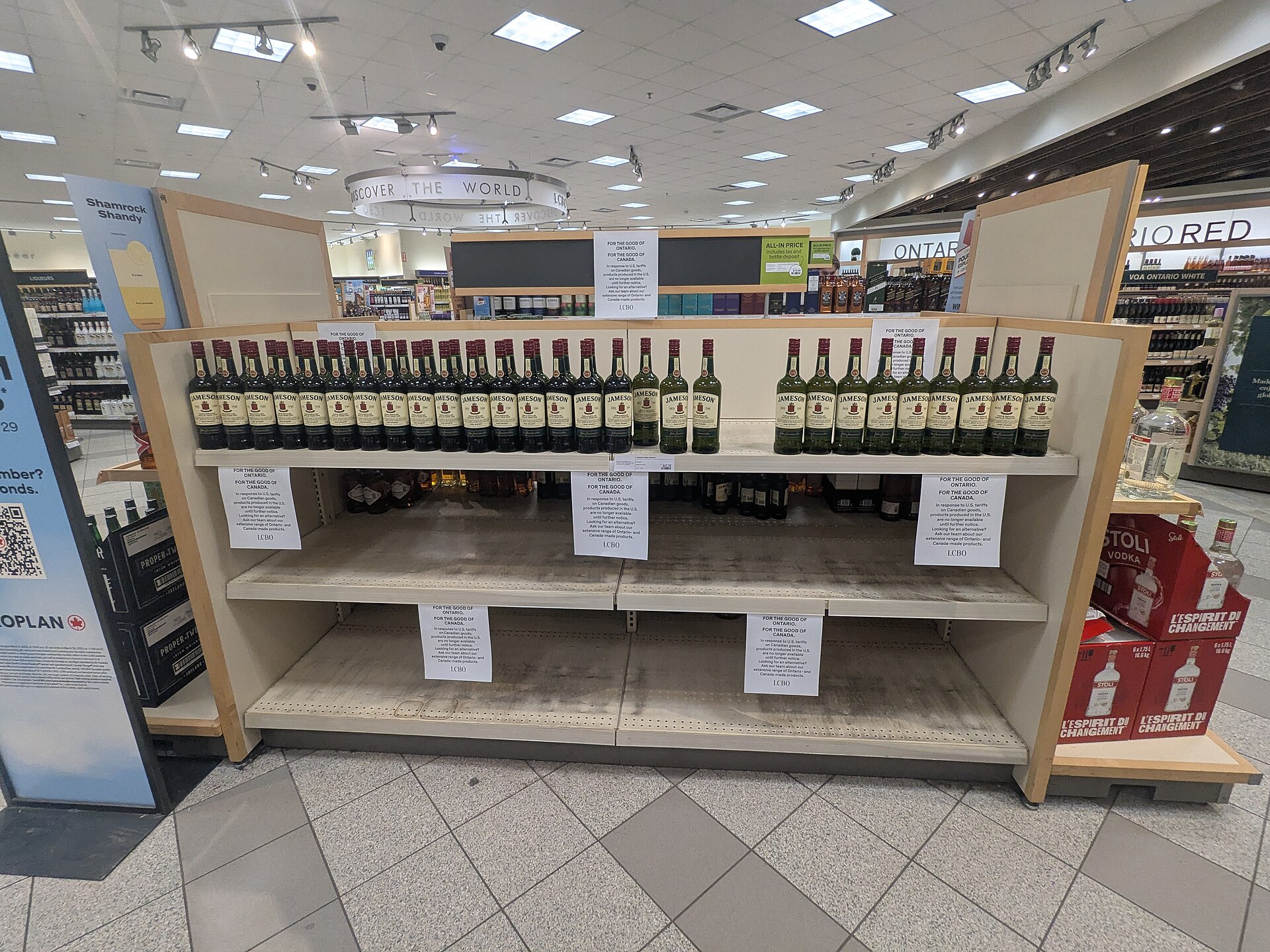
Two reasons, and they stack. The stated one is retaliation for retaliation: Canada had pulled US alcohol from provincial liquor stores, capped US vehicle imports and — Washington says — given European dairy better access than American dairy. The unstated one is that the administration keeps running out of legal ways to impose tariffs. The Supreme Court took away the emergency power in February. Section 338 is what was left that could still hit one country hard and fast.
Who benefits?
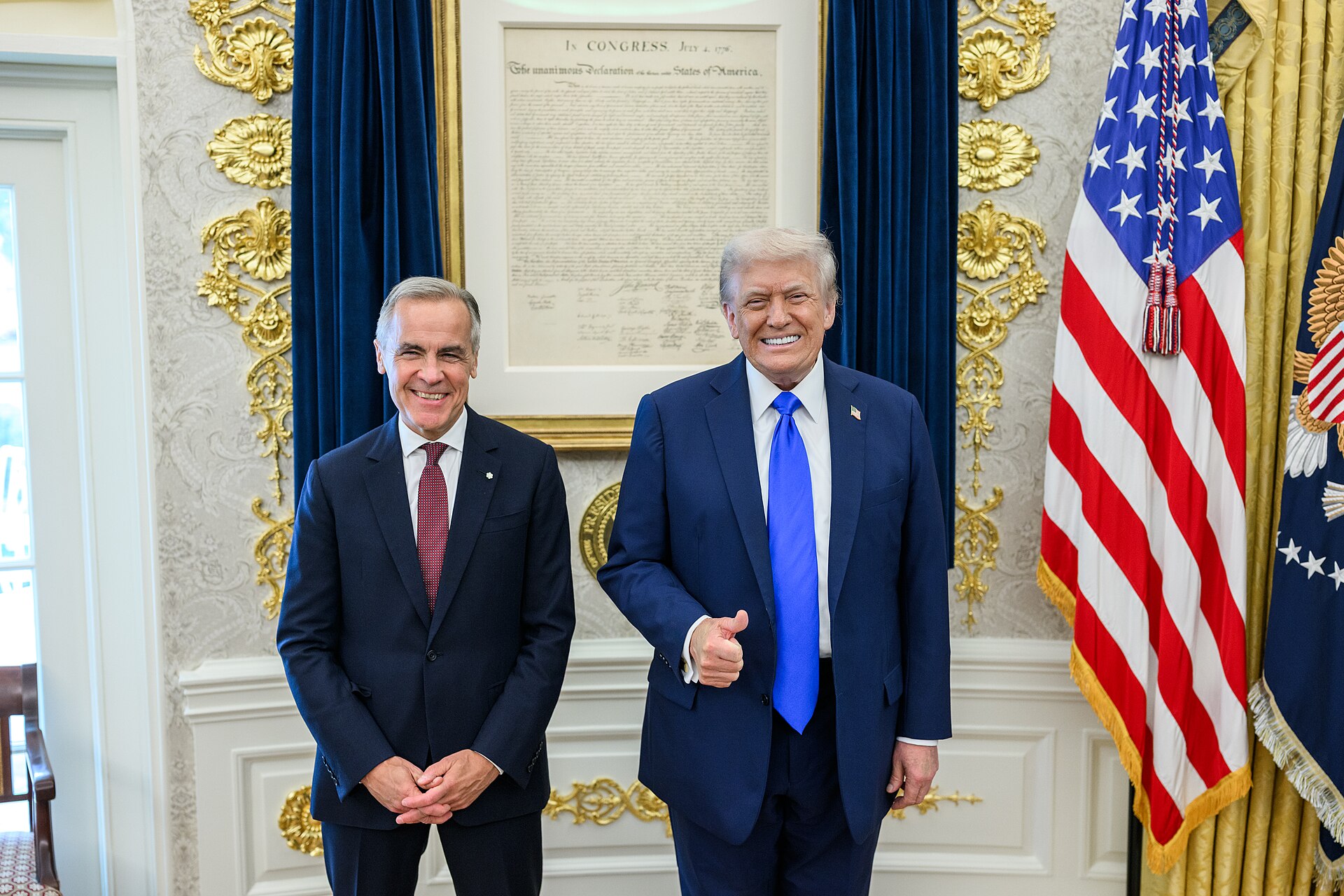
American dairy farmers, distillers and carmakers are the intended winners — the whole case is that Canada shut them out. Whether they actually gain depends on Canada changing the rules, and Canada has done the opposite. The clearer beneficiary right now is the tariff power itself: a president who has had one authority struck down and another expire has just proved a third one works, and other trading partners are watching.
UncertainWho loses?
Canadian exporters first — nearly 72% of everything Canada sells abroad goes to the United States, so a US tariff is not a market they can route around. Then buyers on both sides, from 8 September, when Canada's matching tariffs land on American steel, dairy, appliances, farm equipment, paper and electronics. And underneath both: anyone who assumed a signed trade agreement was protection. It wasn't.
What happened?
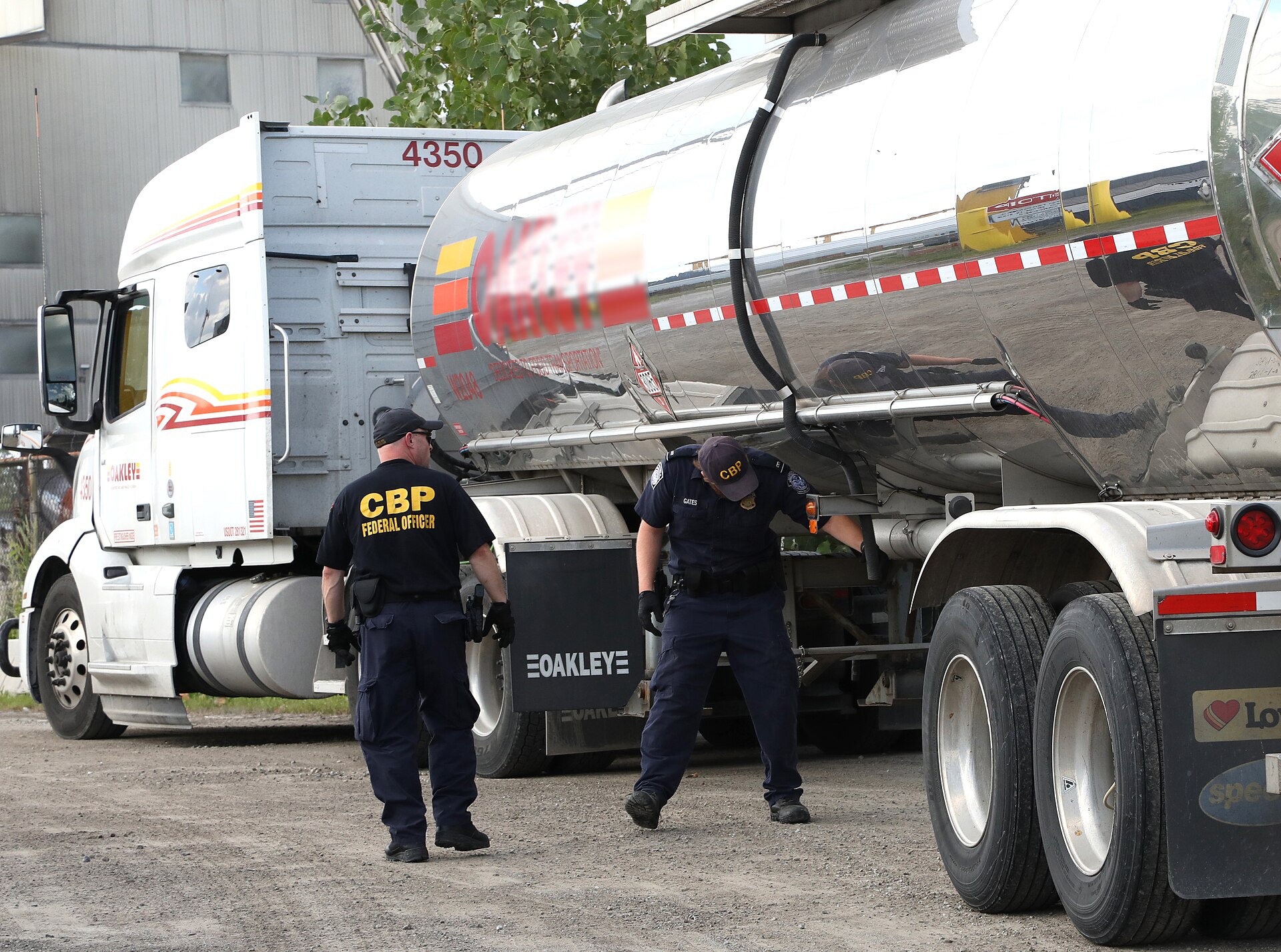
President Trump signed three separate Section 338 proclamations on 20 July 2026, covering alcoholic beverages, dairy and 'motor vehicles'. The statute requires a 30-day wait, so the duties were set for 12:01 a.m. ET on 19 August; the deadline was pushed three days while negotiators tried to close a deal, and the tariffs took effect early on Saturday 22 August after those talks failed. The Holland & Knight review of the proclamations found the 'motor vehicles' list to be the broadest of the three — 439 tariff lines across 18 pages — and noted that despite the title, none of them sit in the vehicles chapter of the US tariff schedule: the covered goods are agricultural products, textiles, wood, cement, furniture and machinery. The alcohol list covers beer, wine, cider and spirits; the dairy list runs to roughly 52 classifications including milk, cream, whey, lactose and casein. Two exclusions matter. Goods already carrying Section 232 national-security duties — steel, aluminium, copper, passenger and commercial vehicles, some wood, semiconductors and patented pharmaceuticals — are carved out. And, in the firm's words, 'USMCA origination does not exempt covered goods from the Section 338 duty', which is the departure: qualifying as a North American free-trade good has been the standard shield against every other tariff track, and here it is explicitly not one. CSIS put the coverage at 4.9% of total US imports from Canada in 2024. The Associated Press, reporting the day it landed, described a border that carries about $880bn of goods and services a year, roughly $2bn of goods a day and nearly 330,000 people. Canadian Prime Minister Mark Carney said 'Canada will match those tariffs dollar for dollar to protect our workers and businesses', with the countermeasures dated 8 September.
Why did it happen?
US Trade Representative Jamieson Greer's statement of 20 July made the official case plainly: Canada 'unlike other partners and allies, continues to retaliate against the United States', having 'taken U.S. alcohol products off Canadian shelves, given better market access to dairy products from the European Union, and… put a cap on U.S. vehicle exports to Canada from companies reshoring to the United States.' That is a coherent Section 338 theory — the statute is built for exactly the case where a country treats American goods worse than another country's. The timing points at a second driver. CSIS notes that the Supreme Court's rejection of IEEPA tariffs and the expiry of the Section 122 duties 'created openings for this alternative mechanism' — in other words, the authority was reached for partly because the earlier ones were gone. Section 338 is unusually convenient for that purpose: compared with Section 301 it has, in the CSIS reading, 'a less-clear investigative requirement, and a shorter timeline', and it caps out at 50%, which is where the rate landed. Holland & Knight read the whole thing as a negotiating position — a '50 percent opening bid' inside the USMCA review, with the 30-day statutory wait functioning as 'a deadline to extract concessions'. On that reading the tariffs were designed to be traded away, and the talks collapsing was the failure case, not the plan. Likely rather than confirmed: the discrimination claims are stated on the record and the legal-vacuum timing is documented, but no official has said the second thing out loud, and the internal weighting between the two is inference.
Who benefits?
On the administration's own account the beneficiaries are named US sectors: distillers whose product came off provincial shelves, dairy producers it says are ranked below European ones, and carmakers reshoring to the US who then hit a Canadian export cap. CSIS is sceptical about at least one of those claims, noting that the dairy allegations sit awkwardly against data showing 'U.S. dairy exports to Canada remain far below the quota threshold' — if American exporters are not filling the access they already have, a tariff does not obviously create a customer. The more reliable winner is precedential. Holland & Knight expect litigation in the US Court of International Trade, and CSIS points out that no court has ever interpreted Section 338 — so until one does, the authority is live, untested, and available against anyone. CSIS reads part of the motivation as signalling to third countries, Brazil among them, what retaliating against US tariffs will cost. Uncertain, because 'who benefits' here rests on a counterfactual nobody can settle yet: if the tariffs are traded away in a USMCA deal, the beneficiary was the negotiating position; if they survive a court challenge, the beneficiary is every future use of a statute that ignores free-trade status.
UncertainWho loses?
The asymmetry is the whole problem. The Associated Press's figure — nearly 72% of Canadian goods exports go to the US — means Canada has no substitute market of comparable size to absorb a 50% duty, which is why Ottawa's answer is a matching tariff rather than a redirection. On the American side the cost lands on importers and the buyers behind them: the covered list is heavy in machinery and industrial inputs, not consumer luxuries, so the tariff is paid partly by US manufacturers using Canadian components. Canada's countermeasures, dated 8 September, cover steel, dairy, appliances, agricultural machinery, pulp and paper, and electronics — a list built to be felt in US export states. The structural loser is USMCA itself. Holland & Knight state flatly that USMCA origination does not exempt covered goods; CSIS calls the result 'unprecedented uncertainty regarding USMCA compliance protections' and warns about 'interconnected auto supply chains'. Formal USMCA renegotiation has begun with Mexico and has not begun with Canada. Confirmed, because these are documented figures and dated measures, not projections — the only open question is size, not direction.
Domino Effect
The causal chain so far. Read the dates against each other — that is the whole argument.
That is the reading a serious trade practice put in writing before the talks failed: Holland & Knight titled its analysis '50 Percent Opening Bid' and framed the whole action as a lever inside the USMCA review, reversible the moment Canada adjusts its auto surtax, provincial alcohol bans or dairy quota administration. It is not a naive reading — tariffs have been announced, delayed and dropped repeatedly in this dispute since 2025, and the three-day extension on 19 August is exactly what a bargaining chip looks like. What the reading has to survive is the specific wording of the proclamations, which do not treat USMCA status as a defence, and a Section 338 authority that no court has yet interpreted. If the tariffs are lifted in a deal, the precedent still stands: a president can tax a treaty partner at 50% under a 1930 statute, and the treaty does not answer. That part does not get traded away.
Corrections & revisions
3Every change to this analysis since publication, with the reason. We append here — we don't rewrite. A number that changes silently is indistinguishable from never having been wrong.
RSS feed-
REVISITAdded a domino step, two citations, one whyItMatters.chain sentence, and a new probability tracking the threatened auto/steel tariff. whyItMatters.chain: 5 steps, ending 8 Sep 2026 countermeasures → whyItMatters.chain: 6 steps, adding the 8 Sep 2026 threat of a second 50% tariff on autos/parts/steel effective 1 Jan 2027Days after Canada's own countermeasures took effect, Trump threatened a second, separate 50% tariff specifically on Canadian vehicles, auto parts and steel from 1 January 2027 — a new escalation on a different goods category than the Section 338 duties this analysis was built around (which carve out vehicles and steel under existing Section 232 duties).
-
REVISITResolved canada-retaliates-on-time (yes), updated the matching domino step to confirmed past tense with the final figures, and added one citation. canada-retaliates-on-time: 88% (open) → canada-retaliates-on-time: resolved yesrevisit.js flagged the 8 Sep 2026 deadline as passed and still open. Canada's Department of Finance and three independent customs-law trackers confirm the counter-tariffs took effect on schedule, at the announced rates and coverage, with a companion $7.5bn domestic support package — a finalized, in-force measure, not an announced intention.
-
REVISITAdded one citation and moved canada-retaliates-on-time, with a dated note. canada-retaliates-on-time: 72% (open) → canada-retaliates-on-time: 88% (open)revisit.js flagged canada-retaliates-on-time as judgeable within 7 days. Carney has since confirmed no further talks are scheduled and Canada's Department of Finance published the finalized product list for the 8 September counter-tariffs — both materially strengthen the case the deadline holds, with the one condition that previously could have delayed it (a talks resumption) now explicitly ruled out.
Sources
9 sources
Every source behind the Trust Index above. Follow them — a trust score you can't check is decoration.
- Understanding President Trump's New Tariffs on Canadian Imports
- 50 Percent Opening Bid: Canadian Imports Subject to Section 338 Tariffs Amid USMCA Talks
- Ambassador Greer Issues Statement on President Trump Imposing Section 338 Tariffs on Canada
- US imposes 50 percent tariffs on $20bn in Canadian goods after talks fail
- US imposes 50% tariffs on $20B worth of Canadian products. Canada says it will retaliate.
- Canada will impose retaliatory tariffs on US goods beginning Sept. 8 as trade negotiations collapse
- Canada announces targeted countermeasures and substantive support for workers and businesses in response to U.S. tariffs
- Trump threatens 50% tariffs on Canadian cars, trucks, metals
- Trump threatens 50% tariffs on Canadian vehicle, steel imports to hit Jan. 1
Nothing here stands alone. This story is one node in a wider web — every card is another thread you can pull.