The Supreme Court Killed Trump's Tariffs. Within Hours, They Came Back Under a Different Law.
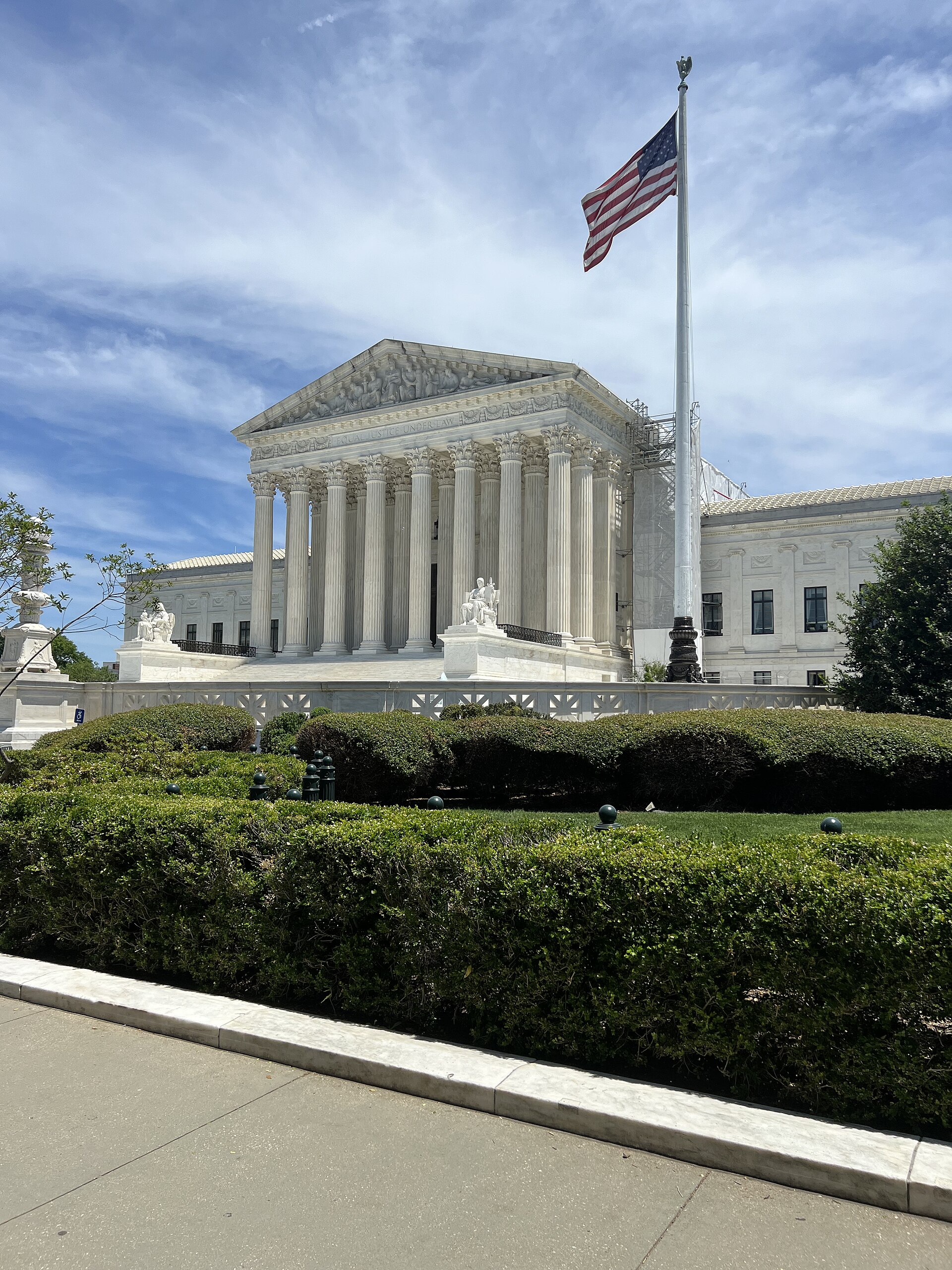
The Supreme Court struck the tariffs down. You're still paying them — just under a different law.
- On 20 February 2026 the Supreme Court ruled 6-3 that the president had no authority under the International Emergency Economic Powers Act to impose tariffs, striking down the "reciprocal" and trafficking-related tariffs on Canada, Mexico and China.
- The administration replaced them the same day with a flat 10% global tariff under a different law, Section 122; that tariff ran its full 150-day legal limit and expired 24 July 2026, with new Section 301 duties of 10-12.5% on roughly 80 countries taking effect the same minute.
- Through three different legal authorities and one Supreme Court defeat, the average effective US tariff rate for 2026 reached 6.6% — the highest since 1969.
- The Tax Foundation estimates the tariffs will collect roughly $1.2 trillion for the US Treasury over 2026-2035, even after accounting for the economic drag they cause, while US households pay about $900 more a year.
- US manufacturing construction spending on new plants fell 22% year-over-year rather than rising as the policy intended, and importers have had to track three different statutory regimes since February.
What happened?
On 20 February 2026 the Supreme Court ruled 6-3 that the president had no authority under the International Emergency Economic Powers Act to impose tariffs, striking down the 'reciprocal' tariffs and the trafficking-related tariffs on Canada, Mexico and China. The administration replaced them the same day with a flat 10% global tariff under a different law, Section 122. That tariff expired after its legal 150-day limit on 24 July 2026 — and new Section 301 duties of 10-12.5% on roughly 80 countries took effect the same minute. As of late July, the average effective US tariff rate for 2026 is estimated at 6.6%, the highest since 1969.
Why did it happen?
The administration treats a broad tariff regime as a settled policy goal, not a legal experiment it is willing to drop when one authority for it fails — so when the Supreme Court closed the IEEPA route, it moved immediately to Section 122, and when a trade court called that illegal too, it kept using it until the statutory clock ran out and then switched again to Section 301. Congress, which the Court said actually holds this power, has not moved to reclaim it or set clearer limits.
Who benefits?
The US Treasury, which the Tax Foundation estimates will collect roughly $1.2 trillion from these tariffs over 2026-2035 even after accounting for the economic drag they cause. Countries and industries that negotiate carve-outs, like Brazil's beef and orange-juice exemptions from its 25% rate. And the administration itself, which gets to claim an active, enforced trade policy regardless of which court has most recently ruled against its legal basis.
UncertainWho loses?
US households, who the Tax Foundation estimates pay about $900 more a year in 2026 even after the Supreme Court's ruling removed one tranche of tariffs. US manufacturers, whose construction spending on new plants fell 22% year-over-year rather than rising as the policy intended. Trading partners facing rates that have changed legal basis three times in six months, with no guarantee the current one survives its own court challenge. And, arguably, legal certainty itself — a company importing goods into the US has had to track three different statutory regimes since February.
ConfirmedWhat happened?
The ruling, in Learning Resources, Inc. v. Trump and Trump v. V.O.S. Selections, Inc., held that tariffs are 'a very clear ... branch of the taxing power' the Constitution reserves to Congress, that IEEPA's authorization to 'regulate' importation does not stretch to cover revenue-raising duties, and that no president had invoked IEEPA for tariffs in the statute's nearly 50-year history — three concurring and dissenting blocs (Roberts/Gorsuch/Barrett; Kagan/Sotomayor/Jackson; and a Kavanaugh/Thomas/Alito dissent) agreed on the outcome while dividing on the reasoning. The ruling struck down the IEEPA-based reciprocal tariffs and the trafficking/immigration tariffs on Canada, Mexico and China specifically — it did not touch tariff authority under other statutes. Within hours, the administration invoked Section 122 of the Trade Act of 1974 to impose a flat 10% tariff on nearly all countries, citing a 'fundamental international payments problem'; unlike the IEEPA regime, it applied uniformly with no country-specific carve-outs. That tariff was itself found illegal by a Court of International Trade panel on 7 May 2026 — though relief was limited to three plaintiffs — and ran out its statutory 150-day ceiling on 24 July 2026 regardless. New Section 301 duties of 10-12.5%, targeting roughly 80 countries over forced-labor and other trade practices, took effect at the same minute the Section 122 tariff expired, alongside country-specific rates set separately: 25% on Brazil (with beef and orange juice exempted), 20% baseline on China plus additional Section 301 duties, and a 15% rate covering the EU, Japan, South Korea and Taiwan. The Tax Foundation's own tracker, last updated 27 July 2026, puts the resulting average effective tariff rate at 6.6% for calendar year 2026 — the highest since 1969 — even after the Supreme Court's ruling removed one entire legal basis for it.
Why did it happen?
The Cato Institute's own legal analysis, published 14 May 2026, argues Section 122 was itself an illegal reach: Congress used 'balance-of-payments' and 'balance-of-trade' as deliberately distinct concepts in the same statute, and the administration's own WTO filing invoked a Bretton Woods-era reserve-depletion standard that contradicts the trade-deficit justification it gave domestically — while the US, including the financial account, actually ran a balance-of-payments surplus of roughly $96 billion in 2025. A Court of International Trade panel agreed the tariffs were illegal on 7 May 2026, yet the tariff continued collecting for another eleven weeks until its own 150-day statutory limit arrived on 24 July — at which point Section 301 duties, built on a slower but more litigation-resistant legal foundation, were ready to take over in the same minute. The Council on Foreign Relations' framing captures the pattern directly: the newer authorities are 'more time-consuming and cumbersome in process' than IEEPA but have 'stronger legal footing' — which reads less as a change of policy than a change of the legal vehicle carrying the same policy forward. Likely, not confirmed, because the administration has not stated this strategy explicitly as sequencing around anticipated legal defeats; the pattern is consistent with that explanation, but the available reporting infers rather than quotes an admitted plan.
Who benefits?
Revenue is the clearest, most quantified beneficiary: the Tax Foundation projects about $1.2 trillion raised from 2026 to 2035 on a dynamic basis, meaning after accounting for the tariffs' own negative growth effects, which the same analysis puts at 0.4 points of long-run GDP from the Section 232/301/338 tariffs alone plus another 0.2 points from foreign retaliation. Individual exemptions carved out in country-specific negotiations — Brazil's beef and orange juice exclusions from its 25% Section 301 rate being the clearest documented example — show that specific negotiated relationships benefit even as the general rate rises, which is a form of leverage the administration retains precisely because the rate-setting authority sits with the executive rather than a fixed statute. Domestic manufacturing, the stated policy target, does not show clear gains in the same data set: manufacturing's share of GDP has fallen from 10.7% in Q1 2017 to 9.4% currently, manufacturing employment is 'effectively flat' since January 2025, and construction spending on manufacturing buildings is down 22% year-over-year — the CFR's own reporting frames this as tariffs 'not yet' achieving their stated goals rather than achieving them. Uncertain, because 'who benefits' from a policy whose stated goal (reshoring manufacturing) is not showing up in the data it would show up in first is a genuinely open question — revenue and negotiating leverage are real and measured; the reshoring case is not.
UncertainWho loses?
The household-cost figure is the most directly quantified: the Tax Foundation's 27 July 2026 update puts the average US household tax increase from these tariffs at about $900 in 2026, a number calculated after incorporating the Supreme Court's IEEPA ruling — meaning even with one entire tariff tranche struck down, the replacement authorities kept the household cost close to where it was. The same analysis estimates the tariffs reduce long-run US GDP by 0.4 percentage points on their own, and by a further 0.2 points once foreign retaliation is included — a combined drag that falls on the broader economy, not a targeted sector. Manufacturing, the policy's own stated beneficiary, shows the opposite of the intended signal in the CFR's reporting: construction spending on manufacturing buildings fell 22% year-over-year, which the analysis attributes partly to tariff-driven material cost increases raising the price of building the very factories the tariffs are meant to encourage. Businesses face a compounding cost that is harder to put a number on: three distinct legal bases (IEEPA, Section 122, Section 301/232) in six months means compliance and pricing decisions have had to be re-evaluated each time a court ruling or a statutory deadline changed the rules, with no assurance the current Section 301 regime is the last one to face a legal challenge. Confirmed on the quantified costs — household tax increase, GDP drag, manufacturing construction spending — because all three come from the same actively-updated, methodology-disclosed tracker; less certain, and not separately scored, is how much the legal instability itself costs businesses beyond what shows up in these headline numbers.
ConfirmedDomino Effect
The causal chain so far. Read the dates against each other — that is the whole argument.
The counterfactual is close to testable, because it is what the ruling's own text aimed at: IEEPA tariffs specifically did end, within days, exactly as ordered. What the ruling did not do — because it was never asked to — is settle whether Section 122, Section 232 or Section 301 could carry the same policy under different legal reasoning. Each of those statutes has its own history, limits and litigation risk, and Section 122 itself was subsequently found illegal by a lower court. The honest reading is not that the administration defied the ruling; it complied with it exactly while treating the underlying policy goal as separable from any single legal vehicle for achieving it — which is why 'why did it happen' above is scored likely, not confirmed: the pattern is clear, the explicit intent behind it is inferred.
Corrections & revisions
1Every change to this analysis since publication, with the reason. We append here — we don't rewrite. A number that changes silently is indistinguishable from never having been wrong.
RSS feed-
REVISITRewrote the "why this matters to you" hook. the Court settled who does not have this power without settling who does, and the tariff bill on every US import has not meaningfully paused for the argument → The Supreme Court struck the tariffs down. You're still paying them — just under a different law.Operator decision, 2026-08-19: whyItMatters.outcome is now the page's primary hook and every analysis was rewritten to a single short, concrete, human-stakes sentence (docs/EDITORIAL.md, Permanent standards #4) — replacing several that had grown into full paragraphs or abstract policy-thesis phrasing.
Sources
4 sources
Every source behind the Trust Index above. Follow them — a trust score you can't check is decoration.
Nothing here stands alone. This story is one node in a wider web — every card is another thread you can pull.